



By Charmaine Ndlela
Government has outlined a R5.1 billion funding package to strengthen its response to gender-based violence and femicide (GBVF), even as the backlog of sexual offences cases continues to worsen.
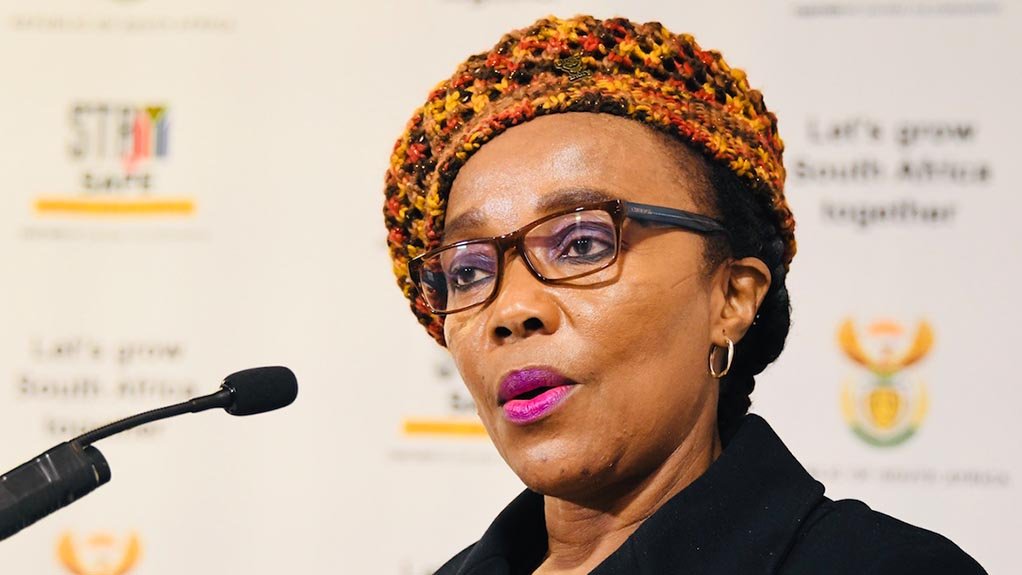
Minister in the Presidency for Women, Youth and Persons with Disabilities Sindisiwe Chikunga acknowledged serious shortcomings in the criminal justice system during a strategic engagement with the Commission for Gender Equality (CGE) on Friday.
“Although system capacity has improved, timely, survivor-centred case outcomes remain the real test,” Chikunga said.
The funding package, announced by Finance Minister Enoch Godongwana during the Medium-Term Budget Policy Statement in October, includes R3.8 billion over the medium term to recruit 3,552 social workers across provinces.
The appointments are intended to strengthen prevention, early intervention, psychosocial support and victim-empowerment programmes.
An additional R186 million has been allocated to improve forensic and investigative capacity, while sexual offences courts are expected to increase from 55 to 101.
Government also plans to expand Thuthuzela Care Centres from 72 to 80 by the 2028/29 financial year.
A further R157.4 million has been allocated to the Department of Women, Youth and Persons with Disabilities to strengthen coordination and oversight.
However, Chikunga acknowledged that both the National Strategic Plan on GBVF and the GBVF Disaster Management Plans remained unfunded mandates, constraining the department’s ability to fulfil its responsibilities.
She welcomed the CGE’s findings on the implementation of Pillar 3 of the National Strategic Plan, which focuses on justice, safety and protection.
The Commission conducted a joint inquiry with the South African Human Rights Commission and the CRL Rights Commission, examining the reporting, investigation, prosecution and sentencing of GBVF cases.
The inquiry included visits to Mpumalanga, the Eastern Cape and KwaZulu-Natal.
“Government needs this evidence, especially when it is uncomfortable to hear,” Chikunga said.
The findings highlighted concerns about secondary victimisation, inadequate investigative capacity, conviction rates, case management and access to survivor-support services.
Chikunga said that of the 54 performance indicators under Pillar 3, 31 had been achieved, 14 were in progress and nine remained unachieved.
Government had upgraded 40 district courts to support domestic violence survivors, established 14 sexual offences courts during the financial year ending March 2026 and provided 338 functional facilities for protected or remote testimony.
However, only 221 prosecutors had completed specialised GBVF training against a target of 800.
Another 1,185 law enforcement officers participated in GBV-related learning programmes between January and June 2026.
The minister said improvements in institutional capacity had not translated into consistently timely outcomes for survivors, while information on case progression and service quality remained uneven.
The Human Sciences Research Council’s national GBV prevalence study found that 33.1% of adult women, approximately 7.3 million, had experienced physical violence during their lifetime, while 9.8% had experienced sexual violence.
Chikunga said government’s next phase would focus on measurable outcomes, stronger accountability, improved coordination across the criminal justice system and sustainable financing for GBVF interventions.
INSIDE POLITICS






