- Advertisement -spot_img

Mboweni Gives SAA R10.5bn Bailout, Freezes Salary Increases

- Advertisement -spot_img

Must read

THEBE MABANGA

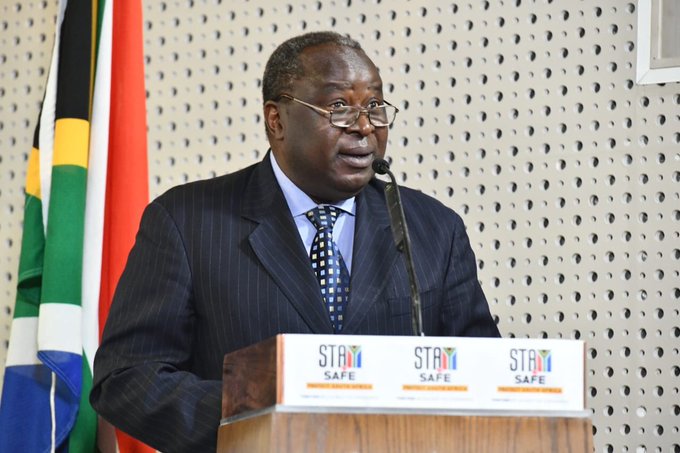
A SUBDUED Finance Minister Tito Mboweni invoked former President Nelson Mandela’s spirit as he urged South Africans to confront the country’s economic challenges, then proceeded to ask civil servants and public representatives to take a pay cut while taking money away from departments to help bail out South African Airways (SAA) and the Land Bank.

Tabling the Medium Term Budget Policy Statement (MTBPS) in Parliament on Wednesday, Mboweni recalled Madiba’s words, uttered 26 years ago as South Africa was setting out in its path as a democracy to “meet despair with hope and death with the reaffirmation of the beauty of life” as they confront the health social and economic challenges brought about by COVID-19.

Mboweni announced that the fiscal consolidation path that he announced at the supplementary budget unveiled in June has been raised from three to five years and that the debt to GDP ratio will now stabilise at 95% of GDP with a gross debt rising from the current level of R 4 trillion to R5.5 trillion.

“We propose consolidated spending of R6.2 trillion over the 2021 Medium Term Expenditure Framework,” said Mboweni, adding that R1.2 trillion goes to learning and culture, R978 billion to social development and R724 billion to health.

But there will be pain in the form of spending cuts.

“The medium-term fiscal strategy narrows the main budget primary deficit from an expected R266 billion in 2021/22 to R84 billion in 2023/24 and we achieve a surplus by 2025/26,” he said.  

Such a speedy cut can only occur through spending cuts.

Mboweni says Treasury now expects the South African economy to shrink by 7.8% this year, still that the 9.5% forecast by private sector economists and the 11% expected by the Organisation for Economic Co-operation and Development (OECD).

“We forecast the South African economy to grow by 3.3 per cent in 2021, 1.7 per cent in 2022 and 1.5 per cent in 2023,” Mboweni said.

The sharp increase for 2021 is due to growth coming off a low base.

Mboweni used the occasion to debunk the myth that government had frittered away R500 billion Covid Relief funds through corruption. 

He noted that more than R30 billion was used for health and other frontline services while support for vulnerable households now exceeded R50 billion.  

R40 billion was used for wage protection through the Unemployment Insurance Fund Temporary Employment Relief Scheme (TERS), R100 billion for job creation initiatives, which will now be spread over the over the next three years.

There is also the R200 billion loan guarantee scheme, which has proven a failure with less than 20% taken up in spite of government tweaking its conditions.

“After extensive consultations between the Banking Association, the National Treasury and the South African Reserve Bank, work is underway to review the Loan Guarantee Scheme to improve take-up. I will also be working with my colleagues in the Cabinet to boost business restart efforts,” said Mboweni.  

R20 billion has gone towards municipalities to assist them with COVID-19 related activities while R70 billion towards emergency tax measures.

Mboweni also announced that the Land Bank, which received R 3 billion at the Supplementary Budget and will now require R 7 billion over the next three years to support its restructuring.

R10.5 billion was also found to support SAA’s business rescue plan, in addition to the R 16.4 billion that was allocated in February for settling guaranteed debt and interest.

“Our approach is in line with the principle that funding to state-owned companies must come from within the current framework and reprioritised from elsewhere,” Mboweni said as he confirmed that money was taken from baseline spending of departments, including R2.5 billion from the police.

The Democratic Alliance has called SAA bailout “indefensible and immoral”.  

He noted that the Economic Reconstruction and Recovery Plan recently unveiled by President Cyril Ramaphosa is already being implemented, including through R12.6 billion employment stimulation programme meant to be implemented over the next six months but whose details are not yet clear and R2.2 billion subsidies for housing delivery, for which an additional R6.7 billion has been contractually committed.

Mboweni said government aims to shift spending from consumption to investment, contain spending growth and ensure that the fastest growing item outside of debt expenditure is capital spending, currently running at 7.8 % per year.

Mboweni also announced the salary increase for public servants will be 0.8% in the next three years, a decision that is likely to put him on a collision course with labour.

“The Budget guidelines proposes a wage freeze for the next three years to support fiscal consolidation,” said MTBPS.

Mboweni is determined to cut the ever-increasing public wage bill, which account for 40% of the total government expenditure R567 billion.

He closed by igniting hope but chose a grim text from the Gospel of John, warning of how those who walk in darkness do not know where they are going.

(COMPILED BY INSIDE POLITICS STAFF)

More articles

LEAVE A REPLY

Please enter your comment!
Please enter your name here

CATHSSETTA

spot_img

AVBOB STEP 12

spot_img

Inside Education E-Edition

spot_img

Inside Metros G20 COJ Edition

spot_img

JOZI MY JOZI

spot_img

QCTO

spot_img

Latest article