

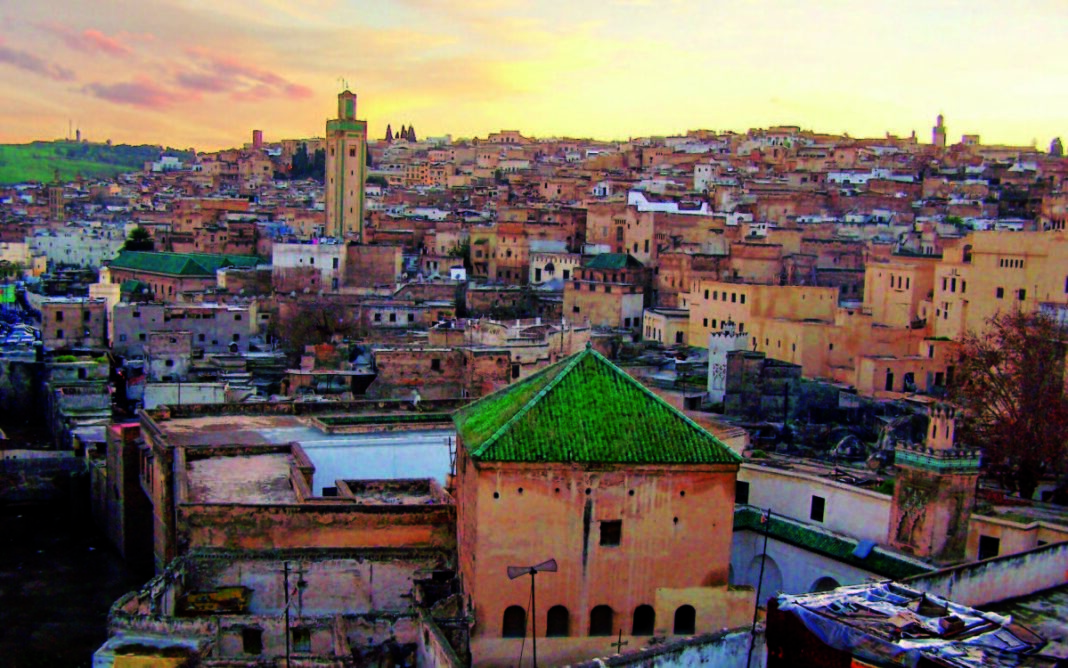


More than 2,000 people died when a powerful magnitude 6.8 earthquake struck Morocco on 8 September. The epicentre was in the High Atlas Mountains, 71km (44 miles) south-west of Marrakesh. Moina Spooner, from The Conversation Africa, asked José A. Peláez, a professor in geophysics who has carried out research on seismic activity in Morocco, about what led to this situation.
What geological factors contributed to this earthquake?
The Earth’s surface is constituted of several tectonic plates, large segments of the planet’s outer layer, which move against each other. This movement is responsible for various geological phenomena, such as earthquakes, volcanoes, and the formation of mountains and ocean basins.
The tectonic activity in Morocco primarily involves the convergence of the Eurasian and the Nubian (African) plates. The Eurasian Plate pushing against the Nubian Plate is what led to the formation of the Atlas Mountains, which run through Morocco, Algeria and Tunisia. The mountains are
You’ve reached your free article limit
Subscribe to enjoy unlimited access to trusted journalism. Cancel anytime.
Subscribe nowNeed help? molokom@insidepolitic.co.za






