
- Advertisement -spot_img

Plastic-free farming trial launched in Eastern Cape

- Advertisement -spot_img

Must read

By Lungile Ntimba

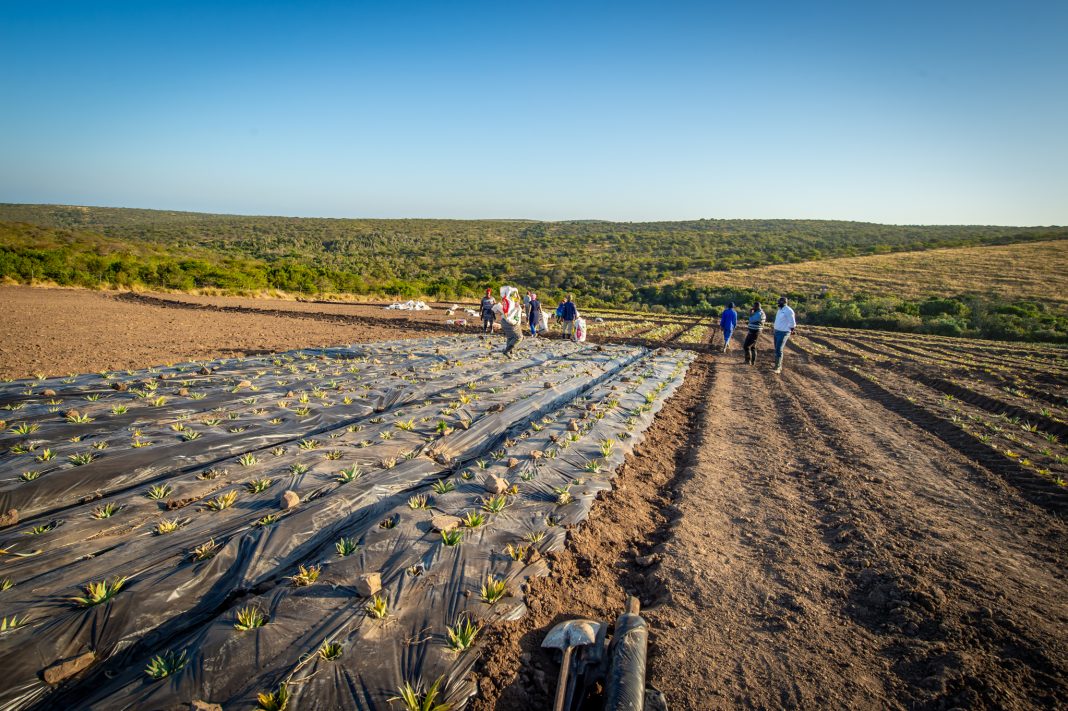
The Council for Scientific and Industrial Research (CSIR) has launched a field trial of biodegradable agricultural mulch films on a pineapple farm in Peddie, Eastern Cape, to advance sustainable farming and scaling the circular economy practices in the country.

The project is funded by the Department of Science, Technology and Innovation through its South African Circular Economy Demonstration Fund.

The fund supports the demonstration of tested circular economy innovations, ranging from new technologies to improved processes and social interventions that have not yet achieved scale or widespread impact locally.

CSIR spokesperson Phetolo Phatsibi said the trial contributed to the broader goal of reducing plastic pollution from fossil fuel-derived products, while enhancing crop performance.

Earlier this month, the department’s deputy director-general for socio-economic innovation partnerships, Prof. Linda Godfrey, visited the site. She was accompanied by the CSIR’s technical team, including the advanced polymers and composites research group leader Dr Vincent Ojijo, and research engineer Osei Ofosu, as well as local agricultural extension office.

“This visit is a key milestone. It allows stakeholders to see, first-hand, a home-grown circular innovation that could transform how farmers use plastic mulches – an area of agriculture that is overdue for sustainable alternatives,” Godfrey said in a statement.

According to CSIR, the biodegradable mulch films were designed to perform similarly to conventional fossil-fuel-derived plastic mulches, enhancing crop yields, conserving soil moisture, regulating temperature and suppressing weeds. But, without the lasting environmental burden. 

Unlike traditional petroleum-based mulches, the new films are engineered to completely decompose in soil after the cropping cycle, breaking down into water, carbon dioxide and organic biomass.

Ojijo said the team had developed different formulations for short, medium, and long-duration crops.

“What’s more, our formulations incorporate natural materials sourced locally, adding an economic dimension to their environmental value,” he said.

The project is important because it raises awareness and will build partnerships that could see the move from a field trial to the market.

INSIDE POLITICS

More articles

LEAVE A REPLY

Please enter your comment!
Please enter your name here

Inside Education E-Edition

spot_img

CATHSSETTA

spot_img

AVBOB STEP 12

spot_img

Inside Metros G20 COJ Edition

spot_img

JOZI MY JOZI

spot_img

QCTO

spot_img

Latest article



