

By Lungile Ntimba
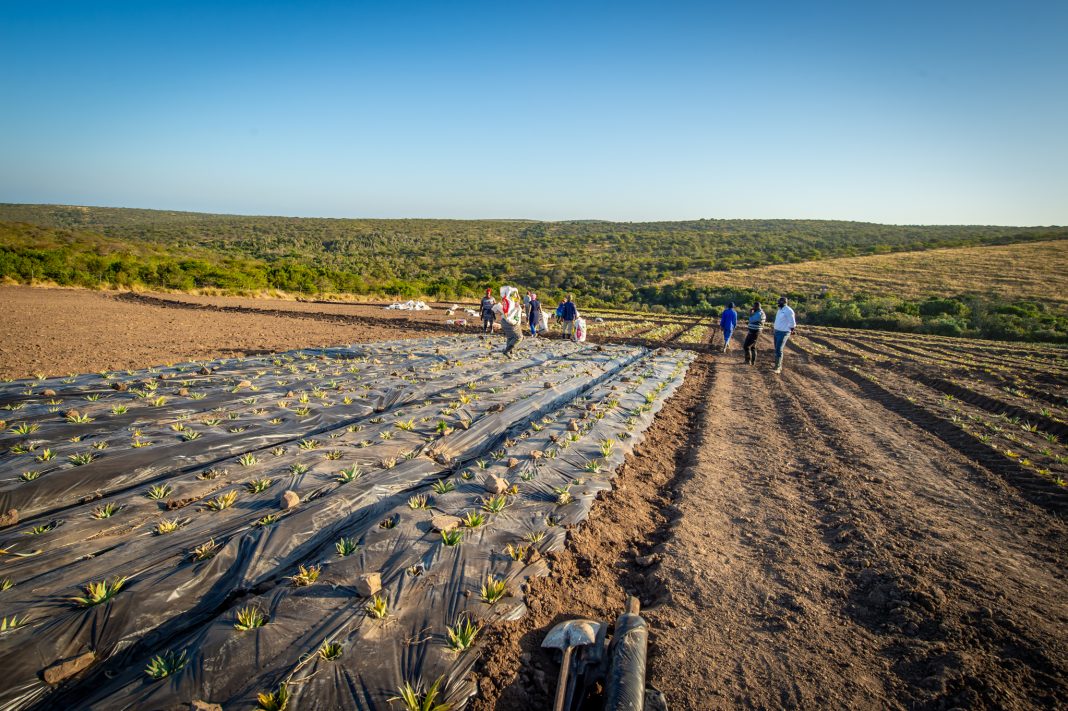
The Council for Scientific and Industrial Research (CSIR) has launched a field trial of biodegradable agricultural mulch films on a pineapple farm in Peddie, Eastern Cape, to advance sustainable farming and scaling the circular economy practices in the country.
The project is funded by the Department of Science, Technology and Innovation through its South African Circular Economy Demonstration Fund.
The fund supports the demonstration of tested circular economy innovations, ranging from new technologies to improved processes and social interventions that have not yet achieved scale or widespread impact locally.
CSIR spokesperson Phetolo Phatsibi said the trial contributed to the broader goal of reducing plastic pollution from fossil fuel-derived products, while enhancing crop performance.
Earlier this month, the department’s deputy director-general for socio-economic innovation partnerships, Prof. Linda Godfrey, visited the site. She was accompanied by the CSIR’s technical team, including the advanced polymers and composites research group leader
You’ve reached your free article limit
Subscribe to enjoy unlimited access to trusted journalism. Cancel anytime.
Subscribe nowNeed help? molokom@insidepolitic.co.za