
By Thapelo Molefe
South Africa bears the world’s heaviest HIV and TB burdens relative to its population, with adolescent girls and young women aged 15 to 24 accounting for the highest number of new weekly infections.
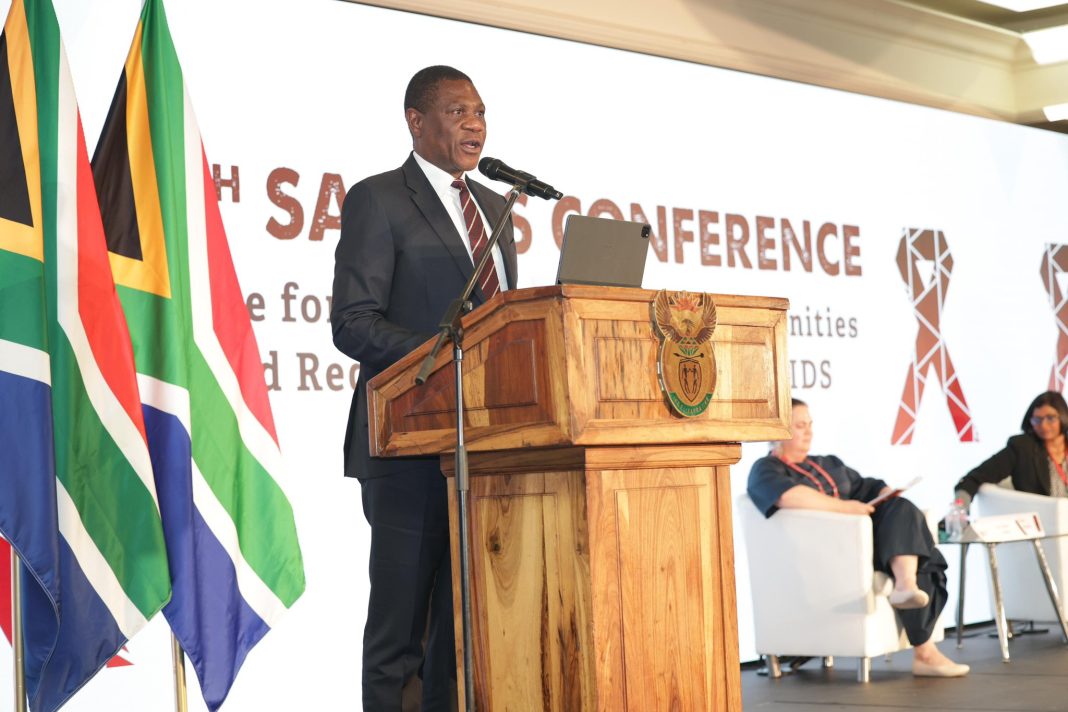
This stark reality framed Deputy President Paul Mashatile’s opening of the 12th South African AIDS Conference in Ekurhuleni on Monday.
Addressing delegates in his capacity as chairperson of the South African National AIDS Council (SANAC), Mashatile warned that while progress has been made, the country is still falling short of global targets to end AIDS as a public health threat by 2030.
South Africa has reached 96-78-97 against the UNAIDS 95-95-95 benchmarks—96% of people living with HIV know their status, 97% of those on treatment are virally suppressed, but only 78% of those diagnosed are on sustained antiretroviral therapy.
“The second 95 remains our biggest challenge…We are falling short on initiating and retaining people on treatment. This is where we must focus our energy,” Mashatile said,
He noted that the Health Department’s Close the Gap campaign, launched earlier this year at Chris Hani Baragwanath Hospital, was working to find 1.1 million HIV-positive people not yet on treatment.
The Deputy President said the initiative runs parallel to the End TB Campaign, which targets testing of five million people in 2025/26 to cut TB incidence and mortality.
He stressed that the global community is relying on South Africa to achieve epidemic control.
The conference, held under the theme Unite for change – empower communities and redefine priorities for HIV/Aids, brings together policymakers, researchers, activists, health professionals and global partners, including WHO Director-General Tedros Ghebreyesus and UNAIDS Executive Director Winnie Byanyima, who joined virtually.
Mashatile said efforts must now centre on community-driven strategies, equitable access to healthcare, and anti-stigma education.
He pointed to the National Strategic Plan for HIV, TB and STIs (2023–2028) as a framework for prevention, treatment, and health system strengthening.
He also acknowledged challenges posed by recent United States funding cuts but said the government is ramping up domestic resources and exploring partnerships with BRICS nations and the private sector.
“This is the last strategic plan before 2030, and we must ensure it positions us to end AIDS,” Mashatile said.
“Behind every statistic are real people with hopes and dreams. Our duty is to ensure they live long, healthy lives.”
INSIDE POLITICS





