
By Johnathan Paoli
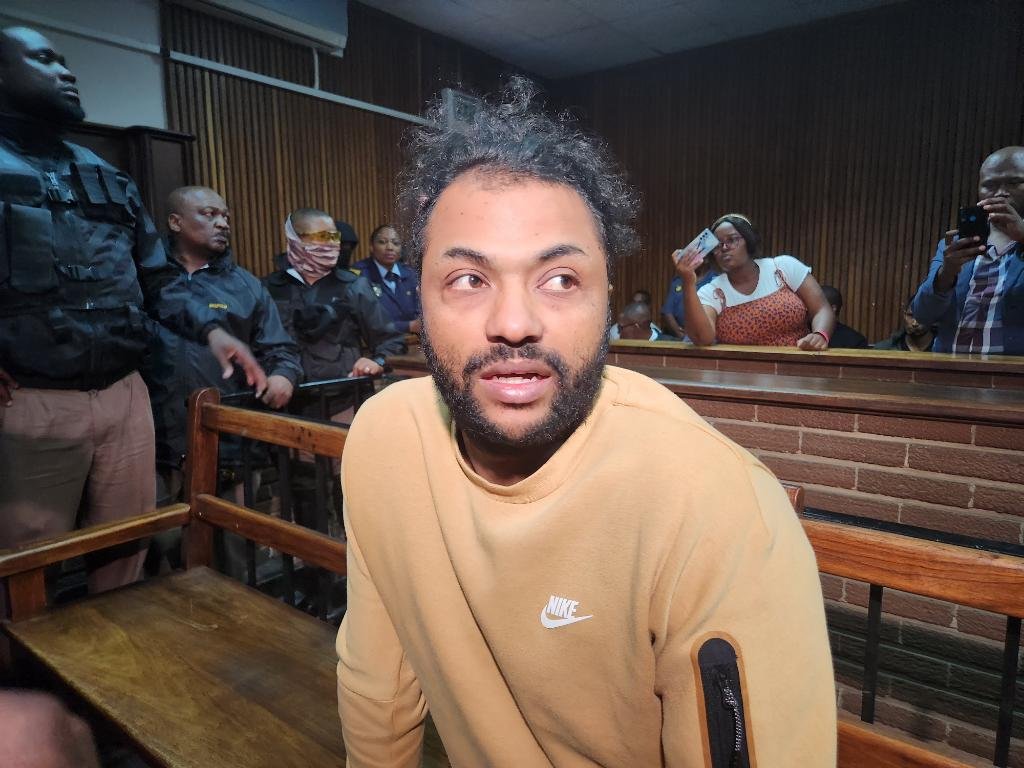
The North Gauteng High Court has dismissed urgent applications brought by convicted murderer Thabo Bester and his partner, Nandipha Magudumana, to stop the airing of Netflix’s highly anticipated documentary, Beauty and the Bester.
In delivering her judgment, Judge Sulet Potterill stressed that the presumption of innocence, a cornerstone of South African law, would not be undermined by the documentary.
“The presumption of innocence until proven guilty will in no way be impacted by the utterances in the documentary. No judge will be influenced by any documentary. Witnesses will be exposed to cross-examination. The public may form opinions, but that is an unavoidable by-product of the criminal justice system,” she said.
The ruling, handed down by Judge Potterill on Friday morning, cleared the way for the documentary’s release barely 30 minutes before its scheduled global premiere.
Both Bester and Magudumana had sought urgent interdicts against Netflix International BV and production partner Storyscope (in Magudumana’s case), arguing that the documentary violated their constitutional rights to dignity, privacy, equality, and a fair trial.
They contended that its broadcast ahead of their criminal proceedings would prejudice them in the eyes of the public and the courts.
Potterill, however, was unequivocal in rejecting their arguments, striking both applications from the court roll and ordering that they pay costs on the punitive scale.
The court further held that both applicants could pursue defamation or damages claims if they believed their reputations had been harmed, but that such potential prejudice did not justify the drastic step of prior restraint against the media.
A central flaw in both applications, Potterill found, was the failure to establish genuine urgency.
Magudumana’s legal team had argued that the looming broadcast date of 12 September justified an urgent interdict.
Yet the judge noted that her attorneys had known since at least 20 August, when the trailer was released, that Netflix intended to proceed.
Instead of moving swiftly, they delayed launching their application until 9 September, leaving the court and respondents with little time to prepare.
“This was self-created urgency; the applicant cannot sit back until the hour of reckoning and then expect the court to accommodate her timelines,” Potterill said.
Similarly, Bester’s application, filed on 26 August, did not comply with procedural directives and failed to explain why substantial redress could not be obtained in the ordinary course.
Both applicants framed their cases as a clash between their constitutional rights and the media’s right to freedom of expression.
But Judge Potterill pointed to binding precedent from the Supreme Court of Appeal in Media Television (Pty) Ltd v National Director of Public Prosecutions (2007), which held that prior restraint on publication may only be ordered if demonstrable and substantial prejudice to a constitutional right is shown.
“In neither matter has such prejudice been established. Speculation about potential harm is not enough. The right to freedom of expression in section 16 of the Constitution weighs heavily against prior restraint,” the judge ruled.
Magudumana’s application sought not only to stop the release of the documentary but also to compel Netflix to remove footage of her father and commentary by former Constitutional Court Justice, Edwin Cameron.
She argued that her licensing agreement with Netflix was unenforceable and unconstitutional.
The judge dismissed these claims, describing a “total disjunct” between the contractual disputes raised in Part B of her application and the urgent relief sought in Part A.
Bester, meanwhile, argued that Netflix had proceeded without his consent and that the documentary violated his personality rights.
Potterill found that much of the material featured in the production was already in the public domain through court judgments, bail hearings, and extensive media coverage.
Potterill emphasised that the applicants could still pursue their arguments in Part B proceedings at a later date, but that there was no basis to interfere with Friday’s scheduled broadcast.
“The applications have not complied with the rules, the practice directives, or the case law, and have placed undue pressure on the parties and the court by bringing them a day before screening. They are dismissed,” she concluded.
The multi-part series explores the rise and fall of Bester, dubbed the “Facebook Rapist” and later convicted of murder, and his relationship with Magudumana, who stands accused of helping him escape from prison in 2022.
INSIDE POLITICS



