
Simon Nare
The South African Revenue Service (SARS) had become a more trusted and capable institution after its years-long recovery from the state capture era, President Cyril Ramaphosa said on Thursday.
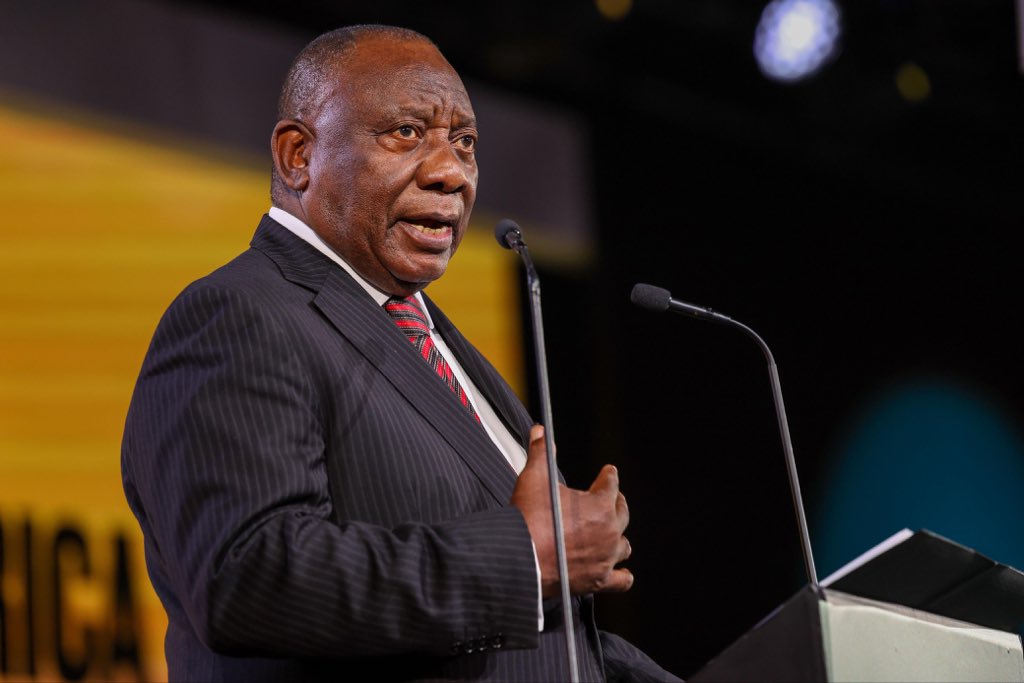
Addressing staff at the SARS’s National Command Centre, Ramaphosa praised outgoing commissioner Edward Kieswetter for helping restore its credibility.
He said stronger tax administration had improved investor sentiment and recent gains in the country’s fiscal and regulatory standing.
“When S&P issued our first sovereign credit rating upgrade in nearly two decades late last year, amongst the factors cited was strong value-added tax and corporate income tax receipts.
“SARS was also instrumental in the work of the multi-disciplinary team whose efforts saw South Africa exit the Financial Action Task Force grey list in October last year,” said Ramaphosa.
He said the progress made could obscure how difficult the rebuilding process had been after SARS was undermined during the administration of former president Jacob Zuma.
The president said the institution moved swiftly to implement the recommendations of the Nugent Commission of Inquiry into tax administration and governance. The commission recommended National Prosecuting Authority criminal prosecutions, the setting aside of contracts and the recovery of expenditure among wide-ranging steps.
“Eight years later, the majority of the recommendations have been implemented as the organisation continues along its transformative journey to become a smart, modern SARS with unquestionable integrity that is trusted and admired,” he said.
Ramaphosa said SARS was now positioning itself to broaden the tax base, improve voluntary compliance and strengthen “fiscal citizenship”, while also investing in its own organisational capacity, leadership and governance.
“It has also focused on its own organisational capacity by strengthening leadership and governance, and on scaling up its modernisation efforts by leveraging people, data and technology,” he said.
He said SARS occupied a “unique and critical role” at the centre of efforts to build a capable state by ensuring government had “sufficient, predictable resources” for public services and infrastructure investment.
Ramaphosa said revenue collection remained challenging in South Africa and globally, even as the economy showed early signs of recovery.
He added that slower economic growth and the high cost of living were squeezing the tax base and that the country needed fiscal space to drive inclusive growth and other pillars of the Government of National Unity.
“Even though we are on track to achieve a third consecutive primary budget surplus, giving us more room for social spending, we continue to rely on SARS to support the delivery of the strategic priorities of the Government of National Unity.
“We do not want to burden future generations with debilitating debt,” he said.
Kieswetter is set to leave the institution this year after Ramaphosa previously asked him to remain for a further two years beyond the end of his term to allow for a leadership transition.
ALSO READ: IPID refers Emmanuel Mbhense docket to NPA
To Kieswetter, Ramaphosa said the commissioner was leaving behind a SARS that was more cohesive, efficient and capable.
Ramaphosa said Kieswetter’s leadership had been vital to restoring the credibility and integrity of the institution.
“The real measure of your contribution is not how much revenue SARS collected during your tenure, but by how well prepared it is for a challenging future,” he said.
Appointed in 2019, Kieswetter joined the institution during one of its most trying periods, and helped steer it through a turnaround that included the upgrading of SARS systems and processes to improve efficiency and compliance.
Among the reforms credited to the commissioner was the introduction of auto-assessment in 2021, which SARS says has simplified filing for millions of taxpayers and reduced turnaround times.
INSIDE POLITICS



