
By Johnathan Paoli
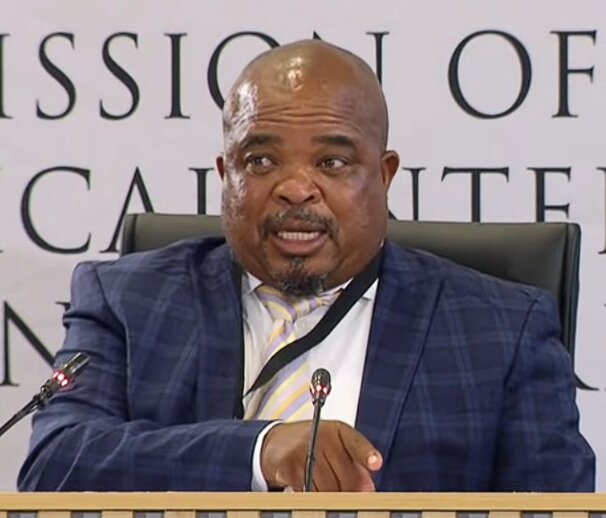
Directorate of Priority Crime Investigations (Hawks) Lieutenant-Colonel Nkoana Joseph Sebola has refuted previous testimony by warrant officers Steve Phakula and Marumo Magane, stating that the pair had neither the skills nor the authority to be in charge of the cocaine bust at the Scania plant in Aeroton, south Johannesburg in 2021.
Appearing before the Madlanga Commission of Inquiry on Thursday, Sebola insisted that Magane and Phakula, under the lead of Gauteng Traffic Deputy Director Samuel Mashaba, did not have any authority to be actively involved at the crime scene.
“A big no. Criminal matters are investigated by the police, unless other investigative agencies have been mandated to do, but not the traffic police. He [Mashaba] can not [lead a drug bust], he can only maintain the source of information,” Sebola said.
Sebola testified that when he arrived at the scene, he found a chaotic situation, with about 20 law enforcement officials and numerous bystanders already present.
Several officers allegedly arrived in unmarked vehicles and some identified themselves as “crime intelligence Hawks” officials, a unit Sebola insisted does not exist within the DPCI structure.
He said he was informed that a Booysens SAPS vehicle had blocked a black Nissan bakkie that was allegedly attempting to leave the scene, loaded with black sports bags and driven by Magane.
Sebola further stated that the scene had not been secured when he arrived and that his team had to cordon it off before beginning their investigation.
He said that a warehouse employee identified Mashaba as the person “running the show” at the scene.
Commission evidence leader Advocate Thabang Pooe questioned Sebola extensively about the removal of drug-filled bags from a shipping container and their loading into Magane’s black Nissan bakkie.
Sebola maintained the bags should never have been removed from the container in the first place.
He said he found Magane seated inside the vehicle loaded with what was later confirmed to be 715kg of cocaine and described how investigators opened one of the sports bags and found brick-like packages concealed inside.
Sebola pierced one of the bricks with a pin, causing a white powdery substance to emerge, which he suspected was cocaine.
He described the packages as bearing markings, including a red bull and seagull logos, commonly associated with South American cocaine consignments.
He testified that he had previously encountered similar markings during other drug operations, including seizures linked to Sao Paulo in Brazil.
Sebola said the drugs remained sealed and in their original condition when he arrived, contradicting suggestions that the scene had already been properly processed by earlier responders.
Sebola said that after interviewing Magane, Phakula, Mashaba and Nku, he arrested all four men for defeating the ends of justice and warned them that additional drug-related charges would follow once the substances had been formally confirmed.
The commission also heard evidence of alleged attempts to intervene in the arrests.
Sebola testified that Mashaba phoned a “Brigadier Shibiri” from the scene seeking “an amicable solution” following the arrests.
According to Sebola, Shibiri asked whether there could be a resolution to the matter, but Sebola responded that the suspects were already under arrest.
The case against the four were later withdrawn, following complications in the witnesses’ testimony, and the matter was struck off the roll.
Sebola further testified that cellphone downloads later revealed suspicious communications allegedly linking the accused to the cocaine shipment.
He claimed records showed Mashaba and Magane did not know each other before the day of the bust and had allegedly been introduced through another police officer saved on a cellphone as “Police Alberton”.
The commission continues.
INSIDE POLITICS





