
- Advertisement -spot_img

A royal family feud over who should be king of the Zulus

- Advertisement -spot_img

Must read

JOHN ELIGON

THE Zulu king’s son strutted the room holding a wooden scepter, leaving behind a praise singer who, admiring the supporters, chanted to the king’s past, “Bayede!” – Hail Your Majesty!

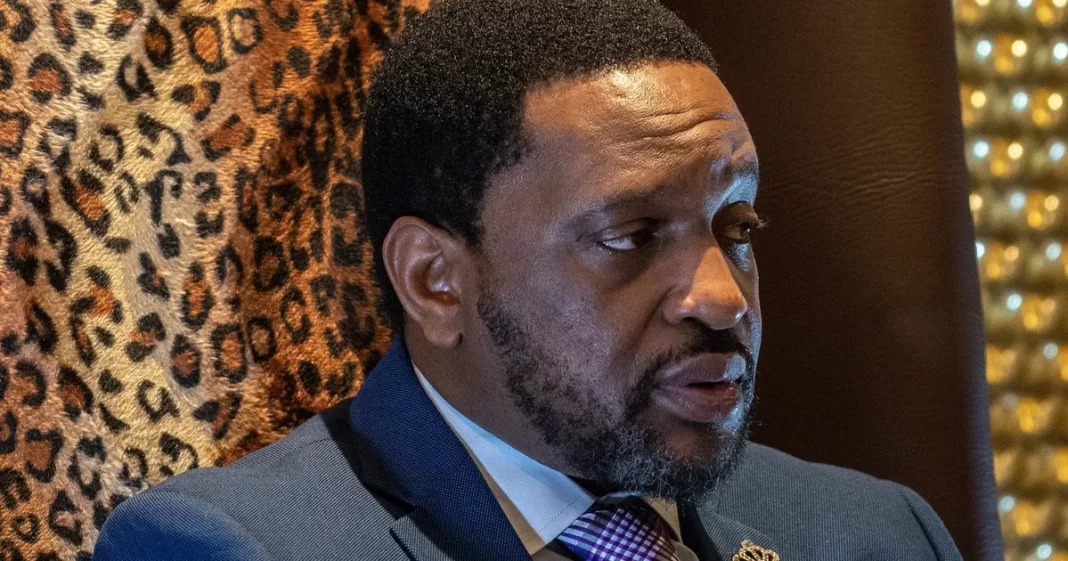
His crown-shaped lapel pin shimmered with gold and diamonds as he settled into a high-backed leather chair draped in a leopard-print fabric, keeping his guests standing until he began the interview.

The 47-year-old Misuzulu Zulu keeps himself like a king.

He is the son of King Goodwill Zwelithini, who died last year after a 50-year reign, and is a descendant of the family of King Shaka Zulu, whose bloody conquest to unify the Zulu kingdom two centuries earlier made him a mythical figure.

But Misuzulu’s claim as his successor has been strongly opposed. His father has left behind more than a dozen sons. And although Misuzulu has been blessed by many powerful members of the royal family as well as the President of South Africa, some of his relatives – including uncles, aunts and siblings – have deemed him unfit to lead him as a reckless playboy.

Now members of one of Africa’s most storied monarchies are caught in a fierce battle that threatens to disintegrate the family.

The two sons of the deceased king are now calling themselves kings. There have been numerous lawsuits, public humiliations and dramatic confrontations – all luring a country where an estimated 14 million Zulus make up the largest and most culturally influential ethnic group.

“I like to call it domestic terrorism – family domestic terrorism,” Misuzulu said in a rare news media interview, his first with a foreign outlet.
“The family is still deeply, deeply divided.”

The Misuzulu cattle are scheduled to enter the kraal—a Zulu ritual asking the next king to introduce the ancestors—on Saturday.
It is traditionally one of the last customs before the coronation.

Although the Zulu king has no official government powers, he still exercises real influence. He controls a vast swath of land belonging to the kingdom – slightly larger than Haiti.
He oversees the annual budget of $3.9 million that the government provides for the royal family. And he serves as the moral leader of the proud people.

All this gives him an influence that prompts politicians to shower him with gifts (especially around election time) and make him jealous of other South African kings.

“The voice of the king, for the Zulus, overrides any other voice,” said Mafumeli Ngidi, a lecturer in the Department of Historical Studies at the University of KwaZulu-Natal, the historical seat of the Zulu people. “People still bow down to the king.”

This succession is complicated by the Zulu custom of soap opera polygamy and by the fact that established traditions for passing on the crown, handed down orally, are not recorded in formal documentation. These changes have often generated conflict.

Zwelithini, who died at the age of 72, left behind six wives and at least 28 children. Misuzulu is the first child of his father’s third wife.

But he and his supporters within the family say his claim to power is straightforward. He argues that his mother, Queen Mantombi Dlamini Zulu, takes precedence over the king’s five other widows because she comes from the Swazi royal family.

His father was King Sobhuza II of Eswatini (formerly Swaziland), who died in 1982, and his brother is the current leader there – King Mswati III, Africa’s only absolute monarch. Her royal status means that her offspring take precedence in the line of succession, Misuzulu’s supporters argue. And because Misuzulu is her eldest child, she is the heir, he says.

Born in rural KwaZulu-Natal, Misuzulu moved to Eswatini at the age of 5. He returned to South Africa at the age of 11 and completed high school at an elite private institution. His family then forced him to attend university in the United States, he said, as part of a scholarship program for the Swazi royal family, which sends family members and some ordinary Swazis to study abroad. .

Once in South Africa, he lived a largely anonymous life as a business owner, negotiating contracts for a company that makes pipes.

Within a week, Misuzulu’s name as a successor began to surface publicly. His father called on his mother, Mantombi, to be the regent – or provisional leader – of the Zulu nation. This indicated to some that Zwelithini wanted one of her sons to succeed her. A section of the family is challenging the will in court, arguing that King’s signature was forged.

Among the most prominent early supporters of Misuzulu was the Prime Minister of the Zulu nation since 1954, Prince Mangosuthu Buthelezi. Buthelezi, 93, has arguably wielded more power than any other Zulu, including the king who founded the Inkatha Freedom Party, a Zulu nationalist political party.

In the weeks and months following Zwelithini’s death, Buthelezzi convened a series of family meetings in which Misuzulu emerged as the successor.

This led to the separation of many of Zwelithini’s siblings. The king’s two surviving brothers, Prince Mbonisi Zulu and Prince Vulindela Zulu, said in an interview that Buthelezzi sought to establish a successor he could control.

The brothers accused Misuzulu’s supporters of bypassing the traditional process for determining an heir.

And he confronted Misuzulu, demanding that he stop calling himself the king. He claimed that as the surviving siblings of the Zwelithini, they were the most senior royals and should be in charge of the process of selecting the next king – not the Buthelezzi and his allies.

The drama exploded in April 2021, when Mantombi, who had just been named provisional leader of the Zulu nation, died 48 days after the king.

Rumors swirled that she had been poisoned. Fingers point to Misuzulu’s biggest critics – Mbonisi and another brother, Princess Thembi Nedlovu. They held a news conference denying that they had killed her. (Mantombi died of natural causes, a consultant for Misuzulu said.)

A week after his mother’s death, Misuzulu upset his opponents when he arrived at her memorial service in traditional leopard skin regalia, surrounded by Zulu warriors singing a song reserved for a king. Some saw it as an arrogant display.

“It was a matter of stepping up to the plate,” said Misuzulu, soft-spoken and dressed in a crisp suit. The moment a king’s spirit leaves his body, he said, “A new king immediately takes over.”

That night, chaos broke out in one of the royal palaces during the reading of Mantombi’s will, to which Misuzulu was named heir. With television cameras going live, a member of the royal family interrupted the proceedings to object. Amidst the uproar, Misuzulu’s security drives him away.

The objector was a family member, who believed that the rightful heir was Zwelithini’s oldest surviving son, Zwelithini of Simakade. His lawyer, Johann Hamann, said he plans to file a lawsuit with evidence that senior members of the royal family had chosen him to assume the throne.

On the anniversary of Zwelithini’s death in March, rival factions of the family honored her with separate prayer ceremonies in different palaces.
He argued which ceremony had more attendance.

A few days later, President Cyril Ramaphosa officially recognized Misuzulu as the next king, the final legal impediment to the coronation under South African law governing traditional leaders.

Mbonisi – backed by 12 family members – filed a court application in early July to try to block the coronation.

In his court filing, Mbonisi made scandalous allegations that were detailed in the South African press. An article in the City Press newspaper in October claimed Misuzulu was a heavy drinker who gave birth to two cousins ​​and the children of one of the family’s domestic workers.

In interviews, Misuzulu acknowledged some of the basic facts of the article but said they were misunderstood.

A judge dismissed Mbonisi’s application in late July, clearing the way for Misuzulu’s coronation. But Misuzulu’s opponents are still struggling to thwart his ascension.

Prince Vulindela, a brother of the former king, said he would not attend the ceremony.

“Because,” she said, “there is no king.”

This story was originally published on nytimes.com.

More articles

LEAVE A REPLY

Please enter your comment!
Please enter your name here

Services Seta 2026

spot_img

Inside Education E-edition June 2026

spot_img

CATHSSETTA

spot_img

AVBOB STEP 12

spot_img

Inside Metros G20 COJ Edition

spot_img

JOZI MY JOZI

spot_img

QCTO

spot_img

Latest article



