Johnathan Paoli
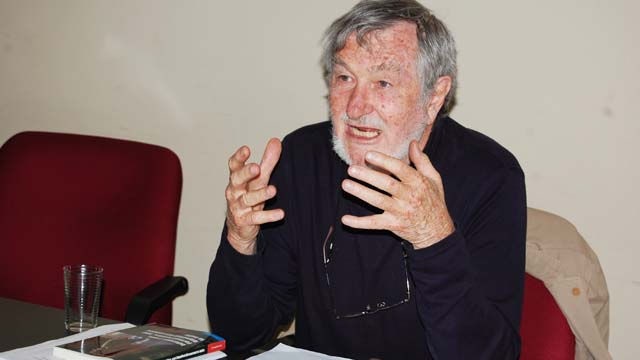
Professor Eddie Webster passed away at the age of 81 on Tuesday, with many saying that his legacy continues to inspire those who strive for a more just and equitable society.
Webster, a towering figure in South African sociology, dedicated his life to understanding and advocating for the rights of South African workers.
Born in 1942, Webster’s academic journey began at Rhodes University, followed by studies at Oxford and York universities. He earned a PhD from the University of the Witwatersrand (Wits), where he later became a Professor Emeritus.
His impact on South African academia is undeniable, and he is widely credited as being the pioneer of the country’s sociology of work and labor studies. His seminal work, Cast in a Racial Mould, remains a cornerstone text, analysing the intricate relationship between the labor process and the evolution of the South African labor movement. Beyond his scholarship, he was a passionate advocate for social justice.
Webster was a colleague and friend of the late anti-apartheid activist Rick Turner and his partner Foszia Turner-Stylianou at the University of Natal (Durban) in the early 1970s, and established the Institute of Industrial Education and the South African Labour Bulletin.
In December 1975 Webster was arrested under the Suppression of Communism Act and acquitted a year later for, inter alia, calling for the release of Nelson Mandela.
Webster was the Distinguished Research Professor at the Southern Centre of Inequality Studies and the founder and past director of the Society, Work and Politics Institute (SWOP) at Wits and the author of seven books and more than 120 academic articles.
The Minister of Trade, Industry and Competition, Ebrahim Patel today paid tribute to the sociologist and academic on Wednesday and said that Webster’s work inspired many young people to think in different ways about growth and fairness.
“Eddie came from a school of engaged intellectuals who saw injustice in the South African labour market and brought their skills to analyse the conditions of workers and to advocate for change. He was a man of enormous imagination and a commitment to working for a society characterised by fairness,” Minister Patel said.
INSIDE POLITICS