
- Advertisement -spot_img

Africa’s infrastructure plans stalled by weak execution, Ramokgopa warns

- Advertisement -spot_img

Must read

By Thapelo Molefe

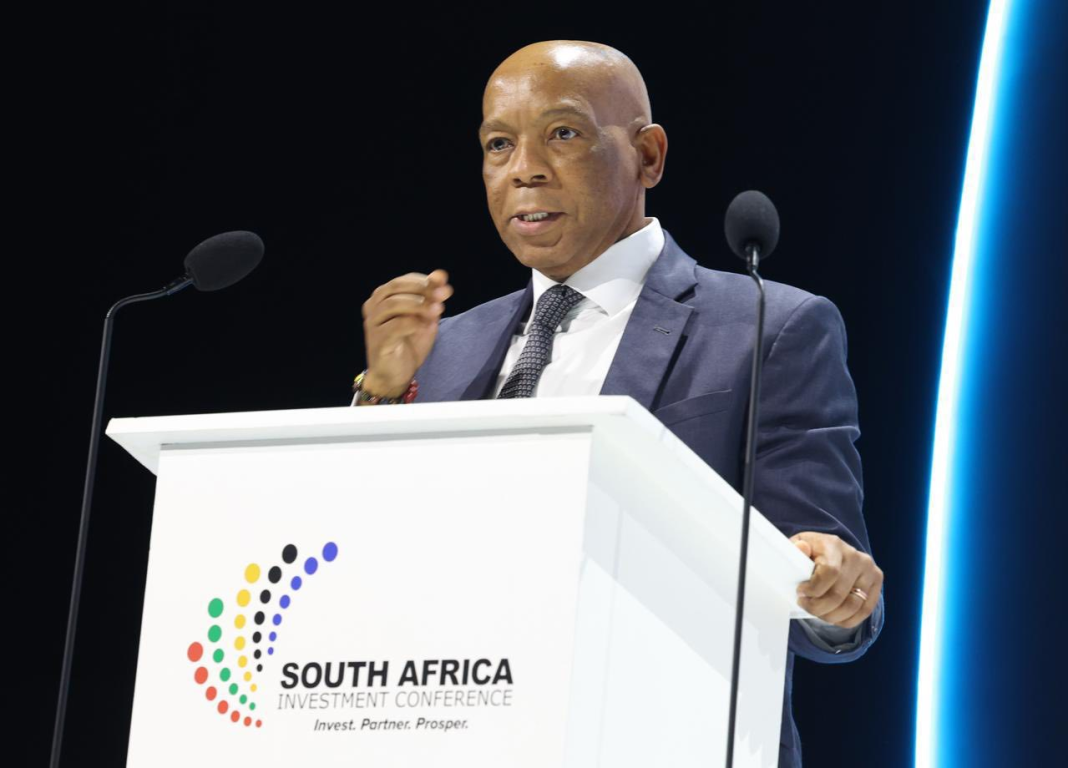
Minister of Electricity and Energy, Kgosientsho Ramokgopa, has warned that Africa’s infrastructure ambitions are being undermined by weak execution, despite detailed continental frameworks designed to drive industrialisation and trade.

Addressing the Fifth Ordinary Session of the African Union Specialised Technical Committee on Transport and Energy in Sandton on Thursday, Ramokgopa said the continent’s primary constraint is no longer planning, but implementation.

“The defining constraint before us is execution,” he said.

“Across both energy and transport systems, we have developed comprehensive frameworks. What remains limited is the capacity to implement them at scale.”

He cited persistent fragmentation across sectors, weak project preparation, and misalignment between continental frameworks and national priorities as key obstacles delaying infrastructure delivery.

His remarks come as Africa faces mounting pressure to modernise infrastructure to support economic growth, trade integration and industrial development.

Ramokgopa said the continent’s development is constrained by a dual challenge of energy shortages and inefficient transport systems, limiting both production and market access.

“Energy deficits limit production and industrial output. Weak transport systems limit distribution, market access, and trade integration,” he said.

More than 600 million Africans still lack access to electricity, while nearly one billion do not have access to clean cooking solutions.

At the same time, high transport costs and inefficiencies across ports, rail systems and border posts continue to raise the cost of doing business.

Ramokgopa said Africa requires between $130 billion and $170 billion annually to meet its infrastructure needs, but faces a financing gap of up to $108 billion.

He cautioned that closing the gap would require more than funding, calling for improved coordination across sectors.

“Infrastructure must not be developed in silos, but as a coordinated system that supports industrialisation, trade, and regional integration,” he said.

He stressed that energy and transport systems should be treated as a single economic platform, noting that ports, rail and logistics networks depend on reliable electricity, while energy systems rely on transport infrastructure to function effectively.

“When these systems are planned in isolation, inefficiencies are embedded into the economy. When they are planned together, costs decline, reliability improves, and productivity increases,” he said.

Ramokgopa highlighted the importance of cross-border infrastructure in unlocking the African Continental Free Trade Area, saying transport corridors and transmission interconnectors are critical for enabling trade and regional integration.

“Transport corridors are not simply physical routes. They are economic lifelines,” he said.

He called for modernisation of ports, strengthening of rail systems, and digitisation of logistics to improve efficiency and reduce delays.

On energy security, Ramokgopa said African countries must build resilient and diversified systems, supported by regional integration to reduce vulnerability to global shocks.

“Interconnected energy systems can improve reliability, optimise resource use, and reduce vulnerability to shocks,” he said.

He also urged a shift from exporting raw materials to building integrated industrial value chains, particularly in critical minerals.

“The model of extraction without beneficiation is no longer sufficient,” he said.

“Africa must move from extraction to processing, manufacturing, and participation in global value chains.”

Ramokgopa said flagship projects such as the Grand Inga Hydropower Project could play a central role in driving continental integration if properly linked to transmission networks and transport corridors.

He added that Africa must strengthen its financial institutions and increase participation of local firms in infrastructure development, while addressing the high cost of capital.

In closing, Ramokgopa called for a shift from commitments to measurable outcomes.

“We must move from measuring effort to measuring outcomes,” he said.

“Progress will not be defined by declarations, but by what we deliver.”

INSIDE POLITICS

More articles

LEAVE A REPLY

Please enter your comment!
Please enter your name here

AVBOB STEP 12

spot_img

Inside Education E-Edition

spot_img

Inside Metros G20 COJ Edition

spot_img

JOZI MY JOZI

spot_img

QCTO

spot_img

Latest article



