Johnathan Paoli
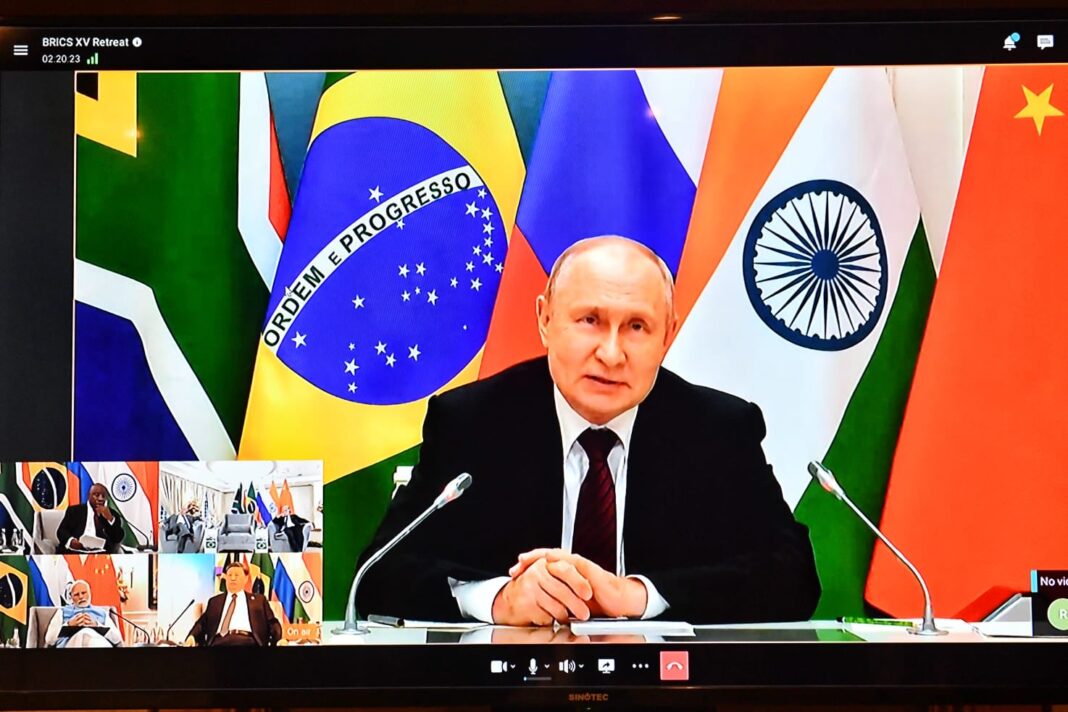
South African President and Chair of BRICS, Cyril Ramaphosa, announced on Thursday the new list of BRICS members, to take effect from 1 January 2024.
The Argentine Republic, the Arab Republic of Egypt, the Federal Democratic Republic of Ethiopia, the Islamic Republic of Iran, the Kingdom of Saudi Arabia and the United Arab Emirates have been invited to become full members.
This follows on a year-long process, deliberations and recommendations regarding consensus between the current BRICS member state leaders on membership expansion.
Speaking at the BRICS open session at the Sandton Convention Centre in Joburg on Wednesday, Indian Prime Minister, Modi, said India fully supports the expansion of BRICS membership to countries who have applied to join the block.
Chinese President Xi Jinping said the five Brics countries reached “broad consensus” on expansion.
Chinese Ambassador to South Africa, Chen Xiaodong, said that China has always been actively pushing for the strengthening of partnerships with other countries.
“As the world faces rising exclusiveness and protectionism, President Xi Jinping pointed out that BRICS is not an exclusive club or small circle, but a big family of good partners that is based on mutual assistance for a win-win cooperation,” Chen said.
Over 40 countries, including Iran, Saudi Arabia, United Arab Emirates, Argentina, Algeria, Bolivia, Indonesia, Egypt, Ethiopia, Cuba, Democratic Republic of Congo, Comoros, Gabon, and Kazakhstan have expressed interest in joining the forum with 20 of them putting in a formal application.
South Africa proposed expanding the membership of BRICS in 2018, but other members — notably Russia and China — were reluctant at the time.
One of the main thrusts coming out of last year’s BRICS Summit was the decision to start the process of expanding the membership to include countries who have applied.
Previous speculations suggested that China and Russia – BRICS’s two autocratic members, were pushing to expand membership, while democratic Brazil and India proved to be wary, with South Africa on the fence.
Russia’s strong impetus for expansion is believed to be driven largely by its isolation from the West because of its war with Ukraine, while China is seeking to boost its geopolitical clout amid increasing US-China tensions over Taiwan.
South Africa’s Minister of International Relations and Cooperation, Naledi Pandor, has been critical in working on the criteria for membership by drafting recommendations to be considered by the member state leaders during the Summit.
INSIDE POLITICS