
- Advertisement -

Confusion, contradictions, as Mkhwanazi outlines relationship with ‘Cat’ Matlala at Madlanga Commission

- Advertisement -

Must read

By Johnathan Paoli

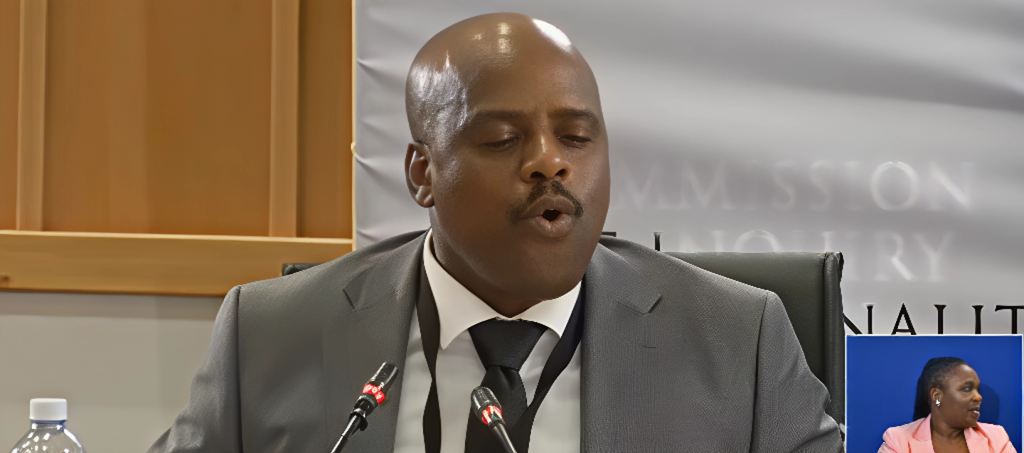
The Madlanga Commission’s marathon hearing on Wednesday ended with a strained exchange between evidence leader Advocate Mahlape Sello and suspended acting Ekurhuleni Metro Police Department (EMPD) deputy chief Julius Mkhwanazi.

Mkhwanazi’s testimony again raised questions about his role in the blue-lights saga and his dealings with businessman and alleged underworld figure, Vusimuzi “Cat” Matlala’s private security and medical companies.

Throughout a long day on the stand, Mkhwanazi struggled to offer coherent explanations for the memoranda of agreement he signed with Matlala’s security firm, CAT VIP Protection Services (Cat VIP), and medical company Medicare24.

Although he repeatedly referred to the documents as “proposed” and therefore not binding, Sello pressed him on the absence of any indication in the paperwork that they were drafts.

He eventually admitted that he had no authority to sign the documents at all and conceded that doing so was “wrong”.

Much of the morning centred on the Medicare24 agreement, which Mkhwanazi said he had understood as a proposal rather than a binding contract.

Under questioning, he conceded that the document was written entirely by Medicare24’s CEO, Mike van Wyk, though he could not recall what, if anything, he had contributed.

He insisted the arrangement would not have cost the EMPD or the metro money and said the company would benefit through positive publicity.

Sello challenged the logic of a private firm accepting substantial obligations, including registering its vehicles as EMPD resources and potentially fitting them with blue and red lights, purely for exposure.

When asked whether it was appropriate for a law-enforcement agency to allow itself to be used for advertising, he replied: “Life is more important than branding”.

Despite signing the Medicare24 agreement, Mkhwanazi appeared uncertain about its content when being questioned.

He attempted to defend the inclusion of blue-light access, emergency services functions, and even drug-testing authority for Medicare24, saying that EMPD officers were not trained to test seized substances, and that outside help would avoid mistakes in drug cases.

The commission stressed that allowing a private, unaccredited company to collect blood samples and test drug exhibits would compromise criminal cases and contravene established policing procedures.

Under pressure, Mkhwanazi conceded that private vehicles fitted with blue lights would be unlawful.

The commission then revisited the question of whether formal relationships existed between the EMPD and private companies before October 2021.

This point has become central to the inquiry.

Earlier testimony suggested that Mkhwanazi had long maintained questionable ties with private security operators, particularly Matlala.

However, after extensive questioning by Justice Mbuyiseli Madlanga, he admitted that no such formal relationships existed.

This admission stood in contrast with a 16 October 2021 letter in which he allegedly informed the city manager that the EMPD had an “endless working relationship” with Cat VIP and listed seven of its vehicles, some registered on the municipal fleet, as being deployed with the EMPD.

Mkhwanazi insisted the letter was forged and denied ever signing it.

Madlanga warned that if the letter were authentic, its contents “would be a lie”.

Further tension followed when Sello questioned him about the deployment of Cat VIP for the 2022 State of the City Address.

While he maintained that senior EMPD leaders were aware of Cat VIP’s involvement, Sello produced a letter from Police Chief Isaac Mapiyeye written the day after the event, requesting basic information about the private company’s deployment.

Even more damaging was internal correspondence, including an email chain on which he was copied, suggesting that operational commanders had no knowledge of Cat VIP’s participation.

Questions about his motivations for selecting Cat VIP deepened the concerns.

Although the city had 10 contracted security companies at the time, all with documented appointment letters, Mkhwanazi admitted he approached none of them.

Instead, he relied on what he described as assurances from his “members” that Matlala employed former SAPS Special Task Force members.

He claimed a “grave threat” to the event justified the decision, yet acknowledged he had never approached SAPS to request official support.

The commission also scrutinised the “operational plan” Mkhwanazi submitted as proof of Cat VIP’s sanctioned deployment.

Sello and Commissioner Sandile Khumalo raised doubts about its authenticity, pointing to repeated numbering errors and duplicated paragraphs, elements also found in the version Mkhwanazi has accused former deputy chief Revo Spies of forging.

Sello described the document as “highly suspect” and said the probability of identical errors occurring independently in two systems was “highly, highly improbable”.

Mkhwanazi is expected to continue his testimony on Thursday.

INSIDE POLITICS

More articles

LEAVE A REPLY

Please enter your comment!
Please enter your name here

AVBOB STEP 12

Inside Education Quarterly Print Edition

Inside Metros G20 COJ Edition

JOZI MY JOZI

QCTO

Latest article



