


By Johnathan Paoli
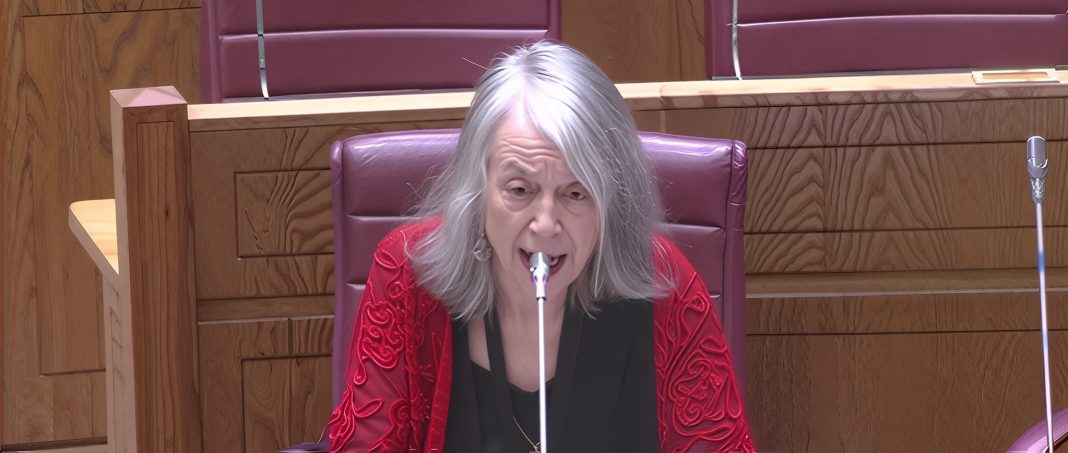
Human-rights researcher and academic Mary de Haas delivered damning testimony before Parliament’s ad-hoc committee into allegations of criminal justice system capture on Tuesday.
The eThekwini-based violence monitor described an alleged pattern of intimidation, psychological violence, and evidence fabrication by the Political Killings Task Team (PKTT).
De Haas painted the PKTT as an opaque and coercive unit that targeted both suspects and police officers who made politically inconvenient breakthroughs.
“The fabrication of evidence is a common theme. I’m hearing horror stories! Human suffering! Dreadful stuff!” she said.
Evidence leader and Advocate Norman Arendse (SC) led De Haas through her long history of documenting violence in KwaZulu-Natal, noting her early work exposing apartheid security police abuses in the 1970s and 80s; a period, she said, when her research frequently took her into shebeens and conflict-ridden communities to gather testimony.
De Haas said that her current work was a continuation of that era.
After 1990, she built extensive police networks while working with returning exiles and the Goldstone Commission.
She told the committee she still receives direct calls from community members and police officers, many of whom provide information about political killings, contested land claims, mining-related disputes, and the alleged failures of law enforcement.
Arendse said that her criticism of the PKTT was cited by suspended Police Minister Senzo Mchunu when he decided to dissolve the unit – a decision that triggered fierce responses from KwaZulu-Natal Police Commissioner Lieutenant-General Nhlanhla Mkhwanazi and former Police Minister Bheki Cele.
It was the attempts to disband the unit that led to the establishment of the ad hoc committee and the ongoing Madlanga Commission.
When Cele appeared before the committee last month and was confronted with De Haas’s claim that he wanted to kill her, he infamously replied that if he had wanted to do so, she would have been dead.
De Haas told MPs that much of her information comes from police insiders, including officers booted from early task teams in the late 1990s after they made breakthroughs in which political actors were implicated in crimes.
Some were later arrested on what she described as completely trumped-up charges.
De Haas said the PKTT’s methods inflicted emotional and psychological abuse on targeted officers and witnesses.
She recounted the story of a man allegedly coerced into providing false testimony.
She also accused the task team of routinely conducting warrantless searches, seizing phones without proper court orders, and relying on fabricated evidence.
One such whistleblower, National Coloured Congress leader Fadiel Adams, lodged the complaint that led to the arrest of Crime Intelligence head and PKTT commander Lieutenant-General Dumisani Khumalo.
De Haas said multiple sources, including the late Economic Freedom Fighters MP Philip Mhlongo, described Khumalo’s leadership at the Operational Response Service (ORS) as toxic.
She said she had been told he had little operational or detective experience, despite later being moved to head Crime Intelligence, a tenure she says collapsed within months amid a financial scandal.
De Haas also accused Cele and senior SAPS leadership of interfering in PKTT operations, alleging that Crime Intelligence supplied the weapons used to kill ANC Youth League leader Sindiso Magaqa and that the resulting report was handed directly to Cele.
She said suspended deputy national police commissioner Francinah Vuma made similar allegations in a protected disclosure.
The committee continues.
INSIDE POLITICS