
- Advertisement -spot_img

EFF warns SABC near collapse, demands R7bn bailout amid digital budget clash

- Advertisement -spot_img

Must read

By Thapelo Molefe

The Economic Freedom Fighters (EFF) has warned that the South African Broadcasting Corporation (SABC) is “nearing collapse” and urgently requires a R7 billion bailout.

The warning came during Parliament’s Budget Vote 30 debate on communications and digital technologies on Tuesday, where MPs clashed over funding, governance and the future of state-owned digital entities.

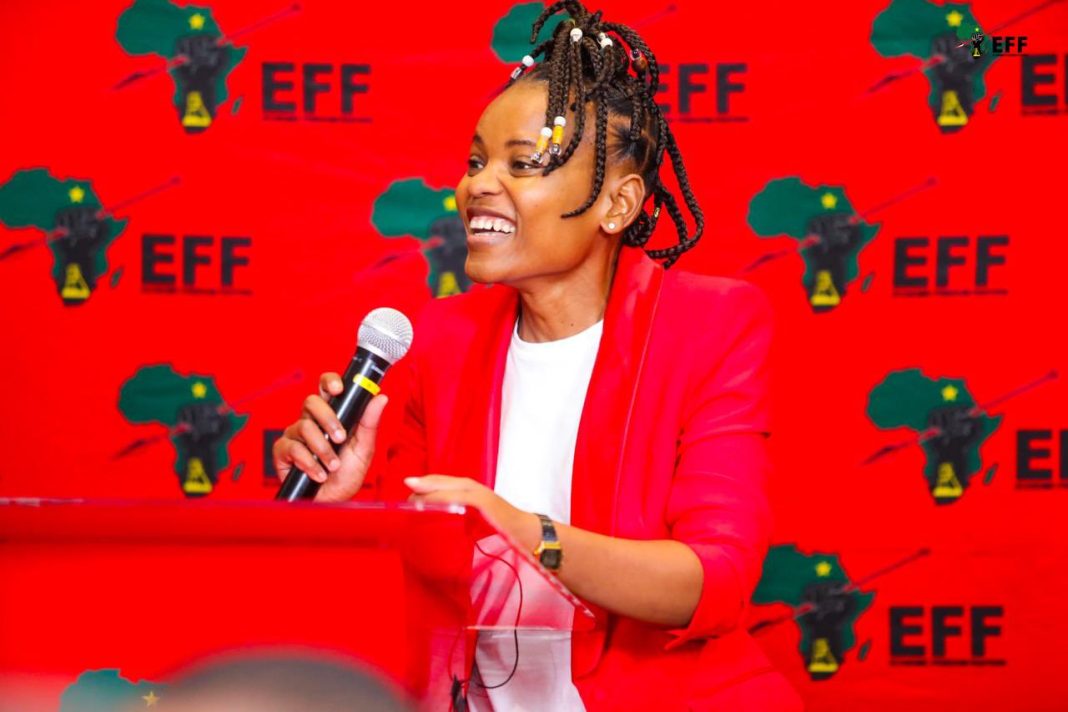
EFF MP Sixolise Gcilishe told the National Assembly that the public broadcaster was operating under an unsustainable financial burden and risked failing to fulfil its constitutional mandate.

“The SABC is not a luxury. It is a public asset and a constitutional necessity, yet it is being systematically depleted,” Gcilishe said.

She said the broadcaster faced an unfunded public mandate exceeding R7 billion over the medium term, warning that this could affect key coverage, including the 2026 local government elections.

“We demand an urgent, comprehensive and unconditional rescue plan for the SABC, including a R7 billion injection over the next three years,” she said.

Gcilishe also raised concerns over ageing infrastructure and unresolved funding models, accusing Parliament and the executive of failing to act with urgency.

She argued that the SABC should be directly funded by the state rather than relying on declining advertising revenue and television licence income.

“The SABC must be funded by taxpayers through the state, not through unrealistic dependence on unpaid television licences,” she said.

Her remarks followed Communications and Digital Technologies Minister Solly Malatsi’s opening address outlining government’s digital transformation agenda, which focused on expanding affordable connectivity, strengthening infrastructure and stabilising state-owned entities.

Malatsi said the department’s role was to create an enabling environment rather than directly control the digital economy.

“We cannot approach this role from a perspective of control but from a perspective of unlocking the potential of being online while protecting the vulnerable from abuse and exclusion,” he said.

He confirmed that the SABC had achieved its second consecutive unqualified audit opinion, describing it as “a remarkable improvement”, while acknowledging ongoing discussions with National Treasury on a new funding model.

Malatsi also revealed that government was considering partial privatisation models for some state-owned entities, saying full state ownership was “no longer sustainable” under current fiscal constraints.

Portfolio Committee chairperson Khusela Sangoni said Parliament had made “significant improvements” in oversight and welcomed progress on the SABC funding model and legislative reforms.

She said the committee had strengthened accountability mechanisms, including a digital tracking system for parliamentary resolutions, but warned that fiscal constraints were placing pressure on all entities.

“The mandate has not shrunk, the digital divide has not been addressed, and expectations have not reduced, yet the resources have,” Sangoni said.

Deputy Minister Mondli Gungubele focused on cybersecurity and digital inclusion, warning that increased connectivity also created vulnerabilities.

“A connected society is also a vulnerable society,” he said, citing risks such as cyber fraud, scams and online exploitation.

Gungubele said more than 40,000 South Africans had been trained in digital literacy programmes through the National Electronic Media Institute of South Africa (NEMISA).

Other MPs raised concerns across the digital ecosystem.

uMkhonto weSizwe Party MP Adil Nchabeleng called for a parliamentary inquiry into alleged failures in digital infrastructure projects in Limpopo.

ActionSA MP Malebo Kobe criticised governance failures in the department and its entities, accusing leadership of producing “hallucinated technology” policies following controversy over AI-generated references in policy drafting.

“This is not some harmless administrative error. It is a profound breach of trust,” Kobe said.

MPs from the Inkatha Freedom Party (IFP) and Patriotic Alliance (PA) supported the budget but raised concerns over implementation failures, infrastructure delays and weak oversight.

PA MP Ernest Hendricks said millions of South Africans remained disconnected despite ongoing broadband rollout projects.

“A connected South Africa is an empowered South Africa,” he said.

The Democratic Alliance (DA) and other speakers highlighted inefficiencies at entities such as the Post Office, SITA and broadband infrastructure agencies, warning that overregulation and procurement delays were slowing digital growth.

Despite broad agreement on the importance of digital transformation, the debate exposed sharp divisions over funding models, state ownership and the future of public broadcasting.

The EFF maintained that the SABC faced imminent collapse without immediate state intervention.

“The SABC is more than numbers on a balance sheet. It is the voice of our nation and we will not remain silent while that voice is muted,” Gcilishe said.

INSIDE POLITICS

More articles

LEAVE A REPLY

Please enter your comment!
Please enter your name here

CATHSSETTA

spot_img

AVBOB STEP 12

spot_img

Inside Education E-Edition

spot_img

Inside Metros G20 COJ Edition

spot_img

JOZI MY JOZI

spot_img

QCTO

spot_img

Latest article



