
- Advertisement -spot_img

Hawks investigator traces R300m cocaine haul to single customs seal in Aeroton case

- Advertisement -spot_img

Must read

By Johnathan Paoli

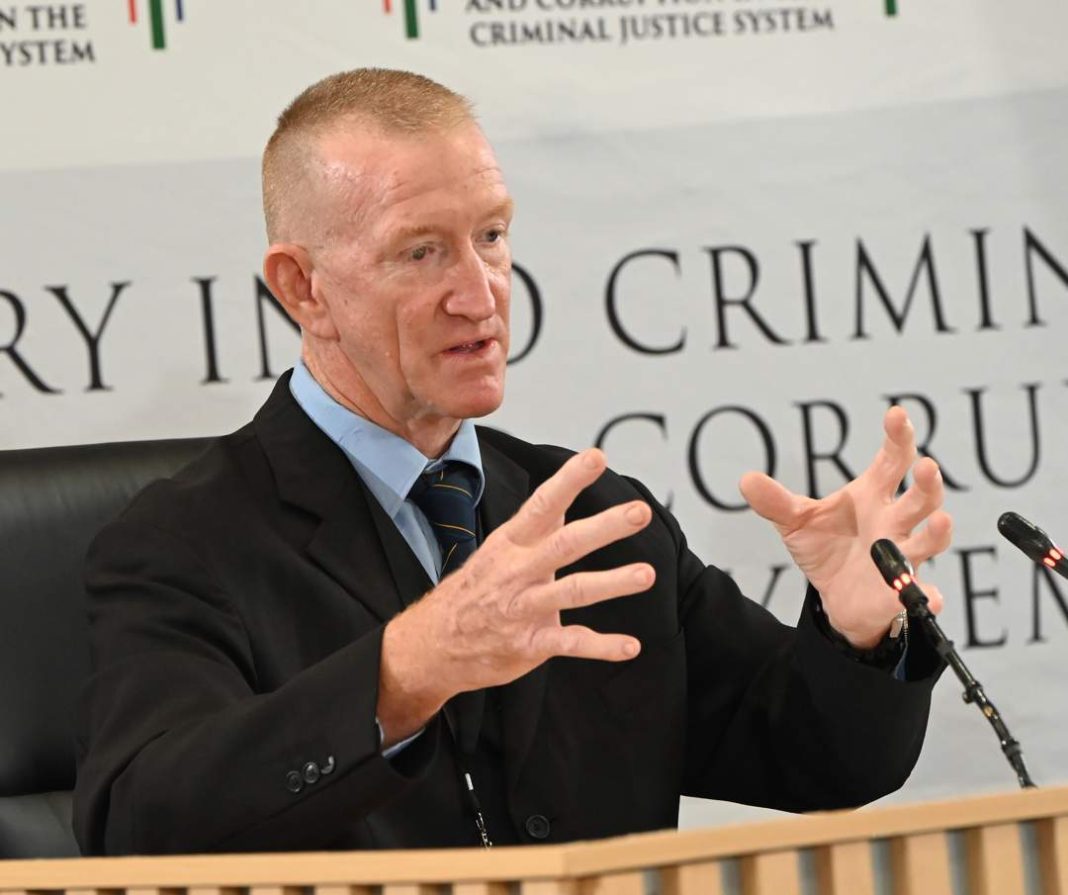
KwaZulu-Natal Directorate of Priority Crime Investigations (Hawks) investigator Warrant Officer Karl Sander told the Madlanga Commission that a single suspicious customs seal ultimately exposed what became one of South Africa’s largest cocaine seizures.

Sander said the discovery followed weeks of surveillance and the inspection of hundreds of shipping containers linked to an international drug trafficking syndicate.

Continuing his testimony on Monday, Sander detailed his role in what is known as the Aeroton case, which led to the seizure of about 750kg of cocaine, valued at roughly R300 million, concealed in a shipment of truck parts from Brazil.

“This was weeks of work. This is what I think the Commission has seen as the Aeroton case. This is the backbone of the Aeroton case,” Sander said.

He said investigators had been acting on intelligence that cocaine was being smuggled into South Africa via commercial cargo shipments from South America.

“We began stopping sugar, dog food, bone food, then car parts… So the commodity changed,” he said.

Sander said traffickers repeatedly shifted concealment methods as enforcement pressure increased, moving from sugar to dog food, then bone meal, frozen offal and eventually truck parts.

He said investigators eventually focused on containers linked to truck manufacturer Scania, which provided a legitimate high-volume cargo cover for the syndicate.

The breakthrough came after intelligence indicated that unidentified police officers had made enquiries about specific containers stored at a logistics yard.

Sander said he and another investigator went to the site, where the officers had already left. During inspection, one container stood out due to an irregular customs seal.

“The giveaway was the South American customs seal… it was different to the other four containers that I’d seized under the same shipment,” he said.

The container was opened in the presence of the logistics yard’s security manager, shipping representatives, Sander and senior Hawks officers, where investigators immediately suspected a major cocaine shipment.

Sander said the discovery triggered a large-scale crime scene response involving forensic and specialised units.

He described a “rip-on, rip-off” method used by traffickers to conceal drugs within legitimate cargo, involving removal and replacement of seals to avoid detection.

“The procedure is where they put them in the bags… they remove the narcotics,” he said.

Sander also told the commission a duplicate customs seal was found inside the container, underscoring the sophistication of the syndicate.

Gauteng Hawks Coordinator of Narcotics Colonel Francois Steyn previously told the commission that only 579.4kg of the cocaine was accounted for at the SAPS Forensic Science Laboratory, leaving 136.46kg unaccounted for. He said some bags showed signs of being cut open.

Steyn said the “rip-off” trafficking method often depends on corruption within law enforcement or customs structures, and warned that South Africa’s ports and borders remain vulnerable to international trafficking networks.

The commission adjourned and Sander is expected to continue his testimony when proceedings resume on Tuesday.

INSIDE POLITICS

More articles

LEAVE A REPLY

Please enter your comment!
Please enter your name here

Inside Education E-Edition

spot_img

CATHSSETTA

spot_img

AVBOB STEP 12

spot_img

Inside Metros G20 COJ Edition

spot_img

JOZI MY JOZI

spot_img

QCTO

spot_img

Latest article



