
- Advertisement -spot_img

IPID’s Maphosho questioned over handling of Aeroton cocaine investigation

- Advertisement -spot_img

Must read

By Johnathan Paoli

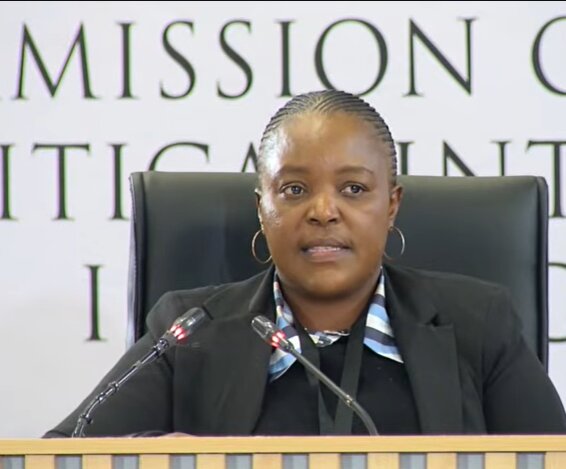
Independent Police Investigative Directorate (IPID) Assistant Director of Investigations Zelda Maphosho has raised concerns about the conduct of police officers involved in the 2021 Aeroton drug bust while facing intense scrutiny from commissioners over shortcomings in her own investigation.

Appearing before the Madlanga Commission of Inquiry on Monday afternoon, Maphosho testified about the watchdog’s probe into allegations that senior police officers and investigators had defeated the ends of justice following the seizure of 751 kilograms of cocaine from a truck in Aeroton, south of Johannesburg, in July 2021.

Central to her evidence were questions surrounding the role of Tumelo Nku, who was described in IPID documents as an informer despite concerns that his status had never been properly verified.

Commission chair Mbuyiseli Madlanga repeatedly questioned why IPID accepted Nku’s claim that he was an informer without independently confirming it, with Maphosho acknowledging that the information had not been verified.

“I am stating this because that is the information that he gave us. However, the information was not verified because he mentioned a handler as a certain General who already passed on,” she told the commission.

The inquiry also examined concerns about how certain police officers came to be involved in the operation.

Maphosho said there were unanswered questions regarding how Gauteng Traffic Police Deputy Chief Director Samuel Mashaba and others knew about the shipment.

Evidence leader Advocate Tebogo Mosikili noted that concerns about how Mashaba and other officers knew about the Aeroton drug bust

The commission heard that Nku had travelled to Durban before the truck carrying the cocaine left for Gauteng and later followed the vehicle to Johannesburg.

Madlanga asked whether Maphosho’s conclusions would have changed had she known these details during the investigation.

“If they had that kind of information, they would have looked at things differently,” Maphosho said.

The commission was also shown WhatsApp communications between Nku and Mashaba discussing the movement of the truck carrying the cocaine consignment.

Maphosho further testified that she believed some officers at the scene may have known more about the origins and intended recipients of the drugs than they disclosed.

She told the commission she felt that “some police officers in the Aeroton drug bust knew who the owner of the drugs was but did not want to disclose it.”

However, commissioners repeatedly challenged her conclusions, arguing that many of her assumptions were not supported by evidence gathered during the investigation.

Commissioner Sesi Baloyi criticised IPID for failing to test key allegations made by complainants.

“Those were the complainants. And as IPID we don’t investigate complainants,” Maphosho said.

Baloyi disagreed, arguing that investigators should have verified the allegations before drawing conclusions.

Madlanga similarly expressed concern about the extent to which IPID relied on statements from complainants without conducting further verification.

The commission also focused on the charges of defeating the ends of justice that were opened by Mashaba, SAPS National Intervention Unit officer Warrant Officer Steve Phakula and Commander of the Crime Information Management and Analysis Centre (CIMAC) at Zonkizizwe Police Station, Warrant Officer Marumo Magane after their own arrests following the drug seizure.

According to Maphosho’s statement, the officers alleged that they had discovered the drugs and arrested individuals linked to the shipment, only to be arrested themselves when Hawks members arrived at the scene.

Yet commissioners questioned whether the evidence presented actually supported allegations of defeating the ends of justice.

Madlanga said he struggled to understand what specific conduct amounted to obstruction of justice.

Maphosho argued that failures to properly process the crime scene, including the handling of evidence and the deployment of specialist units, could amount to defeating the ends of justice.

She said a canine unit should have conducted a comprehensive search of the scene and that further efforts should have been made to identify the true owners of the drugs.

Madlanga appeared unconvinced, remarking that he did not believe several of the actions cited by IPID necessarily demonstrated obstruction of justice.

Baloyi also suggested that IPID should have conducted more extensive investigations before concluding that a case of defeating the ends of justice existed.

The commission further heard that IPID encountered resistance while seeking access to the Hawks docket relating to the case.

Maphosho testified that repeated requests to investigating officer Lieutenant-Colonel Nkoana Sebola and senior Hawks officials for the docket were unsuccessful.

“The police were withholding the docket and it was like they were hiding something,” she said.

The commission adjourned, with Maphosho expected to continue her evidence on Tuesday.

INSIDE POLITICS

More articles

LEAVE A REPLY

Please enter your comment!
Please enter your name here

Inside Education E-Edition

spot_img

CATHSSETTA

spot_img

AVBOB STEP 12

spot_img

Inside Metros G20 COJ Edition

spot_img

JOZI MY JOZI

spot_img

QCTO

spot_img

Latest article



