
By Johnathan Paoli
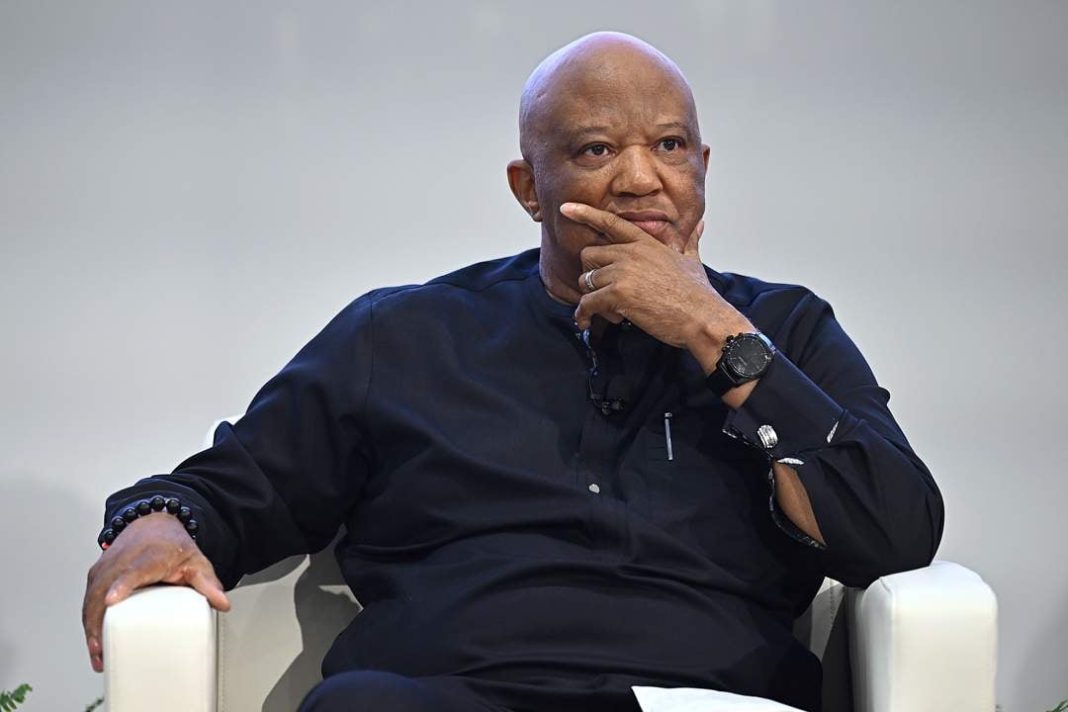
President Cyril Ramaphosa’s Special Envoy to North America, Mcebisi Jonas, says South Africa must guard against foreign policy being influenced by interest groups with narrow agendas.
Speaking at the Kgalema Motlanthe Foundation seminar in Sandton on Tuesday, Jonas called for a unified national agenda and warned against allowing foreign policy decisions to be dictated by “business cabals” or ideological nostalgia.
Jonas noted that while Africa faces growing external pressures — including rising protectionism and the potential erosion of trade preferences under African Growth and Opportunity Act (AGOA) — the continent must respond with greater regional integration, economic diversification, and a clear, pragmatic diplomatic strategy.
“We cannot allow foreign policy to be captured by interest groups with their own agendas,” said Jonas.
“South Africa must identify its national interest and pursue partnerships based on that, whether with China, the US, the EU, or BRICS. Africa has not fared well in the geopolitical shocks of the last decade. The narrative of ‘Africa Rising’ has faltered. We need to rethink development by prioritising intra-African trade and value addition.”
The seminar, held under the theme “Navigating Geopolitical Realities: South Africa’s Position in a Shifting Global Order,” explored growing global economic instability, looming U.S. tariff hikes, and the uncertain future of the AGOA.
The gathering also took place against the backdrop of the Trump administration’s impending tariff increases, set to take effect on 1 August.
These are expected to hit African exports, particularly in the agricultural and automotive sectors, especially hard.
Jonas painted a complex picture of Africa’s economic outlook.
While Africa’s youthful and growing population—projected to reach 2.5 billion by 2050—offers unprecedented potential, the continent remains trapped in debt distress, weakened by low commodity prices and fragile global trade dynamics.
Quoting the Jubilee Commission report, Jonas noted that rising interest rates and a shrinking aid environment were deepening Africa’s vulnerabilities, as debt burdens crowd out investment in infrastructure, health, and education.
He praised progress made under the African Continental Free Trade Agreement (AfCFTA), but said the time had come for bolder action.
“We must intensify regional integration and resist another resource scramble that causes environmental and political harm,” he said.
While acknowledging China as a vital investor in African infrastructure, Jonas warned that the relationship increasingly resembles “colonial-style” dependencies, particularly as China becomes a dominant creditor to African states.
“China’s investment-driven model has propped up commodity prices, but it also undercuts Africa’s own industrialisation by flooding global markets with cheap goods,” he said.
He further noted that China’s infrastructure-led growth model, while beneficial in some cases, has contributed to deindustrialisation across parts of Africa, with local manufacturing unable to compete.
Jonas called on South Africans to unite behind a common foreign policy vision rooted in the Constitution, the Freedom Charter, and democratic values.
“Our foreign policy must reflect who we are as a nation committed to peace, human rights, and economic justice. But we also need consensus around our national identity and interests, especially during times of global uncertainty,” he said.
He made a pointed observation about South Africa’s unique social fabric.
“We are the only country on the continent where a significant white population lives peacefully under democracy. That is something to be treasured and preserved. But we need serious, honest dialogue about the role of the white elite and white capital in driving transformation,” he said.
Jonas argued that transformation has been overly driven by the state, while the private sector—particularly the white business elite—has not been meaningfully incorporated into national reform conversations.
South Africa’s position as the most developed economy in sub-Saharan Africa, its BRICS membership, its role in the African Union, and its G20 chairmanship in 2025 offer strategic leverage, Jonas noted.
“We must position ourselves as a middle power, a stable entry point into Africa for global investors. But agility in diplomacy requires clarity at home. We cannot be locked into Cold War-style blocs. We need strategic non-alignment grounded in our own development goals,” he said.
Jonas also stressed the importance of rebuilding global trust in South Africa’s governance and financial systems, describing the country’s progress in exiting the Financial Action Task Force Africa Joint Group grey list as a positive step.
He concluded with a series of proposals for repositioning South Africa in the global economy.
These included intensifying African integration—especially among large economies like Nigeria, Kenya, Egypt, and South Africa—and championing Africa’s agenda in forums like the G20 and WTO, particularly on issues such as climate finance, debt relief, and vaccine equity.
In addition, he proposed expanding trade ties with Asia, the Middle East, and Latin America, while safeguarding critical links with the U.S., EU, and UK; creating a “G7 of Africa” among the continent’s major economies to strengthen political and economic coordination; and positioning South Africa as the preferred platform for ethical investment into Africa.
“We have to rise above factionalism, above disinformation, and above self-interest. What the world needs and what South Africans need is principled, honest leadership that understands the stakes and seizes the moment,” he said.
INSIDE POLITICS





