


By Thebe Mabanga
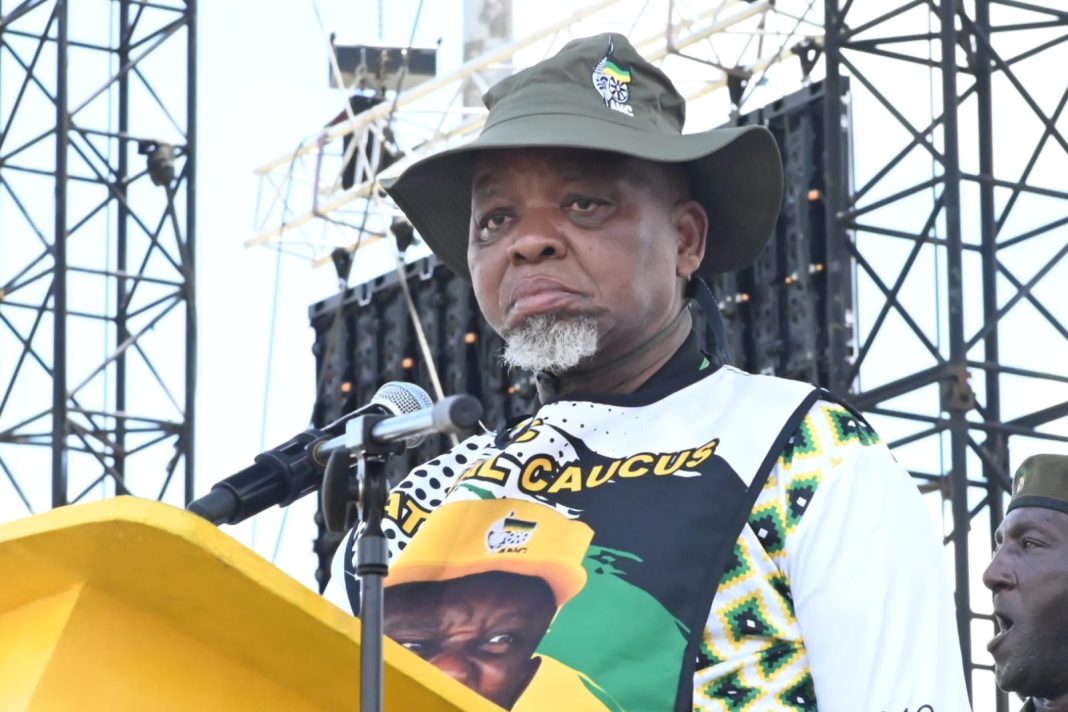
Mineral Resources and Energy Minister Gwede Mantashe has come under fire over remarks he made late last year regarding mining rights on land held under traditional authorities.
The comments were made during an interview with Newzroom Afrika, in which Mantashe argued that minerals found on communal land do not belong to traditional leaders or local communities but to the state, acting on behalf of all South Africans.
In the same interview, Mantashe also drew criticism for suggesting that high unemployment was partly driven by an expectation among some South Africans that government should apply for jobs on their behalf. ANC Youth League president Collen Malatji was among those who publicly rebuked the minister over the remarks.
On the issue of mining rights, Mantashe was responding to a question about how communities could benefit from minerals located on communal land. He said the minerals “do not belong to those chiefs and those communities; they belong to the state on behalf of the people as a whole”.
Those comments have now prompted a backlash from a group loosely describing itself as “concerned amakhosi”, who accuse the minister of undermining traditional leadership and land ownership in rural South Africa.
In a statement, the group said Mantashe’s remarks amounted to “a choreographed and sustained attack on traditional leadership and the land ownership of Black people in rural South Africa”, adding that his comments were “unwarranted, unlawful and unsubstantiated, lacking in both fact and law”.
The group further argued that it was “telling” that Mantashe “would never have applied such logic to mineral rights in Orania”.
According to spokesperson Thami Makhubalo, the statement is endorsed by more than 50 traditional leaders from mineral-rich provinces including Limpopo, North West, the Eastern Cape and KwaZulu-Natal.
Referring to Mantashe as a GNU minister, the group accused him of seeking “to repeat history by denying traditional leaders the right to protect the economic interests of their people” and of portraying traditional leaders as “rogue actors”.
“The land under the custodianship and stewardship of royal and traditional leadership — through their traditional councils as statutory bodies and organs of state — is the last line of defence for economic emancipation,” the statement said.
The group also accused Mantashe of misleading the public by ignoring the objectives of the Mineral and Petroleum Resources Development Act (MPRDA) of 2002.
While the Act vests mineral rights in the state — which issues prospecting rights and 30-year mining licences — the chiefs point to its stated objectives of advancing local and rural development and uplifting host communities. They specifically cited Section 104 of the Act, which provides for preferential prospecting rights for lawful occupiers of land where minerals are found, a principle they say has been affirmed by the Constitutional Court.
“The minister’s comments were a misrepresentation meant to discourage communities from claiming an interest in their ancestral lands,” the statement said. “He seemingly wishes for them to abandon their land and migrate to cities so that mineral-rich communal land can be sold at its real value to preferred capitalist interests. It is shocking to witness such behaviour in 2026.”
While the statement claims the signatories are traditional leaders “across the country”, Makhubalo had not confirmed the exact number of leaders involved or identified a formal leadership structure for the group.
INSIDE POLITICS