
By Akani Nkuna
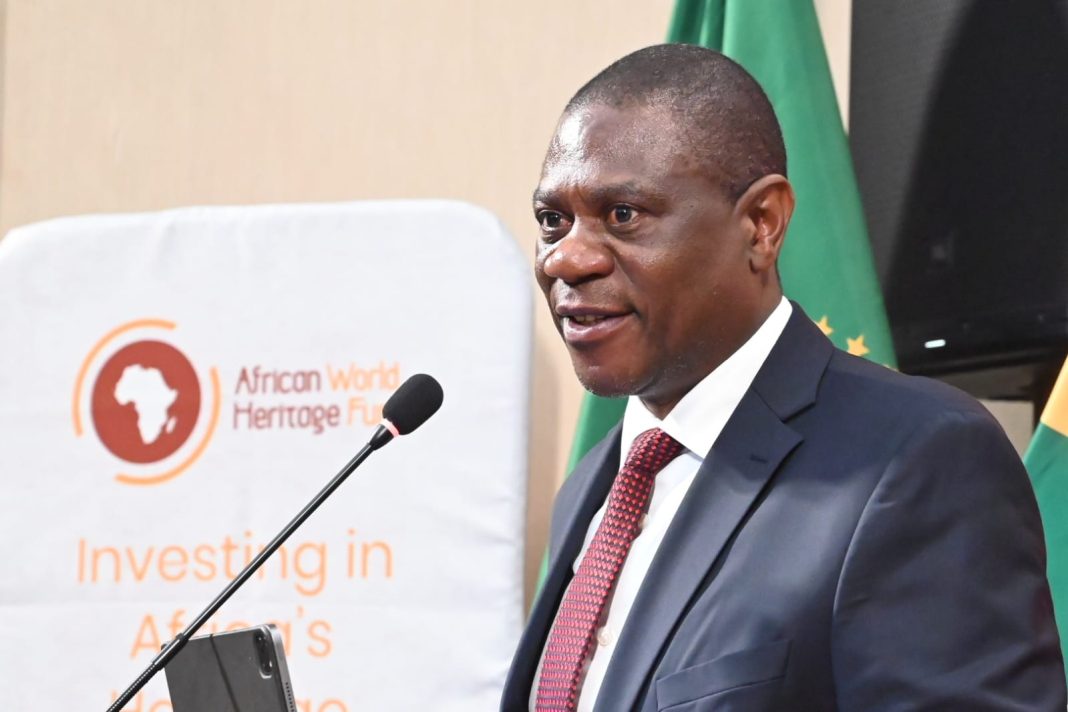
Deputy President Paul Mashatile on Tuesday said cultural and natural heritage should be treated as a key economic sector, not confined to preservation, but integrated into development, investment and sustainability frameworks.
Mashatile was speaking at the commemoration of the 10th African World Heritage Day held at the Development Bank of Southern Africa (DBSA) in Midrand, Johannesburg, which also marked the 20th anniversary of the African World Heritage Fund.
“Heritage cannot exist in isolation… It must speak the language of investment, sustainability and economic growth,” he said. “Let me be clear: heritage is an economic sector.”
He said unlocking the sector’s value required aligning conservation with economic planning and placing communities at the centre, supported by partnerships between government, development finance institutions and the private sector.
African World Heritage Day, proclaimed by UNESCO in 2015, aims to raise awareness of Africa’s cultural and natural heritage and promote preservation and public engagement.
Mashatile said heritage drives tourism, creates jobs and supports local businesses, adding that well-managed and sustainably financed sites can diversify local economies and enhance Africa’s global competitiveness.
He said the African World Heritage Fund had helped bridge the gap between preservation and economic planning over the past two decades through partnerships across sectors.
“The African World Heritage Fund reflects Africa’s transition from dependency to ownership, from marginalisation to leadership. It affirms that Africa will no longer wait to be counted, but will take responsibility for defining its place in the global narrative,” said Mashatile.
“When we launched the Fund twenty years ago, we planted a seed. Today, we can say with confidence that it has taken root and begun to grow. But like any tree, it requires continued care, nourishment, and protection to flourish.”
Mashatile said that since the establishment of the African World Heritage Fund, participation by African States Parties in the World Heritage Convention has increased significantly.
Mashatile cited growth in African World Heritage Sites from 113 to 154 and increased participation by African states in the World Heritage Convention.
He said more than $20 million had been invested in capacity-building, with thousands of professionals trained, and communities, women and youth increasingly included in heritage governance.
“Over US$20 million has been invested in heritage capacity-building. Thousands of professionals have been trained. Communities, women, and youth now play a central role in heritage governance,” he said.
He called for renewed efforts to strengthen the fund, including mobilising its $25 million endowment and expanding partnerships to maximise its impact.
“History will judge us on how well we protect what has been entrusted to us, and on whether we have succeeded in passing it on—stronger and more vibrant to future generations,” he said.
“On this African World Heritage Day, as we celebrate twenty years of the African World Heritage Fund, let us reaffirm our shared responsibility to safeguard Africa’s heritage.”
INSIDE POLITICS





