


By Thapelo Molefe
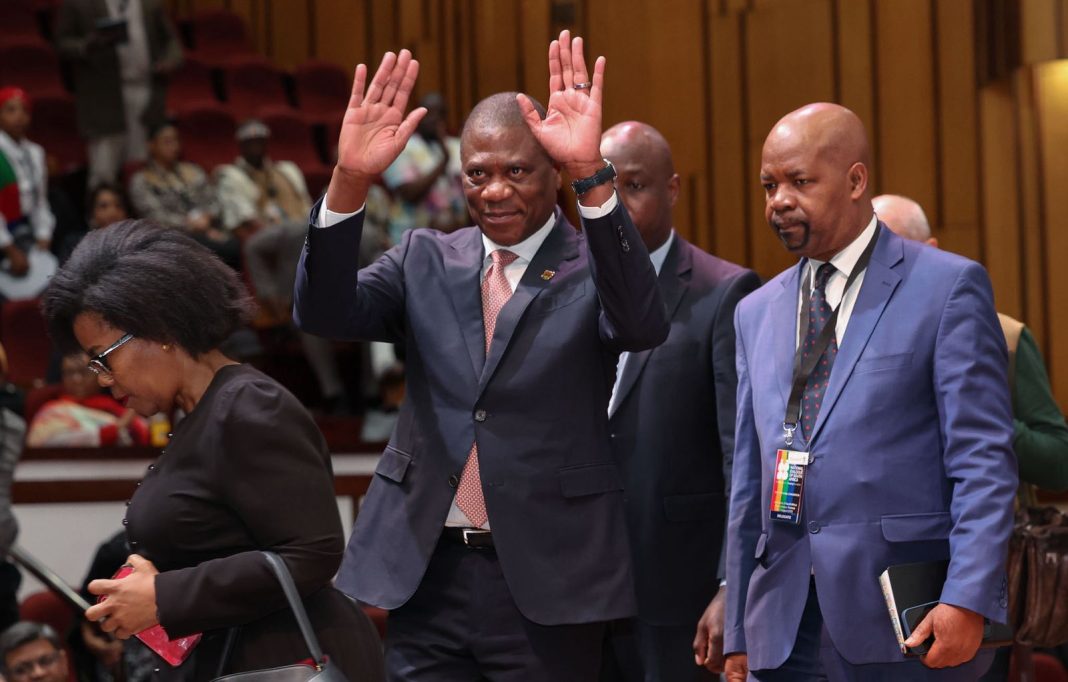
Deputy President Paul Mashatile has been accused of disrespecting citizens after he abruptly left the National Convention of the National Dialogue when the issue of corruption and accountability was raised during the presentation of the citizen-led road map.
His exit triggered outrage and raised doubts about government’s willingness to confront the very crisis the convention was meant to address.
Delegates said Mashatile’s departure symbolised the state’s avoidance of accountability.
“When suddenly the accountability and corruption [issue came up], the Deputy President is leaving with his crew, no explanation, no whatsoever. In a way, I feel like he doesn’t even respect what we are doing right now,” said Nelly Kgoedi from the Phakama Ndoda Foundation.
She said the leaders in the Government of National Unity were not interested in the process.
“At the end of the day, they know the whole government is a scam. It’s like a fake pastor coming and saying, people, you’re going to be saved, and then they don’t give us.”
Human Rights Institute of South Africa director Corlett Letlojane said Mashatile’s exit struck at the core of why citizens had gathered.
“The reason why we are here in the first place is because of the problems of corruption, the problems of institutions of democracy that are not functioning well, that are supposed to be doing their work independently, without fear of reprisals,” she said.
Letlojane warned that by walking out, Mashatile undermined the trust in the process and left delegates feeling exposed.
“It worries me that am I being taken seriously? Am I safe? Can I go back to my community and speak about these things? Or will I have someone monitoring me because maybe I angered, we angered the deputy president?” she asked.
She insisted leaders that leaders should be present and give reassurances.
“I needed to see the deputy president endorsing and rising up and say, I’m not leaving you alone. I’m not behind. I am with you. Thank you for raising this. You are protected.”
Nomalanga Ngwenya of Sonke Gender Justice said delegates had sacrificed their time, even on weekends, to engage with the government in good faith only to be let down.
“It was the expectation of all attendees that when a meeting is called by the president to listen to the nation’s requests, they would really take the time to sit down and listen… Of course it was an issue. It was an issue inside, and people articulated that they were unhappy,” she said.
For others, Mashatile’s conduct epitomised a leadership that dodges accountability.
“We have leadership that has matured. We are over 30 years in government. How long are we going to be duck and diving? People are no longer interested. We can see you. We can see who’s doing what,” said Letlojane
Mashatile’s office, however, pushed back against claims that he had abandoned the process.
His spokesperson Keith Khoza said the deputy president stepped out to meet a group who felt excluded.
“Deputy president stepped out of the national convention to meet with the Khoi-San leaders who felt excluded. The deputy president in government leads the Inter-Ministerial Task Team on Traditional Leadership and Khoi-San, as well as land and rural development,” Khoza explained.
He stressed that Mashatile “was working with the minister of Cogta” at the time and had since returned.
“The deputy president has since returned to the plenary and will remain in the plenary till the end of the second day of the national convention.”
The anger over Mashatile’s walk-out was compounded by growing frustration that citizens’ voices were being erased in the convention’s report back sessions.
Ngwenya told the room that some of their contributions were absent from the official presentation.
“My voice was not in that presentation. As much as they’re saying, these were your voices, our voices were not there… I will not be comfortable with that being the report that comes or that is published on our behalf,” she said.
Kgoedi accused organisers of cherry-picking.
“Mpumalanga’s voice was never heard… They have chosen the voices that they wanted to. So, what report back are they giving? There’s no way forward. We’re just stuck in one place,” she said.
Others demanded transparency saying that the rough documents and notes that were taken in the sessions and they needed to be on a public online platform, so people could see the truth of what was spoken in those groups.
“We need to remind ourselves all the time that we are here because of collapse. Structures of the civil society, government institutions and corruption is one of the cancerous problems that we are facing,” Letlojane said.
The dialogue, billed as citizen-led, ended with many questioning whether the government was serious about confronting corruption or whether Mashatile’s brief walk-out, regardless of his reasons, signalled that when accountability was demanded, leaders would rather leave the room than face the people.
INSIDE POLITICS