


By Levy Masiteng
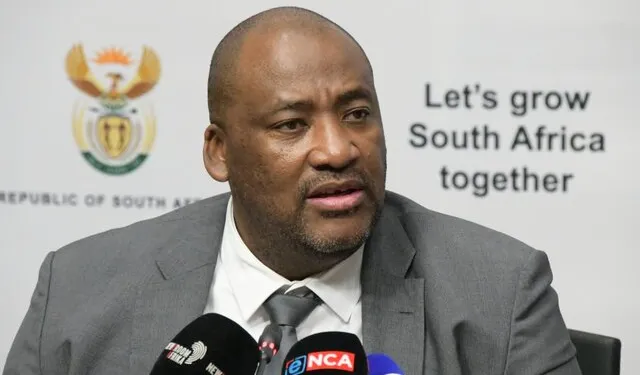
Minister of Sport, Arts and Culture Gayton McKenzie has hit back at what he described as “misinformation, misdirection and insult” following his decision to cancel the Department of Sport, Arts and Culture’s (DSAC) working agreement with Art Periodic for South Africa’s participation at the 2026 Venice Biennale.
McKenzie insisted that no government funding was withdrawn and that the move was necessary to protect the country’s sovereignty and reputation.
In a media statement, he said reports suggesting that DSAC had pulled funding from the exhibition were incorrect.
“It is incorrect to report that DSAC has withdrawn any funding from Art Periodic in staging an exhibition at the 2026 Venice Biennale,” McKenzie said.
“The agreement between DSAC and Art Periodic was to make our exhibition space available to Art Periodic to promote the work of a South African artist or artists at the exhibition, with the rental of space at the South African Pavilion in Venice already having been paid for.”
He said that public resources had already been invested before Art Periodic entered the picture, and that the organisation’s role was to raise private-sector funding to stage the exhibition.
The controversy arose after it was brought to his attention that a foreign country had allegedly undertaken to fund South Africa’s exhibition.
“However, when it was brought to my attention that a foreign country had allegedly undertook to fund South Africa’s exhibition, this was raised as a concern with Art Periodic, who clarified that – according to their understanding – this foreign country had actually undertaken to purchase the artworks concerned following the conclusion of the Biennale,” McKenzie said.
He added that it was being alleged that South Africa’s platform was being used “as a proxy by a foreign power to endorse a geopolitical message about the actions of Israel in Gaza”.
“This foreign country has its own resources, so why not rent its own space and fund its own message to convey its feelings about Israel and Gaza?” He asked.
McKenzie said that South Africa already has an official and clearly articulated position on Israel and Gaza, and that he was careful not to conflate his personal political views with those of the state.
“I do not use the ministry in a manner that runs counter to the position of the state,” he said.
“No censorship has been exercised either, but I retain my discretion as the Executive Authority of the Department to promote South African art and artists, and to be wary of artists being paid to become involved in geopolitical narratives that have the potential to cause unneeded division and bring DSAC and my ministry into disrepute.”
McKenzie also took aim at artists and media coverage surrounding the issue, calling on those involved to be transparent.
“The artists involved in this must come clean about who was paying for this. Even the Daily Maverick journalist [who wrote about this] was told about this concern, but never mentioned it in his article, presumably because it did not favour the narrative that he was framing against me.”
DSAC entered into a working agreement with Art Periodic in November last year, to manage and curate South Africa’s presence at the 2026 Venice Biennale after the department had already secured and paid for the pavilion space.
According to the department, the Art Periodic was expected to fundraise independently, primarily from South African private sources.
The relationship broke down in early January after allegations emerged that a foreign state was financially involved in the project, raising concerns within the department about indirect foreign messaging being channelled through a national platform.
McKenzie said that allowing South Africa’s pavilion to be used for other countries’ agendas would open the door to an unworkable situation.
“If our platform is to instead be used by other countries to push their own agendas, then we should give all countries a chance to gain access to our platform and have an equal opportunity to spread their messages,” he said.
“That, however, would be insanity.”
INSIDE POLITICS