


By Staff Reporter
The National Union of Metalworkers of South Africa (NUMSA) has welcomed the signing of a new above-inflation wage agreement in the auto manufacturing sector, concluding a tense round of negotiations that brought the industry to the brink of a national strike across all seven Original Equipment Manufacturers (OEMs).
The settlement, reached with the Automobile Manufacturers Employers’ Organisation (AMEO) in the National Bargaining Forum, secures a 7% wage increase for the first year of the three-year agreement, followed by increases of 5.5%, or the Consumer Price Index, whichever is higher, in the second and third years.
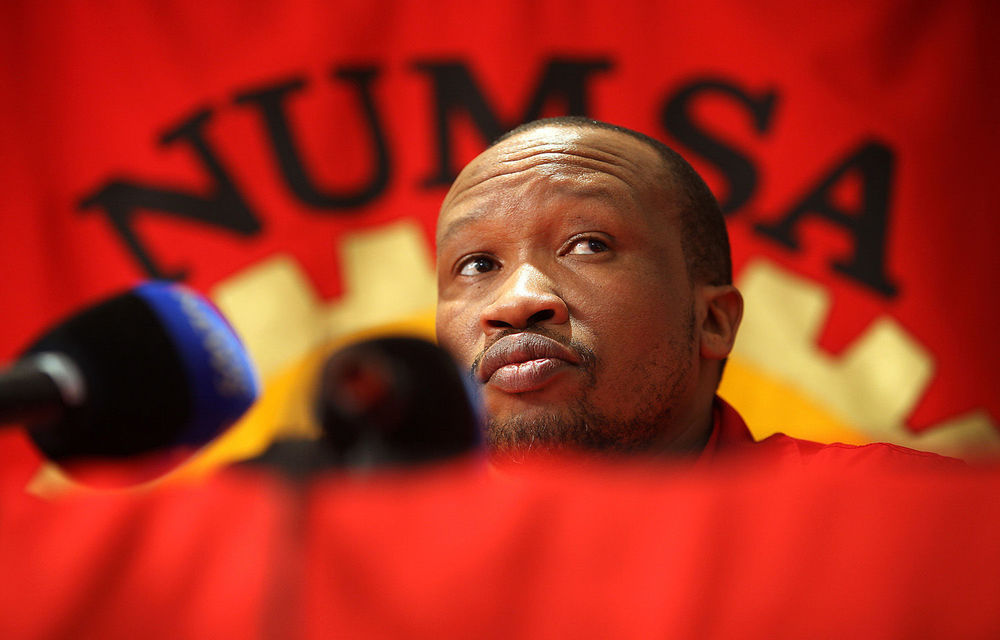
“NUMSA welcomes the signing of this agreement, particularly because the union had deadlocked with employers and we were on the verge of a strike. Thankfully, were able to find one another and conclude this round of wage talks,” General Secretary Irvin Jim said.
The agreement is effective from 1 July 2025 to 30 June 2028, with the first-year increment backdated.
Negotiations had initially stalled when the union rejected an employer offer of 6.5% in the first year, followed by 5% in each of the subsequent two years.
Union leaders then held direct engagements with the CEOs of the major auto manufacturers, which resulted in an improved offer of 7%, 5.5% and 5.5%.
Despite this upward adjustment, the union declared a dispute, collected a certificate of non-resolution, and began preparing for a potential strike.
The turning point came when NUMSA took the matter to its members in general meetings across the seven OEMs.
A democratic mandate emerged: five plants instructed the union’s leadership to accept the offer on the table, while two plants and a satellite facility rejected the proposal and urged the union to continue negotiating and prepare for industrial action.
After receiving a full report at the National Shop Steward Council on 13 November, the union’s leadership resolved that, in the best interests of the majority of members, the deal should be accepted and the dispute concluded.
NUMSA confirmed several additional gains in the package.
The transport allowance will rise from R3 555.53 to R4 500 and will increase annually in line with across-the-board wage adjustments.
Workers affected by short-time will now be guaranteed 60% of their basic daily wage, applicable for up to 50 days a year.
The parties also reaffirmed their commitment to establishing an industry medical aid scheme under agreed terms.
Furthermore, all employees in the bargaining unit will receive a once-off, strike-free, taxable gratuity of R12 500 in the next payroll cycle.
While celebrating the wage victory, NUMSA stressed that several structural issues continue to threaten the future of South Africa’s automotive manufacturing sector.
The union called for urgent engagement between the Presidency, National Treasury and the Department of Trade, Industry and Competition (DTIC) to address the growing dominance of imported vehicles in the local market.
According to NUMSA, 63% of all vehicles sold in South Africa are now imported, a development it describes as unsustainable and corrosive to domestic production capacity.
The union also raised concern about widening trade imbalances within BRICS, particularly regarding China and India.
NUMSA said vehicle imports from these countries have surged from less than 1% in 2018 to around 26% in 2025, arguing that while South Africa’s participation in BRICS is strategically important, the current imbalance cannot be ignored or normalised.
NUMSA urged the government to compel foreign automotive brands selling in South Africa to establish local assembly plants or co-invest with the existing seven OEMs, insisting that such localisation is essential if the sector is to meet the Automotive Masterplan’s 2035 target of 60% local content.
The union further stressed the need for a strengthened industrial policy capable of protecting strategic upstream industries such as steel, reiterating its long-standing call for the nationalisation of ArcelorMittal South Africa and the restoration of the historic cost-plus-three pricing model to support local manufacturers.
The union also called on the government to finalise regulations under the new Public Procurement Act, ensuring that all organs of state, from municipalities to state-owned enterprises, prioritise local content in their spending.
In addition, the union urged National Treasury and the DTIC to introduce incentives that stimulate domestic vehicle demand, particularly for electric vehicles, including the rebating of the ad valorem tax for cars produced locally.
NUMSA maintains that localisation, backed by decisive policy action, remains the most effective path toward quality job creation and reducing poverty, unemployment and inequality.
INSIDE POLITICS