


By Johnathan Paoli
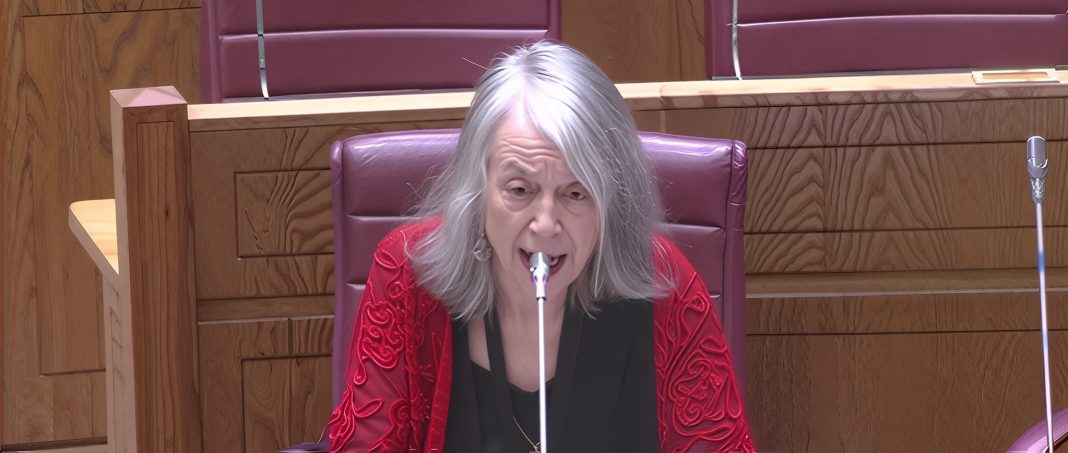
The ad-hoc parliamentary committee examining allegations of political interference and irregularities within the South African Police Service (SAPS) finished on Tuesday evening with an intense, often combative session featuring academic and self-proclaimed human rights activist Mary de Haas.
Over several hours, MPs from across the political spectrum repeatedly challenged the credibility, verifiability, and methodology behind her claims; many of which relied on unnamed police sources, unverified allegations and assertions she later withdrew under questioning.
The session continued in the afternoon with evidence leader and senior counsel Norman Arendse probing De Haas about her complaints regarding a Gauteng prosecutor whose promotion she described as questionable.
De Haas alleged that the prosecutor obstructed a hitman’s attempted confession, basing this on information from an unnamed police officer.
When Arendse asked why she had never lodged a formal complaint with the Independent Directorate for Priority Crime Investigation Complaints (IDAC), she replied simply that she did not know she could.
This became a recurring theme of allegations made without formal reporting, claims not subjected to official processes, and reliance on confidential informants whose identities she refused to disclose.
De Haas described past difficulties sending complaints after former IPID head Robert McBride’s departure and said she relied on activist Patricia Mashale for guidance.
Arendse noted that 70–80% of Mashale’s submitted complaints were found to be without substance by the Inspector-General of Intelligence (IGI).
De Haas defended Mashale, insisting she believed she had credible evidence, though she admitted she herself was unsure of its accuracy.
When MPs began questioning, tensions quickly escalated.
African National Congress (ANC) MP Xola Nqola challenged her refusal to name sources, arguing she appeared to protect those she likes and expose those she dislikes.
De Haas responded that she withheld only the identities of officers whose lives might be endangered.
The most heated exchange came when Nqola accused her of misunderstanding the origins of the Political Killings Task Team (PKTT), established after a high-profile political assassination.
De Haas referred to the victim as a prominent Ramaphosa supporter, prompting Chairperson Soviet Lekganyane to intervene, cautioning sensitivity toward a family still seeking closure.
De Haas withdrew the description.
Nqola also questioned her claims that councillors were paid handsomely and that political assassinations were overstated in terms of undermining democracy.
De Haas replied that focusing solely on councillor killings “ignored all the other important people who are killed”, a response Nqola rejected.
uMkhonto weSizwe Party MPs Sibonelo Nomvalo and David Skosana pressed her sharply on her methodology.
Nomvalo accused her of thumb sucking at the expense of South Africans, saying her assertions about ANC factionalism lacked scientific grounding.
Skosana raised concerns about her hearsay obtained through irregular means, questioning her legal authority to intervene in police matters.
De Haas insisted she acted as a “human rights defender” and had a duty to report abuses.
Critically, several MPs challenged her pattern of making strong allegations and then withdrawing them.
ANC chief whip Mdumiseni Ntuli noted that she had retracted multiple statements during the session, suggesting not all elements of her written submission could be taken at face value.
De Haas argued she exercised more caution in written form compared to verbal testimony, but still stood by the importance of her concerns.
Democratic Alliance MPs Ian Cameron and Dianne Kohler-Barnard pushed De Haas on whether she had ever filed formal statements or opened police cases to substantiate her allegations.
De Haas admitted she had not, arguing instead that the onus lay on authorities to investigate.
Cameron warned that public allegations without evidence risk defamation and undermined the committee’s credibility.
Kohler-Barnard challenged multiple extraordinary claims, including De Haas’s assertion that former KwaZulu-Natal Health MEC Sibongiseni Dhlomo was responsible for cancer patient deaths due to corruption involving oncology machinery.
De Haas withdrew the more extreme phrasing, but maintained concerns about mismanagement.
By the time Economic Freedom Fighters MP Leigh-Ann Mathys took over, De Haas conceded she had only briefly read the committee’s terms of reference and had misunderstood IDAC’s mandate.
Mathys raised worries that unverified information could inadvertently destabilise the justice system.
While De Haas insisted her role was to raise red flags based on the accounts of those who came to her, MPs from all parties expressed deep concern about the reliability, consistency and independence of her testimony.
Tomorrow’s proceedings continue with the return of Cedrick Nkabinde to the stand, while the committee will be hearing the testimony of Vusimusi “Cat” Matlala in Pretoria next week Wednesday to Friday.
INSIDE POLITICS