PHUTI MOSOMANE
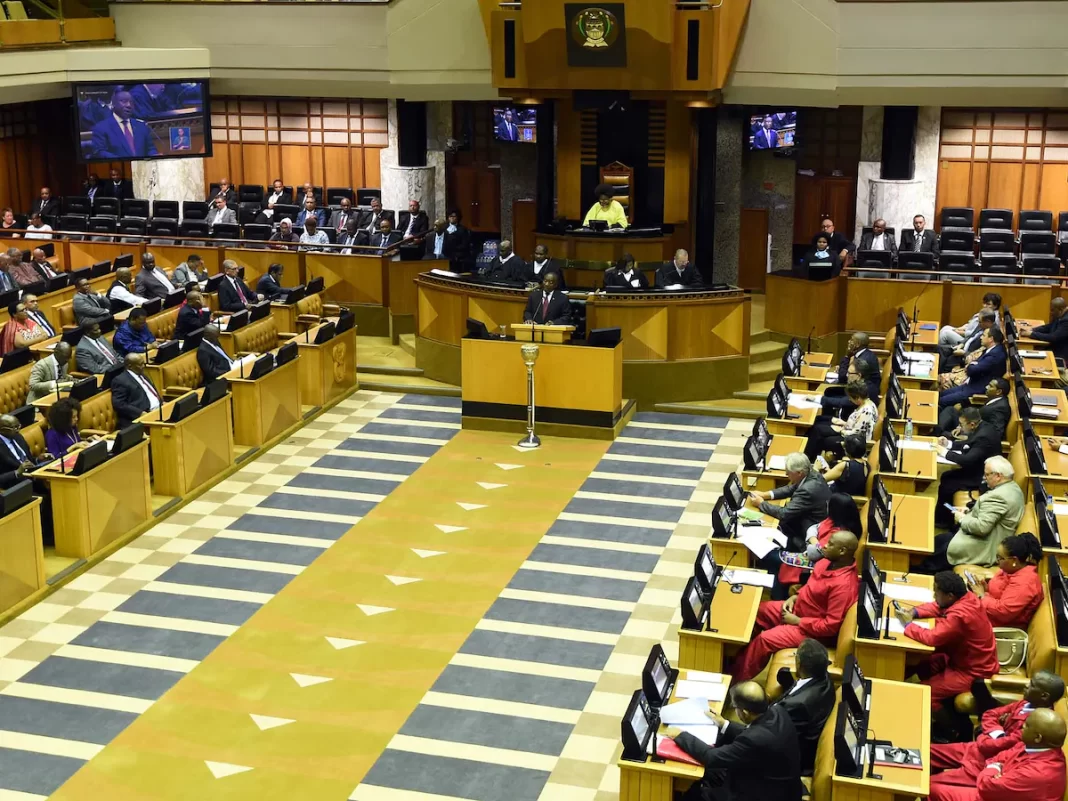
THE National Assembly of South Africa has unanimously approved the amendment to section 6 of the Constitution, making sign language the 12th official language in the country.
During the plenary session on Tuesday, the National Assembly (NA) approved the Report of the Portfolio Committee on Justice and Constitutional Development on the Constitution Eighteenth Amendment Bill [B1 – 2023], which aims to amend section 6 of the Constitution of the Republic of South Africa, 1996.
The amendment includes South African Sign Language (SASL) as an official language to promote the rights of people who are deaf and hard of hearing.
Previously, the South African Constitution recognized 11 official languages, namely Sepedi, Sesotho, Setswana, siSwati, Tshivenda, Xitsonga, Afrikaans, English, isiNdebele, isiXhosa, and isiZulu.
With the addition of SASL as an official language, South Africa is now better equipped to support and include people with hearing impa
People with hearing disabilities often face marginalization and exclusion due to social, psychological, and structural challenges in various settings, including schools, workplaces, social events, and places of worship.
The amendment to the South African Constitution seeks to address these issues by promoting cultural acceptance of South African Sign Language (SASL) and protecting the rights of people who are deaf and hard of hearing.
The amendment aims to prevent discrimination and promote substantive equality, in accordance with Section 9 of the Constitution.
The Bill was introduced to the Committee on January 12, 2023, and received 58 written submissions from individuals and organizations during the public comment period. While a few commentators expressed opposing views, the majority of the submissions were in support of the Bill.
The Committee acknowledges that SASL is not a universal language but believes that its promotion and development will help recognize the various dialects used in South Africa.
The amendment to the Constitution prohibits provisions other than constitutional amendments and matters connected to the amendments, as stated in Section 74(4) of the Constitution of the Republic of South Africa, 1996.
However, the adoption of the Bill recognizing SASL as an official language could impact other legislation that mentions sign language, such as the Use of Official Languages Act 12 of 2012, the South African Schools Act 84 of 1996, and the Pan South African Language Board Act 59 of 1995.
The relevant departments administering such legislation are encouraged to take note of this amendment and consider whether consequential amendments to associated legislation may be necessary to clarify the status of SASL as an official language in the Constitution.
INSIDE POLITICS