
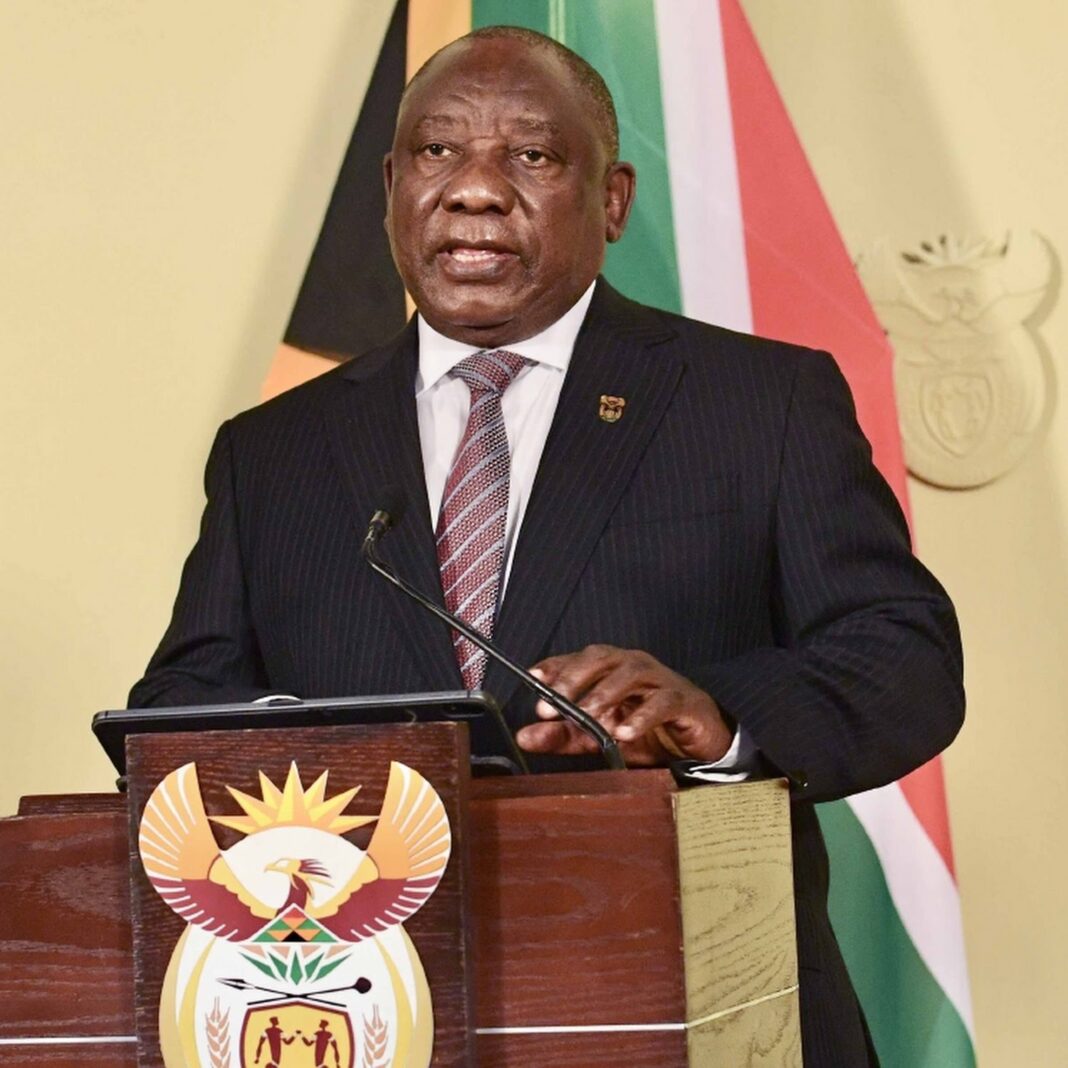
PRESIDENT Cyril Ramaphosa on Tuesday announced that the government intended to end the National State of Disaster in the next coming weeks.
Ramaphosa said the government will lift the national state of disaster once the comment period around the long-term Covid regulations is finalised.
The president’s announcement follows numerous calls, including a court action by the Democratic Alliance (DA), for government to end the National State of Disaster after Cooperative Governance and Traditional Affairs (COGTA) minister Dr Nkosazana Dlamini-Zuma further announced an extension following a meeting of the National Coronavirus Command Council (NCCC).
Ramaphosa said with vaccines now readily available and a large number of South Africans already vaccinated, new COVID-19 cases now remain significantly low.
“We are now at a watershed moment. We are now ready to enter a new phase in our management of the pandemic,” said Ramaphosa.
“After four waves of infection, fewer people are becoming severely ill and requiring hospitalisation. There are far fewer deaths than before. Our scientists tell us that this is mainly because some 60 to 80% of the population has some form of immunity to the virus, either from previous infection or vaccination.”
He added: “The pandemic has changed the way we work, travel, worship and socialise. It has shattered many livelihoods and devastated our economy, leading to the closure of many businesses and the loss of some two million jobs.”
Addressing the nation live on television on Tuesday night, Ramaphosa also said the government would ease some restrictive regulations that have hampered the South African economy for the past two years as from Wednesday.
“Based on those consultations and the recommendations of the National Coronavirus Command Council, Cabinet has decided to ease several restrictions as part of Adjusted Alert. The restrictions on gatherings are being significantly changed,” said Ramaphosa.
“This change to the restrictions on gatherings will be of great benefit to the sporting, cultural, entertainment and events industries in particular. This means that if we are vaccinated or have recently tested negative, we will be able to return to watching sports in stadiums and attending music concerts, theatre performances, conferences and other events.”
The maximum number of people permitted at a funeral will now increase from 100 to 200.
But as before, night vigils, after-funeral gatherings and ‘after-tears’ gatherings are not allowed, said Ramaphosa.
“There are also important changes to the regulation on the wearing of masks. As before, it is mandatory to wear a cloth mask or similar covering over the nose and mouth when in public indoor spaces. However, a mask is not required when outdoors,” he said.
“This means that we still need to wear masks when in shops, malls, offices, factories, taxes, buses, trains or any other indoor public space. But we do not need to wear masks when walking on the street or in an open space, when exercising outdoors or when attending an outdoor gathering.”
He said all these measures would take effect from Wednesday the 23rd of March 2022, once the new regulations are gazetted.
“With these changes, almost all restrictions on social and economic activity will have been lifted,” the president said.
Travellers entering South Africa will need to present negative PCR tests not older than 72 hours in the event they do not have a vaccination certificate.
South Africa’s state of disaster is now set to expire in April 15.
This would make it 24 months since it was first declared at the end of March 2020.
The National State of Disaster, which has been in place since the onset of the pandemic in March 2020, was extended last week, drawing criticism from businesses hard hit by the restrictions announced two years ago.
- Inside Politics





