
- Advertisement -spot_img

Ramaphosa says stronger metro finances could unlock over R100 billion in investment

- Advertisement -spot_img

Must read

By Akani Nkuna

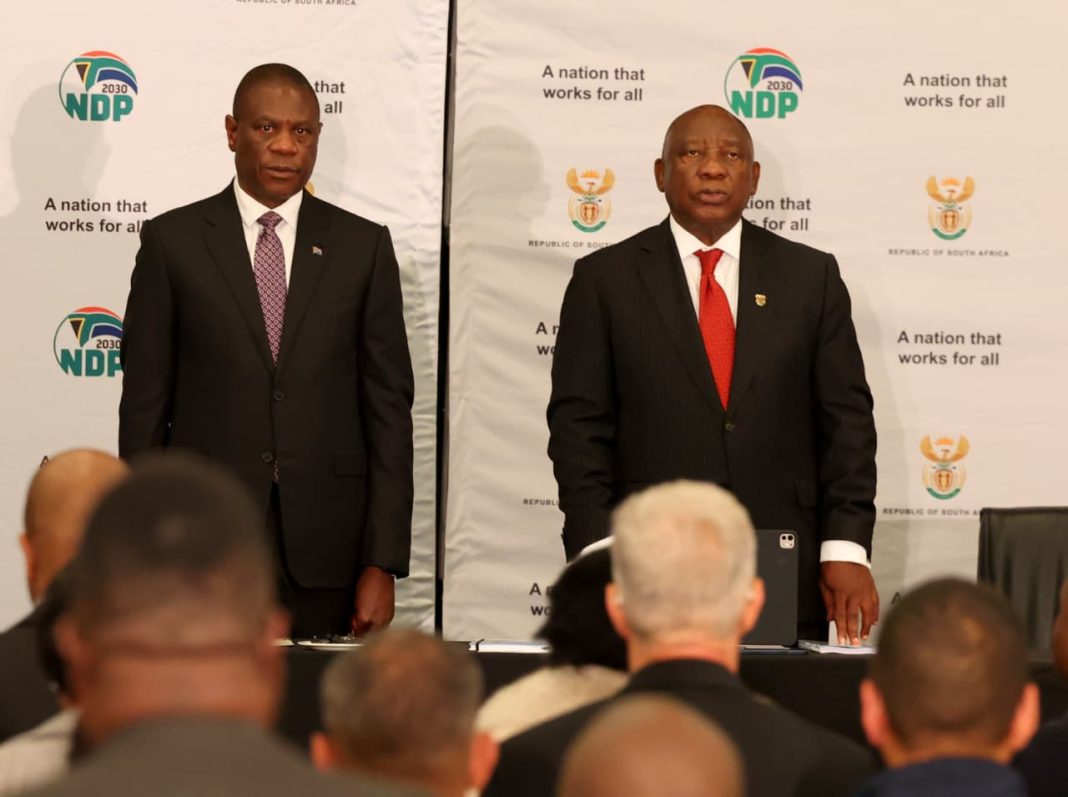
President Cyril Ramaphosa said on Thursday that improving the financial sustainability of metropolitan municipalities could unlock more than R100 billion in investment, as government pushes reforms to stabilise local finances and fix service delivery failures.

He said the National Treasury’s Metro Trading Services reform programme was aimed at strengthening municipal balance sheets and attracting capital.

“The programme aims to improve financial sustainability and to unlock R108 billion in investment by enforcing clear performance targets. If we are able to reach high-performance targets, the incentive for all of us is that there will be billions that will be invested,” Ramaphosa said.

ALSO READ: Ramaphosa sets 4 November as date for 2026 Local Government Elections

He was speaking at a meeting of the Presidential Coordinating Council (PCC) at the Birchwood Hotel on Thursday, attended by government officials, including MECs, mayors and municipal managers under the National Water Crisis Committee (NWCC).

The NWCC, announced earlier this year during the State of the Nation Address, is intended to coordinate a government-wide response to South Africa’s water crisis.

Ramaphosa said reforms in the water sector were already underway, including the National Water Resource Infrastructure Agency Act and the reinstatement of the Blue, Green, and No Drop reports, which provide data on water and sanitation performance.

He said the NWCC would be guided by principles including accountability, financial integrity, cooperative governance and the implementation of consequence management.

“Technical and professional capability must be strengthened. Municipal water and sanitation systems require qualified people – technicians, engineers, plant operators, project managers and financial experts,” he said.

Ramaphosa said the water crisis remained persistent, with the share of households experiencing water disruptions lasting more than two days rising from 24% in 2012 to 34% in 2024.

ALSO READ: ANC withdraws appeal over halted Eastern Cape conference

He attributed the deterioration to illegal connections, weak monitoring, poor maintenance and institutional instability, which have also driven up municipal debt.

“Municipal debt to water boards has tripled between 2018 and 2025. This crisis did not emerge overnight and will not be resolved by any single intervention. We need a range of actions addressing critical areas of failure,” he said.

He added that many municipalities lack critical and strategic skills, often leading to the outsourcing of key functions, to the detriment of service delivery.

Ramaphosa said the current system was “too complex and fragmented”, with smaller municipalities expected to deliver large-scale infrastructure projects without adequate capacity, weakening overall performance.

He said the forthcoming White Paper on Local Government would seek to address structural challenges and improve service delivery.

“It will reimagine the way local government works, addressing systemic challenges in its structure and functioning. Among the tasks we need to focus on is unblocking infrastructure,” he said.

INSIDE POLITICS

More articles

LEAVE A REPLY

Please enter your comment!
Please enter your name here

CATHSSETTA

spot_img

AVBOB STEP 12

spot_img

Inside Education E-Edition

spot_img

Inside Metros G20 COJ Edition

spot_img

JOZI MY JOZI

spot_img

QCTO

spot_img

Latest article



