
- Advertisement -spot_img

Ramaphosa Slams Rich Nations For Imposing Travel Ban On SA Over Outbreak Of Omicron COVID-19 Variant

- Advertisement -spot_img

Must read

PRESIDENT Cyril Ramaphosa has slammed rich Western countries for their knee-jerk imposition of travel bans after hearing about the new Omicron variant.

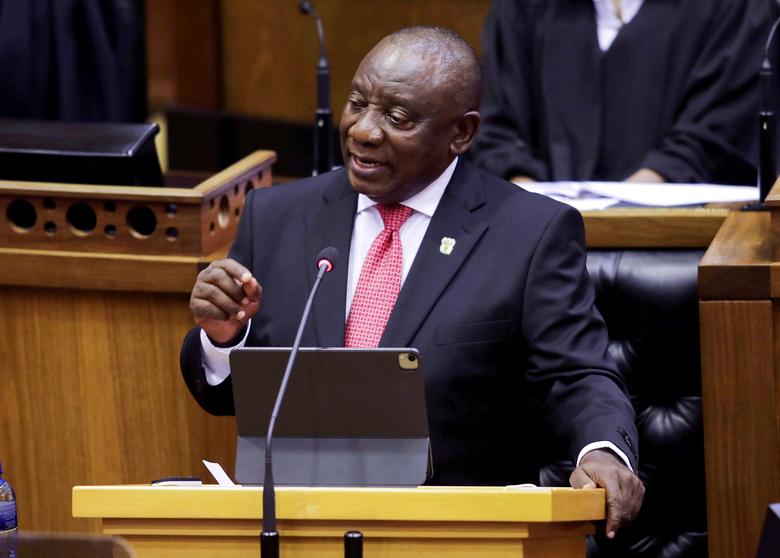
Ramaphosa was addressing the nation on Sunday night on developments in response to the coronavirus pandemic.

Government officials are furious about a British ban on flights from southern African countries, on which several other countries followed suit.

Many South Africans feel they are being punished for their transparency and hard work in keeping tabs on the way the virus is mutating.

“This is a clear and completely unjustified departure from the commitment that many of these countries made at the meeting of G20 countries in Rome last month,” Ramaphosa said.

“The prohibition of travel is not informed by science, nor will it be effective in preventing the spread of this variant. The only thing (it) will do is to further damage the economies of the affected countries and undermine their ability to respond to … the pandemic.”

Scientists have so far only detected the new Omicron variant in relatively small numbers, mainly in South Africa but also in Botswana, Hong Kong and Israel. But they are concerned by its high number of mutations which raised concerns that it could be more vaccine-resistant and transmissible.

Confirmed Covid-19 infections had risen to 1,600 new cases in the past week, compared with 500 in the previous week and 275 in the week before that with the Omicron believed to be behind the spike in infections, particularly in Gauteng. 

Ramaphosa warned of a fourth wave of the pandemic in the next few weeks if not sooner.  

“We were told to expect a new wave in December and also warned of a new variant,”
 said Ramaphosa.

“If cases continue to climb, we can expect to enter a fourth wave of infections within the next few weeks, if not sooner,” Ramaphosa warned, adding that South Africa was in the process of considering “introducing measures that make vaccination a condition for access to workplaces, public events, public transport and public establishments.”

Ramaphosa said not a lot was known about the variant but what scientists had discovered thus far was that it had more mutations than any previous variant.

“Second, we know that Omicron is readily detected by the current Covid-19 tests. This means that people who are showing Covid-19 symptoms or have been in contact with someone who is Covid-19 positive, should still get tested. Third, we know that this variant is different from other circulating variants and that it is not directly related to the Delta or Beta variants. Fourth, we know that the variant is responsible for most of the infections found in Gauteng over the last two weeks and is now showing up in all other provinces,” Ramaphosa said. 

He said the way to tackle the wave included going back to Covid-19 basics, which included wearing masks, social distancing but also getting fresh air. 

“We already have the tools that we need to protect ourselves against it. We know enough about the variant to know what we need to do to reduce transmission and to protect ourselves against severe disease and death.

“The first, the most powerful, tool we have is vaccination. Since the first Covid-19 vaccines became available late last year, we have seen how vaccines have dramatically reduced severe illness, hospitalisation and death in SA and across the world. Vaccines do work. Vaccines are saving lives,” he said. 

With 35% of the total SA adult population being vaccinated and 41% still on single doses, Ramaphosa said he was pleased with the progress made in vaccinating many of the country’s citizens.

But he urged those who had not yet vaccinated to hastily do so, saying that and mask wearing was the best way to tackle this new variant which scientists were still trying to understand.

“Tonight, I would like to call on every person who has not been vaccinated to go to their nearest vaccination station without delay,” said Ramaphosa.

“If there is someone in your family or among your friends who is not vaccinated, I call on you to encourage them to get vaccinated. Vaccination is by far the most important way to protect yourself and those around you against the Omicron variant, to reduce the impact of the fourth wave and to help restore the social freedoms we all yearn for. Vaccination is also vital to the return of our economy to full operation, to the resumption of travel and to the recovery of vulnerable sectors like tourism and hospitality,” he added. 

Though there were fears that his latest address to the nation may come with new restrictions being imposed, Ramaphosa said there would be none at the moment but the government had set up a task team to explore the possibility of mandatory vaccines,

This would mean that people would need to provide vaccine certificates to be able to have access to certain activities, events and locations.

“The task team will report to the inter-ministerial committee on vaccination chaired by the deputy president, which will make recommendations to cabinet on a fair and sustainable approach to vaccine mandates.”

The country will remain on coronavirus alert level 1 for now.

Symptoms linked to the omicron coronavirus variant have been mild so far, according to a Covid-19 adviser to the South Africa government and the Pretoria doctor who first sounded the alarm about the new strain.

There has been no real uptick in hospitalisations, Barry Schaub, chairman of the Ministerial Advisory Committee on Vaccines, told Sky News on Sunday.

“The cases that have occurred so far have all been mild cases, mild-to-moderate cases, and that’s a good sign,” said Schoub, adding that it was still early days and nothing was certain yet.

South Africa has been hit with a number of travel bans from the UK and other nations, after its scientists found the mutated variant last week. Since then, a growing number of European countries, along with Australia, have also identified people infected with the variant.

The large number of mutations found in the omicron variant appears to destabilize the virus, which might make it less “fit” than the dominant delta strain, said Schoub.

“In a way, hopefully it won’t displace delta because delta we know responds very well to the vaccine,” he said.

Angelique Coetzee, chair of the South African Medical Association, called symptoms associated with the variant at this point “different and so mild” compared with others she’d treated for the virus in recent months, Bloomberg reported.

Coetzee told the UK Telegraph that a number of healthy young men turned up at her clinic “feeling so tired.” About half were unvaccinated.

“What we are seeing clinically in South Africa and remember, I’m at the epicenter, that’s where I’m practicing, is extremely mild,” she said Sunday on the BBC’s “Andrew Marr Show.”

“We haven’t admitted anyone” to the hospital with the new variant,” she said. “I spoke to other colleagues of mine, the same picture.”

Asked if authorities around the world were panicking unnecessarily, Coetzee said “yes, at this stage I would say definitely. Two weeks from now on maybe we will say something different.”

  • Own Correspondent

More articles

LEAVE A REPLY

Please enter your comment!
Please enter your name here

CATHSSETTA

spot_img

AVBOB STEP 12

spot_img

Inside Education E-Edition

spot_img

Inside Metros G20 COJ Edition

spot_img

JOZI MY JOZI

spot_img

QCTO

spot_img

Latest article



