


By Thapelo Molefe
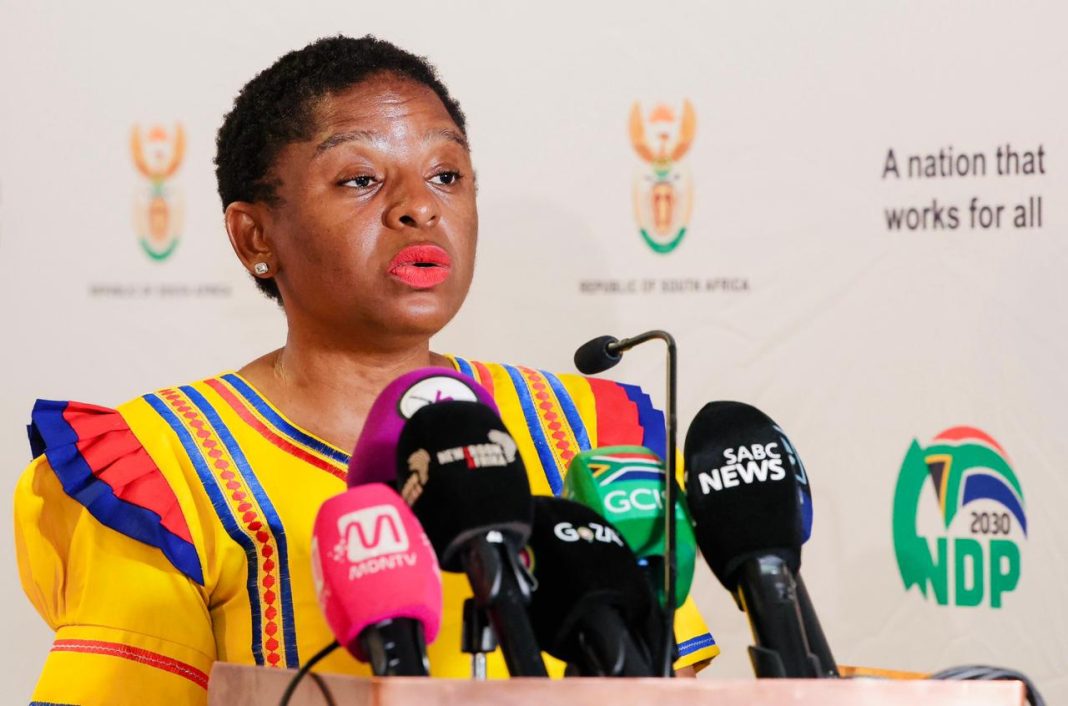
Minister in the Presidency Khumbudzo Ntshavheni said on Thursday that the decision for Cyril Ramaphosa to personally chair a newly established Water Crisis Committee marks a “step change” in government’s response to collapsing municipal water systems and ageing infrastructure.
Briefing the media on the outcomes of Wednesday’s Cabinet meeting, Ntshavheni said government was shifting into what it described as an emergency mode to confront the country’s deepening water shortages.
ALSO READ: Ex-ActionSA councillor accuses party of misleading voters
The move was announced by Ramaphosa during his State of the Nation Address earlier this month, following prolonged water disruptions in the cities of Johannesburg, Ekurhuleni and Tshwane.
“The Water Task Team has done incredible work in conducting the assessment,” Ntshavheni said. “But now we are making a step change and moving faster so that we can have water in the taps.”
The new committee will consolidate the work of the existing task team and operate under a model similar to Operation Vulindlela, focusing on short-, medium- and long-term interventions.
Ntshavheni rejected suggestions that the establishment of the committee amounted to an admission of failure by Deputy President Paul Mashatile, who had been overseeing the water task team.
“There’s no failure of the task team,” she said. “They’ve done the groundwork that needed to be done. But we are now in emergency mode.”
ALSO READ: Skosana brands O’Sullivan a ‘spy’ as ad hoc committee hearing turns explosive
The committee will prioritise stabilising water supply in major metros, particularly in Gauteng, where Rand Water has been granted an urgent three-month licence to abstract additional water from the Integrated Vaal River System.
Ntshavheni said one of the biggest challenges was not bulk supply, but so-called non-revenue water, with more than half of treated water in some municipalities lost through leaks and failing infrastructure.
“In the majority of municipalities, more than 50% of treated water is lost through leaking pipes,” she said, adding that ring-fencing water and electricity revenues would enable metros to reinvest in infrastructure maintenance and upgrades.
Cabinet also confirmed the introduction of a split delivery model for municipal infrastructure grants. Under this model, municipalities with severe governance or capacity failures will shift to an indirect delivery approach, with accredited agencies such as water boards, provincial road agencies or the South African National Roads Agency Limited stepping in to implement projects.
“We do not have time,” Ntshavheni said. “Our people do not have services, and we must ensure that they do.”
ALSO READ: Fleet of resignations rocks Afrika Mayibuye Movement in Limpopo
The intervention forms part of broader commitments made in the 2026 State of the Nation Address to fix weak local government, alongside efforts to tackle organised crime, unemployment and the foot-and-mouth disease outbreak affecting livestock.
Cabinet said the Water Crisis Committee will finalise a Water Action Plan aimed at restoring reliable supply and rebuilding public confidence in municipal water systems.