
- Advertisement -spot_img

Senqu Bridge launch boosts SA–Lesotho water security and trade ties

- Advertisement -spot_img

Must read

By Akani Nkuna

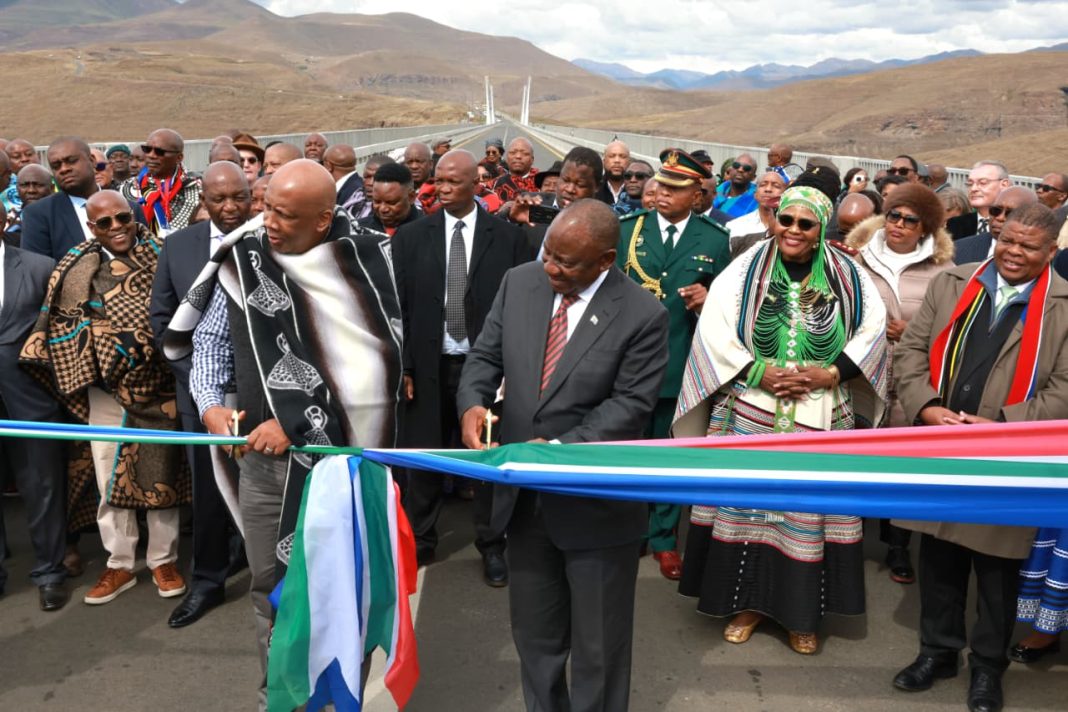
South Africa on Wednesday hailed the launch of the Senqu Bridge in Lesotho as a boost to regional integration, trade and water security under the Lesotho Highlands Water Project (LHWP).

Speaking at the opening in Mokhotlong, Lesotho, President Cyril Ramaphosa said the high-altitude bridge underscored strong bilateral ties and would support economic development in both countries.

“Rising high above the river valley, more than 2,500 metres above sea level, this bridge has been built to endure and will serve many generations,” said Ramaphosa.

“Together with the two other bridges being constructed to span the Polihali reservoir, this bridge will improve travel across this part of the country, making transport easier and cheaper for communities, businesses and visitors.”

The 825-metre structure, costing about R2.8 billion, forms part of Phase II of the LHWP, a multi-phase bi-national initiative established under a 1986 treaty between South Africa and Lesotho.

The project is expected to raise annual water transfer volumes to South Africa while supporting hydropower generation in Lesotho, in what Pretoria has described as a flagship example of regional cooperation.

At the ceremony, attended by King Letsie III and Prime Minister Samuel Matekane, Ramaphosa also announced R30 million in humanitarian assistance to Lesotho through South Africa’s African Renaissance Fund.

“This will help Lesotho to strengthen its national response to HIV and tuberculosis in the context of dwindling levels of international humanitarian assistance,” said Ramaphosa. 

“As the current interim Chair of SADC and Chair later this year, South Africa will continue to promote and champion regional initiatives to accelerate trade, investment and integration and to deepen people-to-people links.” 

King Letsie III welcomed the project as a symbol of deepening economic interdependence, but warned of the social cost to communities displaced during construction.

He urged both governments to ensure affected families are properly resettled and compensated, in line with treaty obligations.

Matekane said the project’s success would ultimately be judged by its impact on local communities.

“It must deliver real, tangible benefits and improve the daily lives of the people affected,” he said.

INSIDE POLITICS

More articles

LEAVE A REPLY

Please enter your comment!
Please enter your name here

AVBOB STEP 12

spot_img

Inside Education E-Edition

spot_img

Inside Metros G20 COJ Edition

spot_img

JOZI MY JOZI

spot_img

QCTO

spot_img

Latest article



