
- Advertisement -spot_img

South Africa Needs To Improve Infrastructure Project Management, Funding – Ramaphosa

- Advertisement -spot_img

Must read

THEBE MABANGA

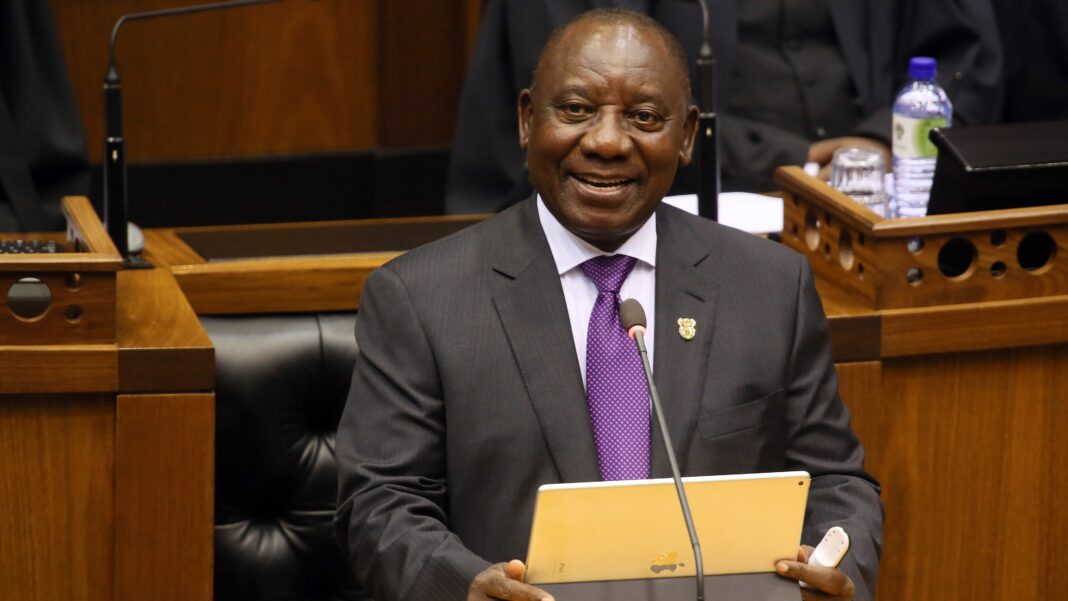
SOUTH Africa needs to improve its infrastructure project management capacity, especially in government, as well as financing for early stage, high-risk phase of infrastructure projects.

This is according to President Cyril Ramaphosa, who addressed the Infrastructure South Africa project preparation Roundtable, which was held in Johannesburg on Tuesday.

The event brought together government, Development Finance Institutions (DFIs), private banks and representatives of pensions to explore ways of funding South Africa’s infrastructure needs.

Ramaphosa told the Roundtable that South Africa is working to rebuild its economy after the devastating effects of the coronavirus pandemic.

“Before the outbreak of COVID-19, South Africa was already experiencing slow growth and rising unemployment. The pandemic worsened an already dire situation, severely disrupting economic activity and putting numerous investments on hold,” said Ramaphosa.

Infrastructure delivery has been touted as one of the key pillars of reviving the economy and is seen as crucial to reducing the cost of doing business and improving the country’s competitiveness. 

But South Africa has a long but recent history of projects running over budget with delays.

These include the Gautrain, which was delivered at three times its original R7 billion cost and the Medupi power station.

Since assuming office, Ramaphosa has launched the Infrastructure Fund, housed at the Development Bank of Southern Africa and in June, he launched the Sustainable Infrastructure Development Symposium, which is headed by Dr Kgosisnetso Ramokgopa. 

“Working with the private sector, we were able to identify 276 projects with a total investment value of more than R2.7 trillion,” Ramaphosa said of SIDS.

In July, government gazetted 50 of these Strategic Integrated Projects with a value of R340 billion and has since listed an additional twelve special projects. 

One of these, the Mooikloof Mega Housing Project, was recently launched in Tshwane.

“The projects are in the areas of water and sanitation, energy, transport, digital infrastructure, agriculture and agro-processing, and human settlements.” Ramaphosa said.

Early stage financing of projects, when pre-feasibility takes place, followed by feasibility studies before a project is deemed bankable, is seen as the highest risk stage of the project.

Government often has to bridge this gap, together with DFIs which are also state owned, before private sector funding comes in.

“The Reconstruction and Recovery Plan emphasises that project preparation is necessary to unlock private sector funding and high impact capital funding,” Ramaphosa said. 

“Attention must be given to improving the state’s technical, project preparation and financial engineering capabilities, including by drawing in private sector skills and expertise.”

Government aims to unlock R1 trillion worth of infrastructure investment, using leverage such as R100 billion in the Infrastructure Fund.  

Ramaphosa said budgetary allocations for this process have been made to the Development Bank of Southern Africa, the Government Technical Advisory Centre located at National Treasury and the Presidential Infrastructure Coordinating Commission’s Technical Project Management Unit.

The Presidential Infrastructure Co Ordinating Commission was created by former President Jacob Zuma and together with pasting the Infrastructure Development Act was designed to speed up the implementation of infrastructure projects.

Ramaphosa cited research from The Global Infrastructure Hub, an initiative of the G20, which estimates that infrastructure project preparation costs in developing countries can range from 5 to 10% of the total project investment, with African governments covering most of these costs. 

“This is compared to the 3 to 5% of project costs in developed countries, where project funds and facilities are willing to take the risks to fund projects,” Ramaphosa said.

South Africa is likely to face global competition for skills, capital equipment and other inputs as well as capital to execute its infrastructure projects as countries also embark on a post-COVID infrastructure spending spree.

(SOURCE: INSIDE POLITICS)

More articles

LEAVE A REPLY

Please enter your comment!
Please enter your name here

CATHSSETTA

spot_img

AVBOB STEP 12

spot_img

Inside Education E-Edition

spot_img

Inside Metros G20 COJ Edition

spot_img

JOZI MY JOZI

spot_img

QCTO

spot_img

Latest article



