- Advertisement -spot_img

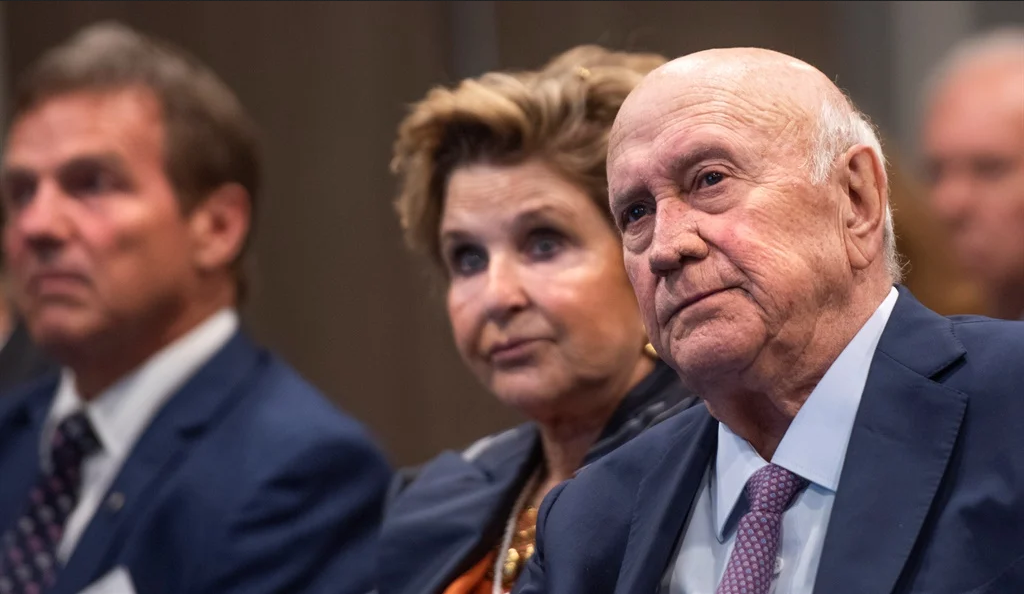
South Africa’s Last Apartheid President, FW de Klerk, Has Died At 85

- Advertisement -spot_img

Must read

FW de Klerk, the former president of South Africa and the last white man to lead the country, has died at the age of 85. De Klerk, who was also a key figure in the nation’s transition to democracy, had been diagnosed with cancer this year, his foundation’s spokesman said.

President Cyril Ramaphosa is expected to announce details of De Klerk’s funeral later this afternoon or evening.

In 1990 he announced he was releasing anti-apartheid leader Nelson Mandela, leading to multi-party polls in 1994.

On 2 February 1990, de Klerk delivered a speech at the opening of the 1990 session of the Parliament of South Africa.

He announced sweeping reforms that marked the beginning of the negotiated transition from apartheid to constitutional democracy. The reforms included the unbanning of the African National Congress (ANC), The Pan Africanist Congress (PAC), the South African Communist Party (SACP) and other anti-apartheid organizations, the release of political prisoners -including Nelson Mandela- the end of the state of emergency and a moratorium on the death penalty.

According to his foundation, De Klerk’s actions and speech marked the official end of segregation policies and the official start of the negotiations that led to a constitutional democracy with equal rights for all South Africans.

He was president from September 1989 until May 1994 and joined Mandela’s government of national unity as one of two deputy presidents after the April 1994 democratic elections.

Ramaphosa has expressed his condolences to Elita De Klerk, the wife of the late former President, and her family following the news of his passing.

 “I have learned with great sadness of the passing of former Deputy President and former State President Frederik Willem “FW” de Klerk. The Former Deputy President passed away earlier today, Thursday, 11 November 2021, after an extended period of illness. He was 85 years of age,” said Ramaphosa.

“I offer my sincerest condolences to his wife, Elita, his children Jan and Susan, and his grandchildren. My thoughts are also with Mr de Klerk’s friends and associates and the management and staff of the FW de Klerk Foundation.”

Ramaphosa said while de Klerk was a leader of a party that was “vastly discredited” in relation of the role the party played in enforcing apartheid, he played a vital role in South Africa’s transition to democracy in the 1990s, which originated from his first meeting in 1989 with President Nelson Mandela who was a political prisoner at that stage.

“He took the courageous decision to unban political parties, release political prisoners and enter into negotiations with the liberation movement amid severe pressure to the contrary from many in his political constituency.

“The Deputy President was a committed South African who embraced the democratic constitutional dispensation and placed the long-term future of the country ahead of narrow political interests.

“Serving as Deputy President from 1994 to 1996, Mr de Klerk played an important role in the Government of National Unity, dedicating himself to the constitutional imperative of healing the divisions and conflict of our past.

“Deputy President de Klerk’s passing, weeks before the 25th anniversary of our democratic Constitution, should inspire all of us to reflect on the birth of our democracy and on our shared duty to remain true to the values of our Constitution.”

  • Inside Politics

More articles

LEAVE A REPLY

Please enter your comment!
Please enter your name here

CATHSSETTA

spot_img

AVBOB STEP 12

spot_img

Inside Education E-Edition

spot_img

Inside Metros G20 COJ Edition

spot_img

JOZI MY JOZI

spot_img

QCTO

spot_img

Latest article