
- Advertisement -spot_img

State Capture Corruption: Ramaphosa Absolves Himself of Any Responsibility

- Advertisement -spot_img

Must read

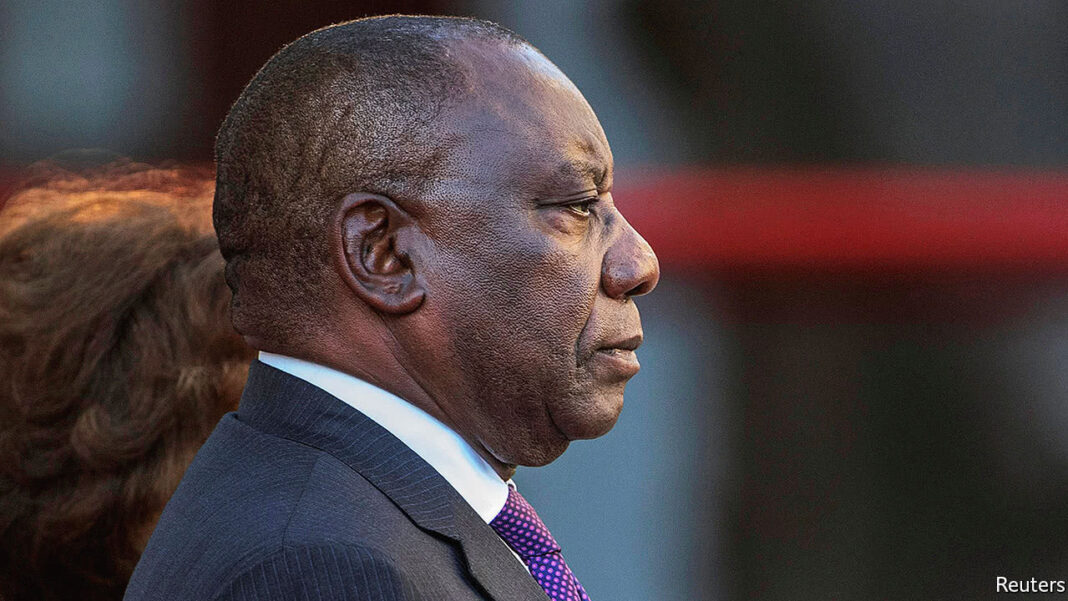
PRESIDENT Cyril Ramaphosa didn’t bury former president Jacob Zuma in his State Capture Commission of Inquiry, but he dug himself a big hole in the ground by failing to take full responsibility for some of government’s failures in dealing with corruption.

Ramaphosa acknowledged that there was rampant state corruption while he was deputy to former president Zuma, but said he did not resign as that would have hampered his efforts to resist the rot.

Ramaphosa served as Zuma’s deputy for four years from May 2014 before succeeding him in February 2018.

“I had five options: resign; speak out; acquiesce and abet; remain and keep silent; or remain and resist,” Ramaphosa said.

But had he quit his job, “this action would have significantly impaired my ability to contribute to bring about an end” to the corruption.

Ramaphosa said he decided to stay in order to “resist some of the more egregious and obvious abuses of power”.

“With the benefit of hindsight, I am certain that this was the necessary and correct course of action,” he said.

Ramaphosa told the state capture commission that efforts to tackle corruption that became endemic during his Zuma’s administration will be a long and difficult process because of fierce opposition.

Since taking office, Ramaphosa said he has taken strides in clearing out corruption through empowering the national prosecution and more recently, having the state’s COVID-19 pandemic funding scrutinised by auditors.

Yet, Ramaphosa has been criticised for being slow to act on corruption scandals that have crept up under his reign.

His recent health minister, Zweli Mkhize, who resigned earlier this month, faces allegations of benefitting himself and his family through a COVID-19-related communications contract.

He has also failed to fire several ministers who remains tainted with allegations of corruption such as Energy and Mineral Resources Minister Gwede Mantashe, State Security Deputy Minister Zizi Kodwa and Police Minister Bheki Cele.    

The appointment of Shamila Batohi in 2018 as South Africa’s new National Director of Public Prosecutions has also failed to yield positive results.

The failure to prosecute several high profile cases continues to damage public perceptions, staff morale and the performance of prosecutors.

Poor leadership choices under former president Zuma crippled organisations such as the South African Police Service, NPA and the police’s special investigation unit, the Hawks.

However, nothing much has changed under Ramaphosa and his administration has failed to enhance the operational capacity of prosecutors and police.

In his closing statement to the Zondo Commission on Thursday, Ramaphosa said that the cost of the corruption was effectively incalculable, and had caused long-lasting damage to major institutions.

“We may be able to establish how much of public funds have been stolen, by how much costs for public goods and services may have been inflated, and what it has cost to investigate these cases and prosecute those responsible.”

“It may be possible to quantify the infrastructure and services that could have been provided to the people of our country with the funds that were stolen and wasted as a result of state capture.”

“We could quantify this in terms of hospital beds, commuter trains, houses, social grants, water reticulation, maintenance of roads and any number of other public goods and services that state capture robbed our people of.

“But what is more difficult to measure is the broader cost to our economy and our society,” he said.

He said that red flags were raised about corruption and the powerful Gupta family as early as 2011, but those allegedly involved had protection from various structures, including law enforcement agencies ‘populated with acolytes’.

Ramaphosa said those who sought to loot state coffers ‘populated the structures in government with their acolytes, their own people, who in some instances continue in doing their bidding’, Ramaphosa told the Zondo commission.

He added that there ‘is resistance against things being done correctly’.

He said it was difficult to measure the effect of state capture on business and consumer confidence, on the loss of investment.

“We similarly cannot quantify the impact of state capture on our standing and image internationally. State capture led to the departure from the public service of highly qualified and experienced people, either because they refused to be part of it or because they presented a threat to those who were part of such activities,” said Ramaphosa.

“It is likely that State capture also discouraged many talented young people from joining government, which has significant implications for the public service of tomorrow. By weakening our security forces and law enforcement agencies, the actions associated with state capture placed the security and integrity of our country at risk.”

The State Security Agency, he said “was one of the agencies that was compromised.”

He added that State capture has damaged people’s confidence in the rule of law, in public institutions, in law enforcement agencies and, even to some extent, in the democratic process.

“That is what makes the work of this Commission so important and so essential,” he said.

“The people of South Africa look to this Commission to uncover the truth, to identify those responsible, and to recommend measures that should be taken against those who are responsible and to prevent it from happening again.”

  • Inside Politics

More articles

LEAVE A REPLY

Please enter your comment!
Please enter your name here

CATHSSETTA

spot_img

AVBOB STEP 12

spot_img

Inside Education E-Edition

spot_img

Inside Metros G20 COJ Edition

spot_img

JOZI MY JOZI

spot_img

QCTO

spot_img

Latest article



