- Advertisement -spot_img

TRC inquiry hears apartheid-era case classification hampered investigations

- Advertisement -spot_img

Must read

By Simon Nare

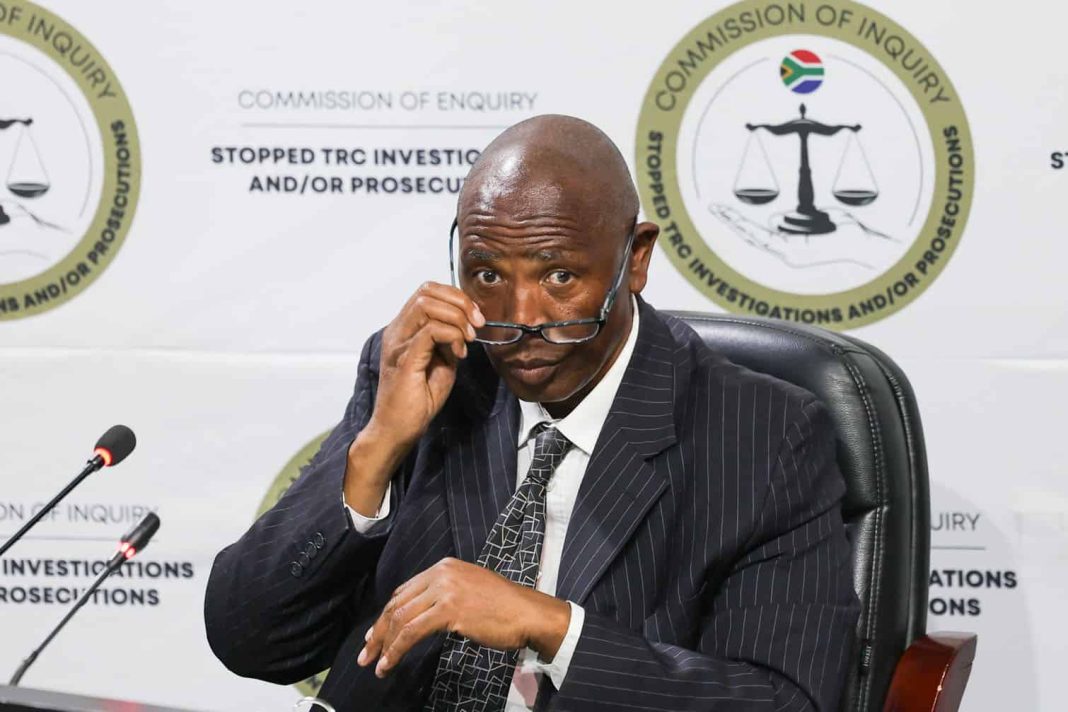
The inquiry into the handling of Truth and Reconciliation Commission (TRC) cases has heard that the National Prosecuting Authority’s (NPA) classification of apartheid-era crimes as “special offences” frustrated and hindered investigations into cases referred by the TRC.

Advocate Howard Varney, representing the families of the Cradock Four, told the inquiry, chaired by retired Constitutional Court Justice Sisi Khampepe, that the NPA incorrectly classified apartheid-era crimes instead of treating them as organised crimes as defined in law.

However, former deputy head of the Directorate of Special Operations (Scorpions), Geophrey Ledwaba, maintained that the legislation was open to interpretation and that then National Director of Public Prosecutions Bulelani Ngcuka had the authority to classify the cases as special offences.

Ledwaba, who was under cross-examination on Monday, said the classification neither disrupted nor delayed investigations. He argued that when the cases were later transferred to another unit outside Ngcuka’s office, sufficient resources and support accompanied the move to ensure the investigations continued.

During his earlier testimony in April, Ledwaba acknowledged that he had limited powers to assist with the investigations and that the cases, initially handled by the Special National Projects Unit within the Scorpions, were transferred to the Priority Crimes Litigation Unit (PCLU).

On Monday, he further admitted that the Scorpions had initially taken over the TRC cases without legal authority, saying Ngcuka had decided to place the matters under his office before they were moved to the PCLU.

Varney argued that the decision to classify the cases as special offences was “not only illogical” but had undermined efforts to investigate apartheid-era crimes.

Ledwaba rejected that assertion.

“I dispute the suggestion that it was illogical,” he said, adding that Varney had not demonstrated how the classification had delayed investigations or why the cases should have been classified differently.

Varney argued that apartheid-era crimes involved coordinated kidnappings, killings and disappearances carried out through a central chain of command by recurring perpetrators, bringing them squarely within the legal definition of organised crime.

“As a matter of plain reading, the TRC cases fall squarely within the definition of organised crime under Section 7,” Varney told the inquiry.

Ledwaba disagreed, saying Ngcuka had deliberately classified the matters as priority crimes rather than organised crime.

“If it was his view that they fell within this category, he would not have moved them out of the DSO, classified them as priority crimes and created a separate unit to deal with them,” Ledwaba said.

He added that the transfer of the cases to the newly established unit was accompanied by a smooth handover, including researchers, records and other resources needed to continue the investigations.

The commission is investigating whether there were attempts to delay, obstruct or prevent the investigation and prosecution of apartheid-era crimes referred by the TRC, and whether any officials or institutions were involved in such interference.

The inquiry has been delayed by court applications brought by former presidents Jacob Zuma and Thabo Mbeki seeking Khampepe’s recusal.

They argue that she should not chair the inquiry because she previously served as both a TRC commissioner and Deputy National Director of Public Prosecutions.

President Cyril Ramaphosa, who appointed Khampepe to chair the inquiry, has not opposed the applications but has said she did not disclose her previous roles in the TRC and NPA before her appointment.

Khampepe served as a TRC commissioner from 1995 to 2001 and as Deputy National Director of Public Prosecutions between September 1998 and December 1999.

She dismissed the recusal applications before the inquiry, prompting Zuma and Mbeki to approach the courts for relief.

INSIDE POLITICS

More articles

LEAVE A REPLY

Please enter your comment!
Please enter your name here

Inside Education E-edition June 2026

spot_img

Services Seta 2026

spot_img

CATHSSETTA

spot_img

AVBOB STEP 12

spot_img

Inside Metros G20 COJ Edition

spot_img

JOZI MY JOZI

spot_img

QCTO

spot_img

Latest article