
- Advertisement -spot_img

Untu, Satawu reject Transnet’s revised wage offer, saying it’s too low below inflation rate

- Advertisement -spot_img

Must read

STAFF REPORTER|

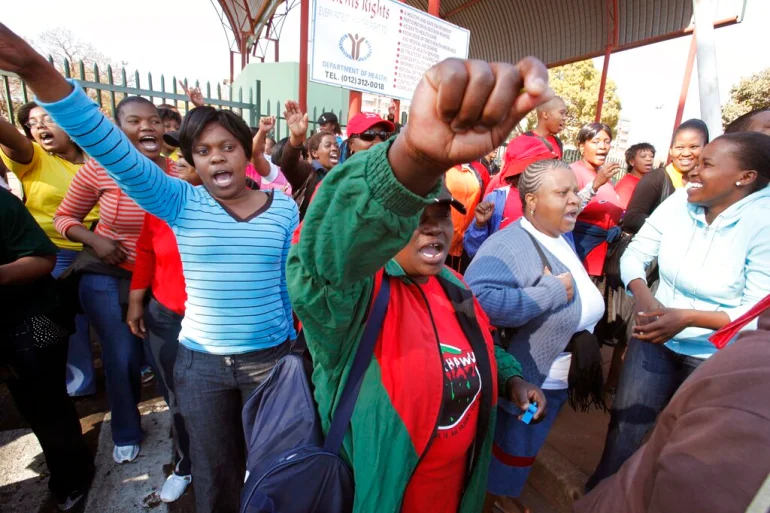
THE Transnet wage strike looks far from over after the workers rejected the employer’s revised wage offer on Tuesday.

The employer has tabled a new offer between 4,25 and 5% across the board.

The unions, UNTU and SATAWU said the strike will continue until the 12% or 13% wage increase demand is met.

UNTU said it has rejected Transnet’s latest offer of a 4% to 5% salary increase, subject to employee grade levels, during what it calls “a marathon CCMA-facilitated session”.

Satawu’s spokesperson, Amanda Tshemese, said the union has rejected the revised offer by the employer because it is way too low.

“The strike is going to continue until the employer tables something that is reasonable,” said Tshemese.

“The employer is insulting us and our members because they know very well that the inflation rate in this country is 7.6% and what the employer is offering us is way below the inflation rate.”

UNTU, Satawu and Transnet are now set to reconvene with the Bargaining Council on Wednesday.

Meanwhile, REUTERS reports that staff shortages caused by an ongoing strike over wages are impacting container and car terminals at South Africa’s Durban port, one of the busiest on the continent.

Transnet, which manages South Africa’s freight rail network and ports, declared force majeure last week after its workers went on strike over a wage dispute.

In an update on its website, Transnet Port Terminals said the strike had impacted waterside and landside operations at its Durban port, which handles 65% of South Africa’s container volumes.

“Please be advised that operations at Pier 1, Pier 2 and Durban RoRo Terminal have been impacted as a result of industrial action. Appointment slots have been suspended. Please do not dispatch trucks to the terminals until further notice,” it said.

Piers 1 and 2 are container terminals, while the RoRo (roll-on roll-off) terminal is used to import and export cars.

The strike could also disrupt fruit exports from Transnet’s Cape Town port just as the deciduous fruit season begins.

“Transnet is working closely with industry to ensure that the perishable products, along with other cargo with a limited shelf-life, are prioritised at the ports,” Transnet said.

The company said the impact of the strike differed across its operations, with essential services such as ship docking and berthing continuing. Services provided by private companies within the ports were also continuing, it said.

“The focus for Transnet management is to keep operations going with the limited resources available,” it said in response to Reuters’ questions.

The Transnet strike is also set to worsen the mining industry’s logistics woes.
Even before the strike, South Africa’s Minerals Council had projected a revenue loss of 50 billion rand ($2.76 billion) this year, compared to 35 billion rand in 2021, as Transnet’s underperformance squeezes exports.

Miners Thungela Resources, Kumba Iron Ore and Jupiter Mines have warned that the strike is likely to impact coal, iron ore and manganese production and exports.

Transnet has said it will meet union leaders on Wednesday to continue wage negotiations.

INSDE POLITICS

More articles

LEAVE A REPLY

Please enter your comment!
Please enter your name here

AVBOB STEP 12

spot_img

Inside Education E-Edition

spot_img

Inside Metros G20 COJ Edition

spot_img

JOZI MY JOZI

spot_img

QCTO

spot_img

Latest article



