
- Advertisement -spot_img

Victim or Martyr: The Spectacular Rise and Fall Of Jacob Zuma

- Advertisement -spot_img

Must read

CHARLES MOLELE|

JACOB Zuma, former president of the African National Congress (ANC), must turn himself in to the nearest police station within the next five days – either at Nkandla, or the Johannesburg Central prison, once a notorious site of interrogation, torture and abuse by the South African Security Police (SAPS) during the apartheid era.

If he fails to do so, the police must take all steps necessary to ensure that he is arrested and immediately serves his prison sentence, the Constitutional Court said on Tuesday in a landmark case.

This is the first time in the South African history that a former president has been sentenced to prison.

The much-anticipated incarceration of Zuma, a master of dark arts politics, has deepened political divisions within the ANC and divided public opinion in South Africa, with pro-Zuma supporters saying they are prepared to lay down their lives for him.

A veteran of the anti-apartheid struggle, Zuma committed a cardinal mistake by refusing to appear before the State Capture Inquiry and its chairperson deputy chief justice Raymond Zondo.

Even after he was persuaded by the ANC’s top leadership to appear before the Zondo Commission, he dug in his heels.

This was odd because when he took office, Zuma swore before Chief Justice Mogoeng Mogoeng and South Africans that he will be ‘faithful to the Republic of SA and will obey, observe, uphold, and maintain the Constitution and all other law[s] of the republic.’

“I solemnly and sincerely promise that I will always promote all that will advance the Republic and oppose all that may harm it,” he said then.

In a scathing judgment, acting deputy chief justice Sisi Khampepe said no one is above the law, and Zuma’s attempts ‘to evoke public sympathy through unfounded allegations fly in the face of reason and are an insult to the constitutional dispensation for which many women and men fought and lost their live.’

“Never before has the judicial process been so threatened,” Khampepe said.

“If with impunity litigants are allowed to decide which orders they may wish to obey and which they wish to ignore, then our constitution is not worth the paper on which it is written.”

Khampepe said these statements were unfounded, and went beyond what could constitute legitimate criticism of the judiciary.

Reacting to her judgment,  Umkhonto we Sizwe Military Veterans Association (MKMVA) spokesperson Carl Niehaus said the Constitutional Court’s decision to sentence Zuma to 15 months imprisonment was a ‘fundamental, absolute outrage’.

“The imprisonment of President Jacob Zuma is totally unacceptable. In fact it is an utter outrage. Now it is our revolutionary democratic right and duty to register our outrage, and resistance to this, in no uncertain terms, and we will,” Niehaus said.

“We fully concur with President Zuma that he is unjustly being targeted, and that the law is being abused for factional political reasons. As President Zuma has stated he was one of the most prominent liberation fighters, and ANC political leaders, who gave his all for our current National Constitution to be adopted, and he cannot allow now that the very same Constitution is being abused. For the Constitutional Court to be part of such a disgraceful situation is an utter shame.”

Mzwanele Manyi, spokesperson for the Jacob Zuma Foundation, said the court’s judgment was unconstitutional and should be challenged because it was not even unanimous, citing points raised by the minority judgment.

“The unconstitutionality of this judgment should be challenged. It is an infringement of President Jacob Zuma’s rights,” said Manyi.

Manyi declined to comment further, saying in a tweet that Zuma’s legal team was currently studying the judgment.

“Once President Zuma has received legal advice, a full statement will be issued. It cannot be ruled out that President Zuma may soon address the nation,” said Manyi.

ANC spokesperson Pule Mabe said the party has noted the judgment of the Constitutional Court against Zuma.

The ANC was currently studying the judgment, he said.

“Without doubt this is a difficult period in the movement and we call upon our members to remain calm. The meeting of the National Executive Committee (NEC) scheduled to take place this weekend, will reflect on implications and consequences of the judgement,” said Mabe.

Zuma, 79, is currently based at his homestead in Nkandla, in deep rural KwaZulu-Natal, following his ousting by the ANC’s national executive committee in 2018.

By common consent, Zuma was the consummate politician.

Growing up as a poor teenage herd-boy in Nkandla, Zuma decided early on to dedicate his life to the anti-apartheid struggle, spending years in exile and jail before rising to the country’s top job.

Struggling from the bottom, Zuma worked his way through underground politics as the intelligence chief of the ANC.  

He embodied the true liberator.

Illiterate and with no formal education to speak of, Zuma made it to the pinnacle of political power in South Africa through effort and sheer determination.

His story, far from being one of triumph, is also a story of great Shakespearean tragedy – of one bad decision after another, including an alleged rape of a struggle stalwart’s daughter, his relationship with convicted fraudster Schabir Shaik, and the controversial Gupta family.

Former national director of public prosecutions, Vusi Pikoli, said in his book that with the benefit of hindsight, he would have charged Zuma along with Shaik, adding that they were inextricably linked to the allegations and the flow of money showed this close proximity.

“Shaik was sustaining Zuma, peddling his name and using his influence as a public official, and it was proven that money was paid,” said Pikoli.

Riding high on the crest of his fame and charisma, Zuma ascended to power in 2007 at the historic Polokwane elective conference.

During his nine years in office, he took a more active role in the government than his aloof predecessor Thabo Mbeki, introducing several policy changes and offering all HIV-positive babies under the age of one with anti-retroviral drugs.

The act marked a final break with the stance of Mbeki, whose unwillingness to implement HIV policies and offer drugs led to the premature deaths of more than 300 000 people.

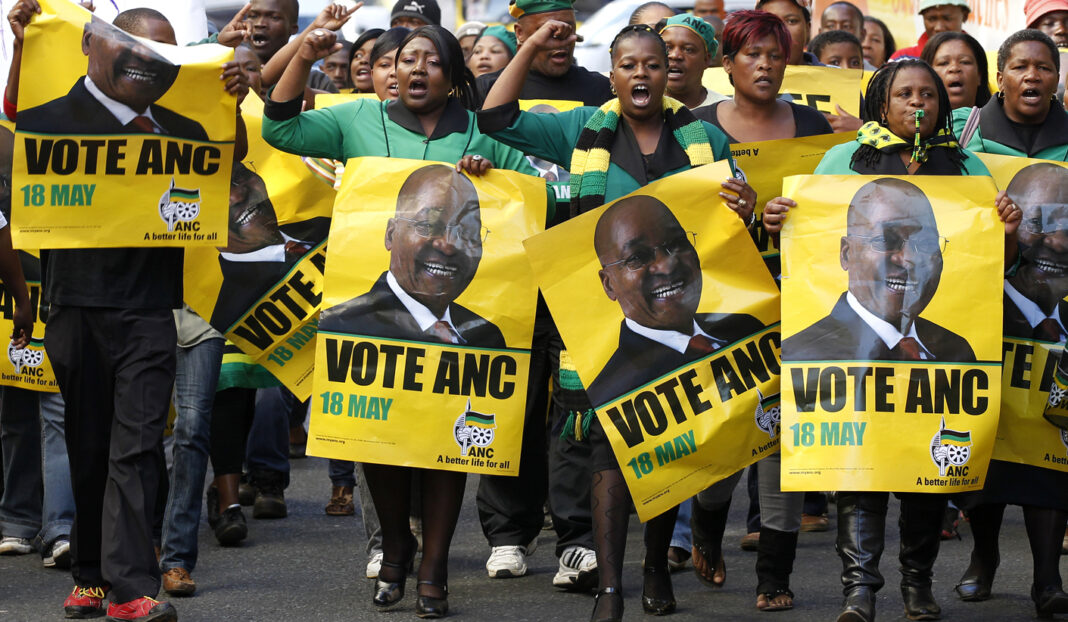
Zuma campaigned in the party’s activities and elections in a more charismatic than ever before.

His posters used colourful slogans to ramp up the ‘radical economic transformation’ agenda of the left.

To quote political analyst and academic, Mervyn Gumede, Zuma energised resistance — ‘even as he destroyed the moral leadership of the ANC, which will take a long time to recover if ever.’  

But instead of using his years in office to rebuild the country, fight corruption and transform the economy, he did the opposite; he disbanded the Scorpions, destroyed state institutions, SOEs and surrounded himself with yes-men and sycophants.

Even senior leaders of the labour federation Cosatu and the SA Communist Party backed him in a belief he would accelerate measures to reduce white ownership of the economy.

The left projected their own ideological fantasies onto Zuma – they saw in him as hope for a “left turn” and a repudiation of the neo-liberal economics which they associated with Mbeki.

But, in the blink of an eye, he lost everything.

Consequently, the SACP and Cosatu have been compelled to recognise that Zuma and his corrupt support networks are indeed a cancer in South African politics, shamelessly enriching themselves in a country still defined by poverty and extreme inequality with unemployment at 27.7% in the first quarter of 2017, and youth unemployment standing at 38%

History will surely judge him harshly – particularly his defiance of the Zondo Commission and for making unwarranted attacks on the judiciary.

The cost of Zuma’s destruction of state institutions and the erosion of public trust, including his expensive habit of firing Finance Minister, allegedly at the Gupta’s behest, is vast and will make it harder for the South African state to make up for lost time in transforming the South African society for a long time to come.

Zuma is expected to address the nation to respond to the news of his prison sentence by the court, the Jacob Zuma Foundation hinted in a tweet on Tuesday shortly after the judgment.

  • Inside Politics

More articles

LEAVE A REPLY

Please enter your comment!
Please enter your name here

CATHSSETTA

spot_img

AVBOB STEP 12

spot_img

Inside Education E-Edition

spot_img

Inside Metros G20 COJ Edition

spot_img

JOZI MY JOZI

spot_img

QCTO

spot_img

Latest article



