


Lerato Mbhiza
Every year on 9 August, South Africans observe a national holiday to commemorate a landmark 1956 march by 20 000 women who marched to the Union Buildings in protest against the apartheid government’s discriminatory including the pass laws.
The historical Women’s March was led by women from all walks of life, from all political parties, trade unions, black, white coloured and Indian women, all marched together to call for an end to discrimination and they sang as they marched to Pretoria ‘Wathint’ abafazi, wathint’ imbokodo!’ ‘You strike a woman; you strike a rock.
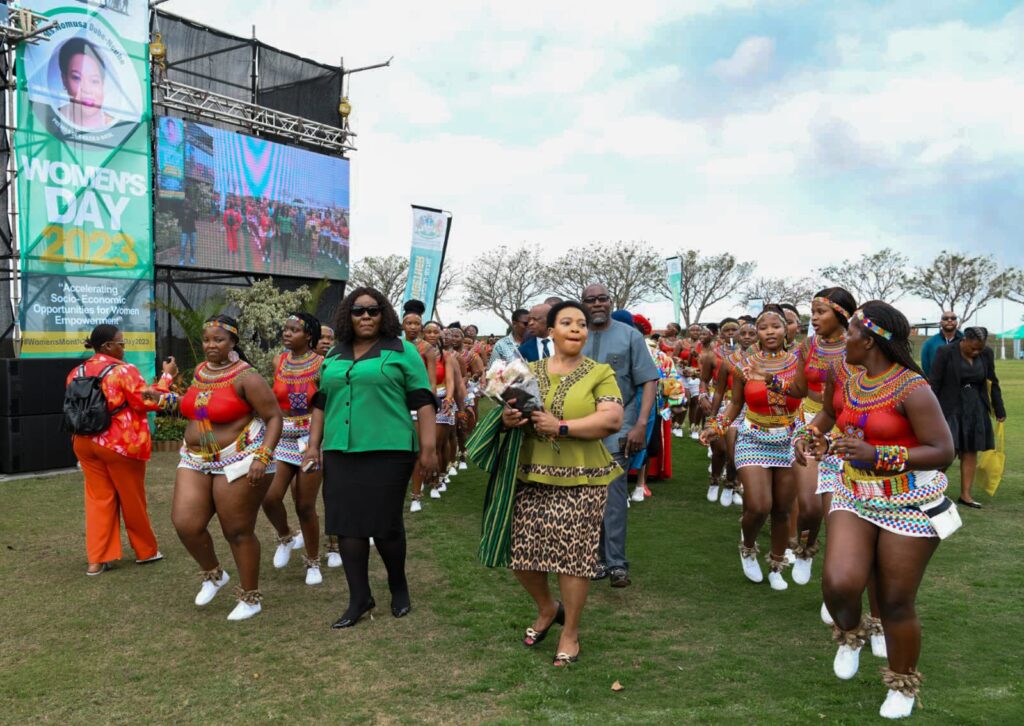
Although democratic South Africa now has a progressive constitution that guarantees gender equality, a surge in female homicide in the first half of this year paints a gory picture on how women’s struggle for emancipation still have a long way to go.
Gender-based violence in South Africa has been on the rise. Police statistics for the first three months of 2023 showed that 10,512 women were raped and 969 were murdered.
President Cyril Ramaphosa has said South Africa has levels of gender-based violence that “are comparable to countries that are at war,” referring to it as “a pandemic.”
Ramaphosa, when addressing the ANC 13th Women Conference, said women need to ensure women are safe from violence and the structure needs to bring equality in the country.
Lirandzu Themba, spokesperson for the Ministry of Police, said the South African Police Services (SAPS), are concerned about the safety of women.
“The SAPS and traditional councils are upscaling its operations to trace gender-based violence perpetrators, arresting serial offenders and rapists, as well as ongoing dialogues with men in various communities, in calling imbizo co talk to man to stop GBV in the communities, ” she said.
But often victims who report rapes are not always assisted adequately, women who go to the police stations are sometimes asked to go home and make it right with their partners rather than given the help they need, she added.
Mantoa Selepe, a gender-equality activist, said current socio economic malaise, as well as the brutal history of apartheid, play a part.
“I think with these men in South Africa we are dealing with generational anger that is cascaded down to generation after generation due to poverty and due to the injustice of the past as well,” Selepe said.
It is vital for the government to invest in educating men about gender equality in order to challenge patriarchal norms, she added.
Loveness Chauke said the celebration of Women’s Day is still important because we are remembering the 20,000 who marched to the union building because of the unjust laws under the then-apartheid regime, “we celebrate women because they are pillars of families, we give birth to the nation”.
INSIDE POLITICS