
- Advertisement -spot_img

Youth Day at 50: Unemployment, exclusion and a future on hold

- Advertisement -spot_img

Must read

By Johnathan Paoli and Akani Nkuna

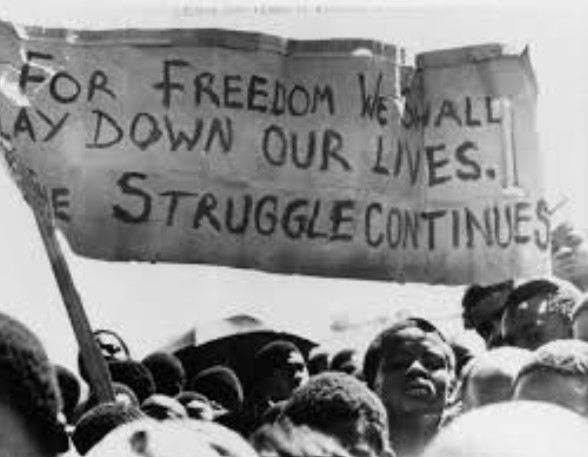
Fifty years after the youth of 1976 rose against apartheid education, millions of young South Africans remain locked out of work, study and opportunity, making Youth Day 2026 less a moment of ceremony than a reminder of unfinished freedom.

While the youth of 1976 fought an openly oppressive political system, today’s generation is battling unemployment, poverty, exclusion, violence and an uncertain economic future.

The June 16 commemoration comes at a time when young people aged 15 to 34 make up almost half of South Africa’s working-age population, yet continue to face some of the most severe socioeconomic challenges in the democratic era.

According to Statistics South Africa’s Quarterly Labour Force Survey for the first quarter of 2026, South Africa had about 42.2 million working-age people between the ages of 15 and 64.

Of these, about 21 million were young people aged between 15 and 34.

Despite their demographic significance, labour market outcomes remain deeply concerning.

Only 5.6 million young people aged 15 to 34 were employed, while 4.7 million were unemployed. A further 10.6 million young people were outside the labour force altogether.

While the national unemployment rate stood at 32.7% in the first quarter of 2026, unemployment among those aged 15 to 24 reached 60.9%, while the rate for those aged 25 to 34 stood at 40.6%.

A major concern is the growing number of young people who are neither employed nor participating in education or training programmes.

Stats SA’s latest data shows that approximately 3.9 million people aged 15 to 24 were classified as NEET, meaning they were not in employment, education or training, during the first quarter of 2026.

The NEET rate for this group increased to 37.6%, while the broader youth cohort aged 15 to 34 recorded a NEET rate of 45.6%.

This means that more than four in 10 young South Africans aged 15 to 34 are disconnected from both learning opportunities and the labour market.

Young women

Young women continue to bear a disproportionate burden. The NEET rate among young women aged 15 to 24 rose to 39.2% in 2026, compared with 36% for young men. If left unaddressed, this gap risks deepening existing inequalities.

Employment opportunities that do exist remain concentrated in lower-skilled sectors.

Trade accounted for nearly a quarter of youth employment in 2026, followed by community and social services, and finance.

Many young workers are employed in elementary occupations, sales and service jobs, or clerical positions, while relatively few hold managerial, professional or technical posts.

While the youth of 1976 organised through student movements, community structures and Black Consciousness organisations, young people in 2026 often mobilise through digital platforms.

Social media has become a powerful tool for expression, awareness and organisation, although critics say that online activism must increasingly translate into real-world political participation.

Youth participation researchers have warned that younger voters remain among the least likely groups to participate in elections, often citing frustration with government performance, corruption, unemployment, poor service delivery and a lack of meaningful opportunities.

The challenge, many argue, is for today’s generation to transform digital engagement into collective action capable of influencing policy and governance.

From the government’s side, the National Youth Development Agency (NYDA) says it has continued to focus on entrepreneurship, skills development and employment creation as key interventions to address the country’s youth crisis.

According to the NYDA’s 2024/25 Annual Report, the agency supported 2,069 youth-owned enterprises through grant funding and financial assistance, while a further 57,490 young people received non-financial business development support, including mentorship, business training, market access and entrepreneurship coaching.

NYDA provided life-skills and job-readiness training to 48,230 young people and facilitated 26,583 job placements through partnerships with government and the private sector.

The agency reported that its entrepreneurship programmes helped create or sustain 7,100 jobs during the financial year, while youth-focused outreach campaigns, innovation initiatives and community-based development projects sought to expand opportunities for young people in both urban and rural areas.

Through its National Youth Service programme, under the Presidential Youth Employment Intervention, the agency assists young people to access paid service opportunities, with participants expected to transition into employment, education, enterprise development and other income-generating activities.

Phase 5 of the programme, launched this month, aims to recruit at least 100,000 young people into structured community service placements.

Participants will work 16 hours per week while receiving stipends calculated according to the programme’s budgeted hourly rate.

The NYDA says the initiative will prioritise vulnerable and excluded youth, expand opportunities in schools and communities, address social challenges such as substance abuse and gender-based violence, and ensure that participants leave the programme with a clear transition plan into further opportunities.

But questions persist about whether existing interventions are sufficient to address the scale of youth unemployment and exclusion facing the country.

For many, Youth Day has become a commemoration that acknowledges the radical courage of 1976, but often loses sight of the seriousness of its political legacy.

Honouring 1976 should not revolve around romanticising the suffering of young people.

It should rather mean continuing their unfinished work in the battle against inequality, defending the right to meaningful education, and building a society where young people are not treated as disposable.

INSIDE POLITICS

More articles

LEAVE A REPLY

Please enter your comment!
Please enter your name here

Inside Education E-Edition

spot_img

CATHSSETTA

spot_img

AVBOB STEP 12

spot_img

Inside Metros G20 COJ Edition

spot_img

JOZI MY JOZI

spot_img

QCTO

spot_img

Latest article



