
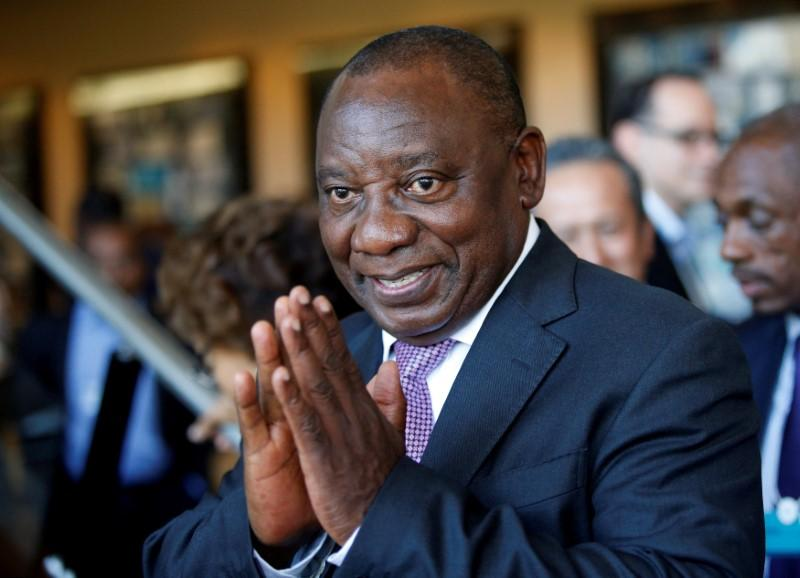
PRESIDENT Cyril Ramaphosa is expected to appear before the State Capture Commission of Inquiry on Wednesday and Thursday in his capacity as the former Deputy President of South Africa in charge of government business.
His office confirmed on Tuesday that the president’s appearance before the Commission follows an undertaking that he made in 2018 to provide the commission with any information and assistance it may seek in the fulfilment of its mandate.
The proceedings are scheduled to start at 9am on both days.
Ramaphosa will face tough questions about his role as deputy president of the country.
He first appeared before the commission in April, where he said members of the ANC had engaged in acts of state capture and corruption for a number of years.
“On August 11 and 12, the president will first complete his evidence relating to the ANC in his capacity as the current president and former deputy president of the party, and thereafter give evidence and be questioned in his capacity as the current president and former deputy president of the country,” commission secretary Prof Itumeleng Mosala said.
Ramaphosa is expected to start by completing his testimony that begun at the end of April regarding his tenure as leader of the ANC.
In his previous appearance before the judicial inquiry, which is due to deliver its final report in the next few months after nearly three years of sittings, Ramaphosa admitted that the ANC could have done more to prevent the corruption that ripped through the country’s institutions over the past decade.
He also conceded that the party had not done enough to tackle the phenomenon of state capture, and dealt with matters relating to the party’s cadre deployment policy as well as party discipline over its members of parliament.
Ramaphosa said the party did not take much notice when the phenomenon of state capture was first raised by Transport Minister Fikile Mbalula at a 2011 National Executive Committee meeting.
He said that the ANC had waited too long to recognize rampant corruption during that period and said that he would not try to “make excuses or to defend the indefensible.”
During the so-called ‘nine wasted years’ of Zuma’s presidency, levels of corruption within the ANC government increased significantly, with Zuma being personally implicated in a number of corrupt dealings.
The commission has far heard evidence in support of allegations that, throughout his presidency, Zuma engaged in corrupt dealings with the Gupta family and others, selling them influence over SOEs and awarding multiple government contracts to Gupta-associated businesses, which embezzled public funds as illicit payments to themselves, Zuma, and his associates.
The family’s influence over Zuma and various SOEs was so pervasive that they were allegedly able to control the appointment and removal of key government ministers and influence South African politics to their advantage.
Guptas fled to the United Arab Emirates (UAE) to avoid potential criminal charges shortly after Zuma was ousted and the Inquiry was launched in 2018
Two years ago, the United States imposed economic sanctions on the Gupta brothers in recognition of their role in widespread bribery and corruption in South Africa under the Global Magnitsky Human Rights Accountability Act.
This year, the United Kingdom followed suit, imposing economic sanctions on the Guptas and associates in the first use of its new ‘Magnitsky-style’ sanctions regime to target international corruption.
- Inside Politics





