By Johnathan Paoli
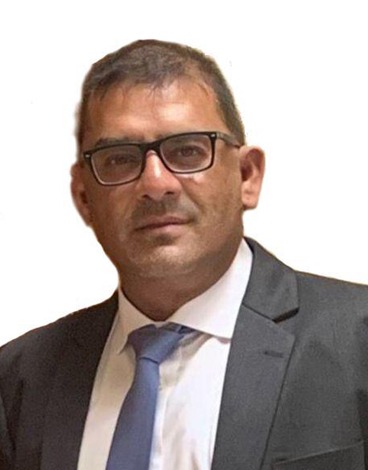
Parliament’s ad-hoc committee probing allegations of corruption and political interference in the criminal justice system has formally called on suspended Inspector-General of Intelligence Imtiaz Fazel to appear and testify.
This is despite his claim that he is legally barred from doing so.
The call followed the formal reading of Fazel’s letter into the record during a virtual housekeeping meeting on Monday, where MPs stressed that the committee requires his evidence to complete its work.
“I am not lawfully entitled to disclose the relevant classified information to the Ad Hoc committee to answer any questions that may be posed by members of the committee,” Fazel wrote.
“On Friday 06 March 2026, I received two letters on the Joint Standing Committee on Intelligence containing letters from the Minister in the Presidency and the acting Director General of the State Security Agency. Copies of these letters are also attached. It is clear that both the minister and the acting DG are opposed to me appearing before the committee at this stage. In the circumstances, I cannot appear before the committee.”
Evidence leader Norman Arendse told members that Fazel had initially been scheduled to testify on Tuesday and remained willing to do so but was prevented by legal and executive constraints.
Arendse explained that Fazel was in the process of drafting an affidavit and had undertaken oversight consultations with Cyril Ramaphosa and Police Minister Firoz Cachalia.
Fazel’s letter states that both Ramaphosa and Cachalia declined his application to testify before the committee, a development that triggered sharp political criticism and renewed calls for executive accountability.
Members insisted that the Inspector-General’s evidence was critical and that Parliament’s constitutional powers could not be curtailed by executive processes.
EFF Deputy Secretary-General Leigh-Anne Mathys registered strong objections to what she described as procedural delays and time constraints raised by MPs, urging the committee to take responsibility for its scheduling, which has resulted in repeated late-night sittings.
She reminded members that Parliament’s authority to compel testimony is constitutionally protected.
“Section 56 of the Constitution gives Parliament and its committees the power to summon any person, require documents, and obtain answers under oath. These constitutional powers cannot be overridden by acts or regulations that may be unconstitutional,” Mathys said.
Mathys added that her party would submit a formal position urging the committee not to limit itself to potentially unconstitutional rules and encouraged other parties to follow suit.
While acknowledging that the Joint Standing Committee on Intelligence could also hear the Inspector-General, she stressed that the ad-hoc committee must have access to all relevant information before finalising its findings.
Mathys further argued that parliament should have recourse if Ramaphosa or the relevant minister delays or refuses to consult with the Inspector-General.
EFF leader and committee member Julius Malema accused the committee of shielding wrongdoing through procedural technicalities linked to the IG’s office.
“You cannot classify corruption as top secret. We are investigating the corrupt manner in which our institutions have been collapsed. There is no reason why the IGI cannot testify,” Malema said.
“The committee is investigating a minister for political interference in SAPS matters, essentially investigating executive interference. Requiring the IGI to seek permission from the minister would mean asking for approval from the very person implicated, which is a clear conflict of interest — the minister is conflicted.”
He added that the same principle applied to the President.
“The President placed on special leave a minister accused of interfering in SAPS matters, meaning the President himself could be implicated. This is a special committee dealing with complex matters and must be treated as such. A head of Intelligence has appeared before the committee before, their work was never compromised,” he said.
MKP MP Sibonelo Nomvalo also objected to the handling of Ramaphosa’s written submission.
“No special treatment on the basis that he’s the President. We are not accepting this excuse of the 16th because everyone here is complaining about time,” Nomvalo said.
The committee further agreed to adjust its witness schedule, shifting the appearances of National Police Commissioner Fanie Masemola and KwaZulu-Natal Police Commissioner Nhlanhla Mkhwanazi to next week to allow additional time to address issues raised by previous witnesses.
Originally, Masemola was scheduled for Thursday and Mkhwanazi for Friday.
The revised programme means both senior officers will now testify in extended sessions next week as the committee races to conclude its work by month-end.
Tomorrow’s proceedings will continue with Acting Deputy National Commissioner for Crime Detection and Divisional Commissioner for Detective and Forensic Services Lt Gen Hilda Senthumule and National Coloured Congress leader and MP Fadiel Adams to appear.
INSIDE POLITICS