
- Advertisement -spot_img

Investment Conference set to attract 31 countries, targets R2 trillion in next five years

- Advertisement -spot_img

Must read

By Thebe Mabanga

The sixth South African Investment Conference (SAIC), set to take place in Johannesburg next week, has attracted 31 countries, with the number expected to rise to as many as 45 as Middle Eastern countries currently affected by the war in Iran confirm their participation and investment announcements, subject to flight availability and other logistical considerations.

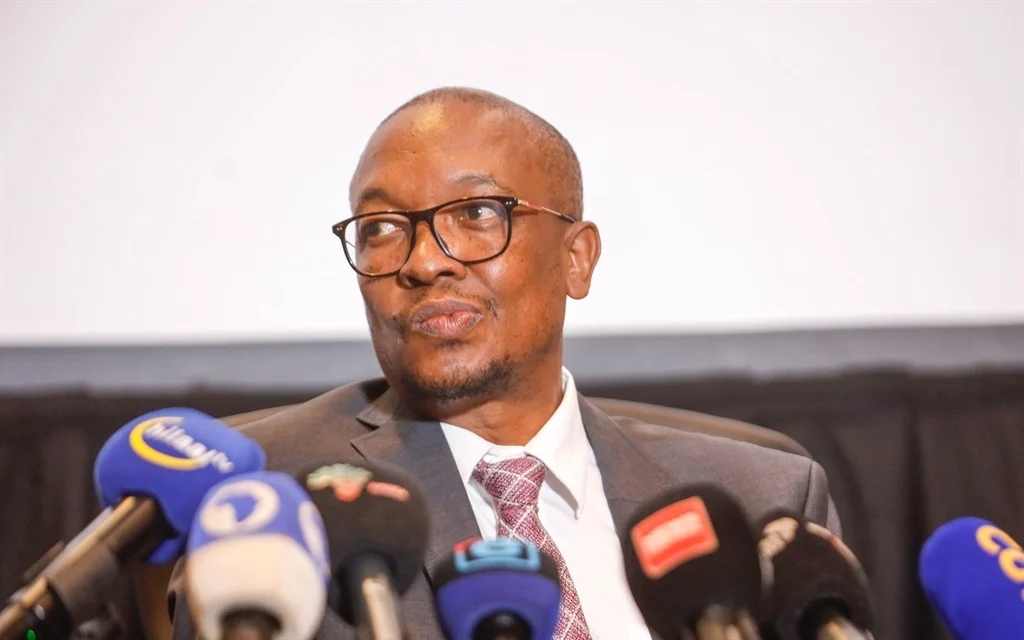
This emerged during a briefing held by the Department of Trade, Industry and Competition (DTIC) on Monday to outline final preparations for the event, which will be held at the Sandton Convention Centre.

Trade and Industry Minister Parks Tau said the event, established by President Cyril Ramaphosa in 2018, has been an “unqualified success”, having attracted R1.56 trillion—about 26% more than its initial five-year target of R1.2 trillion. The conference now targets R2 trillion over the next five annual editions.

“More than 31 countries, representing international delegates, are making their way to our shores. Their growing interest to participate in the 6th South Africa Investment Conference is an illustration that the world sees us as a gateway to Africa, and the ideal place to invest and partner with a developing country that is shaping the world we live in,” Tau said.

“Our message today is clear: South Africa is open, South Africa is ready, and South Africa is an investment destination of choice.”

Tau described the new five-year investment cycle as “ambitious” and grounded in the conference’s strategic pillars to invest, build partnerships, and advance shared prosperity.

“We live in a world of competing demands for capital. Every nation is making the case for why it deserves investor attention. We are making ours, not with promises alone, but with proof.”

The minister noted that, for investors, South Africa offers “compelling, high-return sectors backed by policy certainty and strategic infrastructure.”

On the state of readiness, Tau said “every key milestone has been met”, with preparatory work building on the G20 summit held last November, and acknowledged the City of Johannesburg as the host metro.

He highlighted South Africa’s competitive edge, including a technology sector poised for growth in fintech and digital infrastructure, renewable energy driven by the Just Energy Transition, and a strong agro-processing and manufacturing base to service continental and global markets—all underpinned by a constitutional democracy and an independent judiciary.

Yunus Hoosen, head of investment promotion at the DTIC, said about R600 billion of the R1.5 trillion pledged so far has flowed into the South African economy.

This includes a new factory by Procter & Gamble to manufacture Pampers, as well as the first phase of a new platinum mine in Mokopane, Limpopo.

Luis Felipe Avellar, Africa Operating Unit President of Coca-Cola, outlined the company’s 100-year history in South Africa. He cited a new study showing that in 2024, Coca-Cola contributed R51 billion and supported 87,000 jobs in the South African economy.

Avellar said each direct job supports ten jobs in the value chain, with the company spending R25 billion on the procurement of local goods and services.

Boitumelo Mosako, CEO of the Development Bank of Southern Africa (DBSA), a sponsor of the conference alongside the Industrial Development Corporation (IDC), said the institution supports the R2 trillion target.

She said the DBSA’s role is to translate high-risk, public-mandate infrastructure projects into bankable opportunities.

“The target is a State vision, but it is up to everyone to make it happen,” said Mosako.

The DBSA has mobilised R23 billion to support bulk water infrastructure projects aimed at addressing the water supply crisis affecting various parts of the country.

Tau said the war in the Middle East will impact long-term investment decisions, adding that South Africa could play a key role in logistics and supply chains as countries search for alternative routes following disruptions linked to the closure of the Strait of Hormuz.

He described trade relations with the United States as “fluid”, noting that nothing has changed since South Africa tabled an improved trade deal to stave off punitive tariffs.

However, he said the Supreme Court of the United States had since declared the tariffs illegal, while President Donald Trump announced investigations into about 60 countries, including South Africa, over alleged unfair labour practices.

Tau said South Africa is now awaiting the terms of trade under the new investigation.

INSIDE POLITICS

More articles

LEAVE A REPLY

Please enter your comment!
Please enter your name here

CATHSSETTA

spot_img

AVBOB STEP 12

spot_img

Inside Education E-Edition

spot_img

Inside Metros G20 COJ Edition

spot_img

JOZI MY JOZI

spot_img

QCTO

spot_img

Latest article



