
By Akani Nkuna
Deputy President Paul Mashatile has said that violent protests targeting foreign nationals undermine South Africa’s constitutional order.
Mashatile condemned the recent wave of anti-migrant demonstrations linked to anti-illegal-immigration groups, including March and March, which have taken place in several cities and were continuing in Durban on Thursday.
ALSO READ: Nkosi case postponed to July for consolidation of matters
He called for calm and respect for the rule of law, while urging closer cooperation between government, traditional leaders, civil society and migrant communities in addressing rising tensions and criminality linked to the protests.
“While acknowledging concerns about illegal foreign nationals involved in crime, we strongly condemn the anti-migrant protest and xenophobic violence. We urge law enforcement to address these issues through legal means, not mob violence,” he said.
“These violent acts, as mentioned by President Cyril Ramaphosa, are shameful and do not reflect the views of South Africans or government policy.”
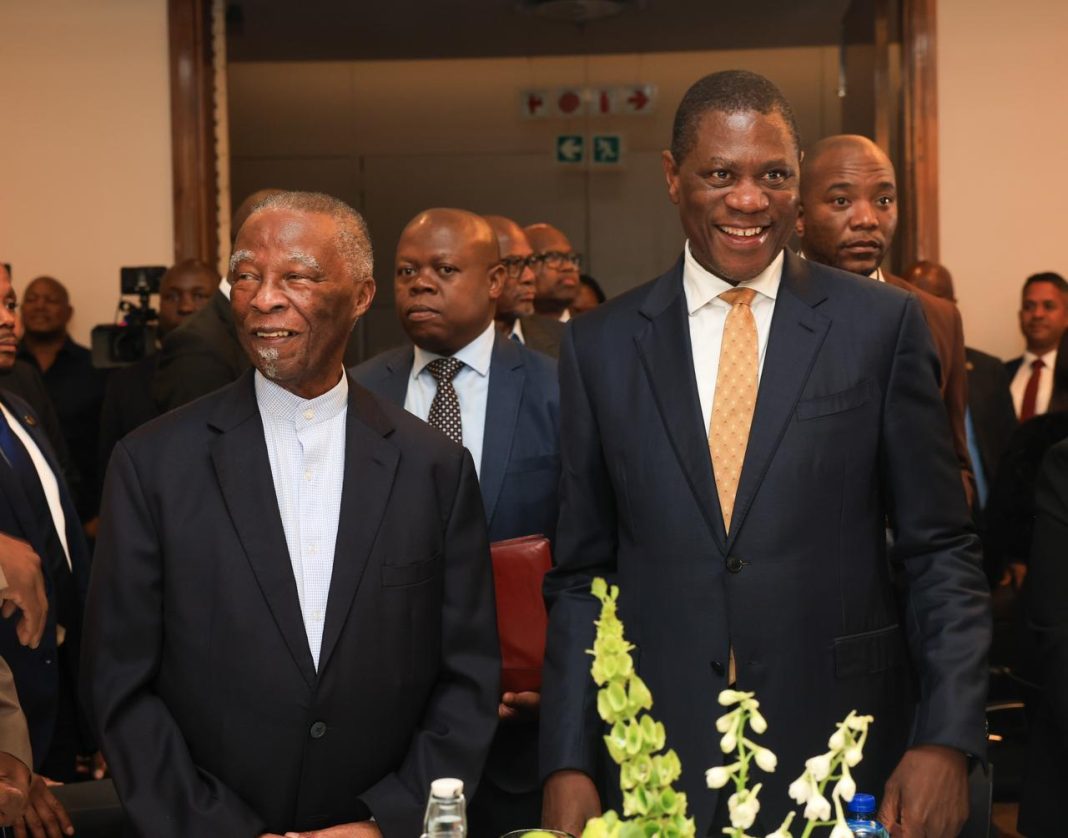
Mashatile was speaking at the NEPAD @25 Business Breakfast in Century City, Cape Town, on Thursday, where policymakers, leaders of continental institutions and representatives of African countries gathered to reflect on NEPAD’s contribution to African development and to strengthen intra-African trade.
The deputy president said Africa’s unity was becoming a strategic necessity in a world increasingly defined by new poles of power.
ALSO READ: WATCH LIVE: Deputy President Mashatile delivers keynote at NEPAD 25 Business Breakfast
He outlined three focus areas to accelerate the continent’s development: regional integration, economic collaboration and African ownership. He said these would help ensure Africa’s development is driven from within, rather than imposed by external forces.
“Africa cannot afford fragmentation and isolation. Our strength lies in solidarity, in speaking with one voice and in pursuing shared objectives that transcend boarders,” said Mashatile.
Mashatile said energy insecurity and infrastructure deficits remained among the continent’s most persistent challenges and required urgent intervention.
He said Africa required large-scale annual infrastructure investment, estimated at up to about R3.16 trillion a year, while expressing concern that the continent continued to attract only a small share of global renewable energy investment, recorded at 2.3% in 2023.
Mashatile said unlocking continental growth required “coherent policies” that drive skills development, investment, technology expansion and global competitiveness. He said these were necessary to move Africa closer to the goals set out in Agenda 2063.
“The next phase of Africa’s growth must, therefore, be driven by productive transformation, stronger regional value chains and deeper continental integration that keeps wealth, production, innovation, and investment circulating within Africa,” he said.





