

By Johnathan Paoli
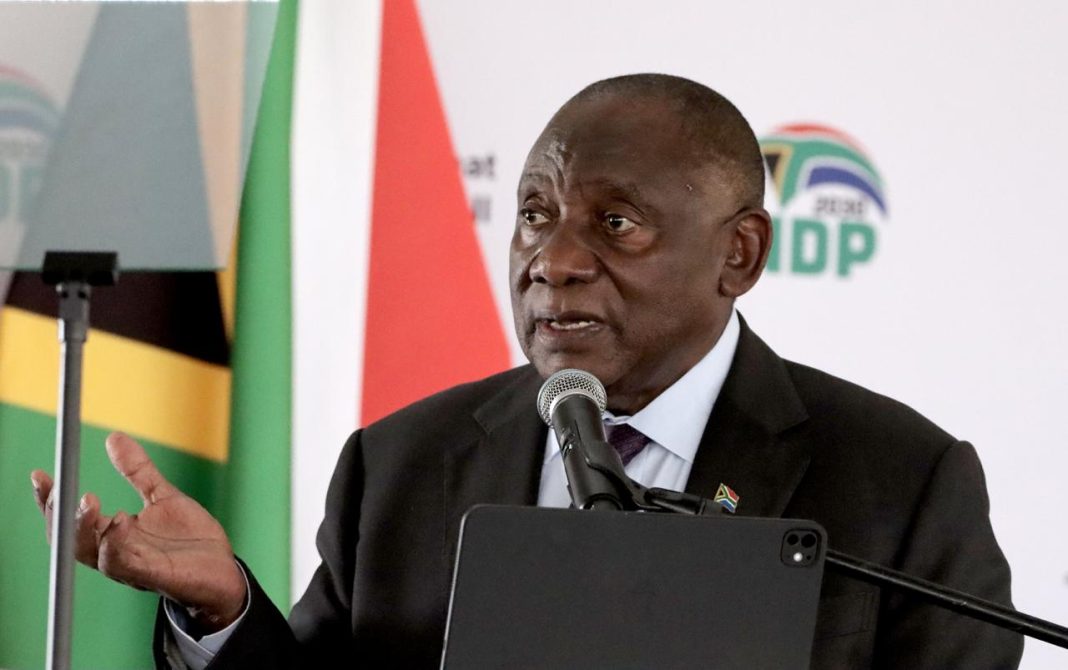
President Cyril Ramaphosa on Friday welcomed the handover of hundreds of title deeds in Setlagole and Madibogo in the North West province as a milestone in South Africa’s land reform programme, while pledging continued government support for beneficiaries beyond the transfer of ownership.
Speaking at a Land Reform and Rural Development Department ceremony at the Setlagole Sports Ground in Ratlou Local Municipality, Ramaphosa said the handover fulfilled constitutional commitments to communities dispossessed under apartheid-era laws.
“Today, we are using the laws and institutions of our democracy to restore what was taken,” Ramaphosa said.
“We are not only correcting a historical injustice. We are building a fairer, more sustainable and more prosperous future for these communities.”
The president presided over the transfer of title deeds under several land reform and restitution programmes, including the upgrading of tenure rights to full ownership for 368 residents through the Upgrading of Land Tenure Rights Programme.
“For many years, families in these two villages built homes, erected structures, enrolled their children in local schools and lived their lives on land they did not formally own,” he said.
Ramaphosa said the formal establishment of townships in Setlagole and Madibogo included sites earmarked for businesses, creches, churches, public facilities and government services.
The ceremony also saw title deeds handed to 20 farmers whose leased state land had been converted into full ownership.
“The state land that they have been leasing for farming activities has now been converted to full freehold title. They are no longer tenants. They are now farm owners,” Ramaphosa said.
Title deeds were also transferred to three communal property associations that had successfully pursued restitution claims following decades of forced removals.
The Gaesegwe Communal Property Association received seven title deeds covering more than 4,000 hectares, while the Barolong Ba Ga Rapulana Communal Property Association received three title deeds covering 411 hectares.
The Barolong Ba Ga Seitshiro Communal Property Association received 11 title deeds covering more than 2,900 hectares.
Ramaphosa, however, cautioned that land ownership alone would not guarantee improved livelihoods for beneficiaries.
“A title deed in a drawer does not on its own transform a family or a community’s fortunes,” he said.
“A farm with no equipment, no water, no capital and no support will not meet people’s needs.”
He said government would ensure post-settlement support accompanied the land transfers and that formal ownership would enable beneficiaries to access financial opportunities previously unavailable to them.
Ramaphosa also acknowledged frustrations over delays in the land restitution process, saying government was working to “fast-track the programme, resource it properly and streamline the processes”.
The ceremony came a day after tensions flared during a meeting between Land Reform and Rural Development Minister Mzwanele Nyhontso and beneficiaries linked to the Barolong ba ga Rapulana Communal Property Association.
The meeting descended into heated exchanges after beneficiaries accused traditional leaders and members of the association’s executive of corruption and excluding ordinary beneficiaries from decisions relating to restored land and government support.
The handover also comes amid mounting scrutiny of the department’s administration of the land reform programme.
During a recent briefing to Parliament’s Standing Committee on Appropriations on the 2026 Appropriation Bill, the department disclosed R137 million in fruitless and wasteful expenditure linked to weak financial controls, supply chain failures and delayed supplier payments.
Officials said delays in settling land claims, including many lodged before the 1998 cut-off date, were being worsened by weak institutional capacity, staff shortages and administrative inefficiencies.
Acting Director-General Clinton Heimann warned that infighting and allegations of corruption within communal property associations were becoming increasingly common, with some disputes escalating to court battles.
Members of Parliament raised concerns that many land reform beneficiaries lacked sufficient technical, financial and operational support to keep farms productive, while weak oversight of leased state-owned farms had contributed to poor revenue collection, mounting debt and underutilised agricultural land.
The committee warned that repeated forensic investigations, delayed settlements and weak monitoring systems had left the land restitution programme vulnerable to fraud, abuse and institutional failure.
According to the department, about 3.9 million hectares of land have been restored since 1995, while more than 5,200 claims remain outstanding.
INSIDE POLITICS