
- Advertisement -spot_img

Cele says 2010 World Cup was SAPS priority during delays in TRC case investigations

- Advertisement -spot_img

Must read

By Thapelo Molefe

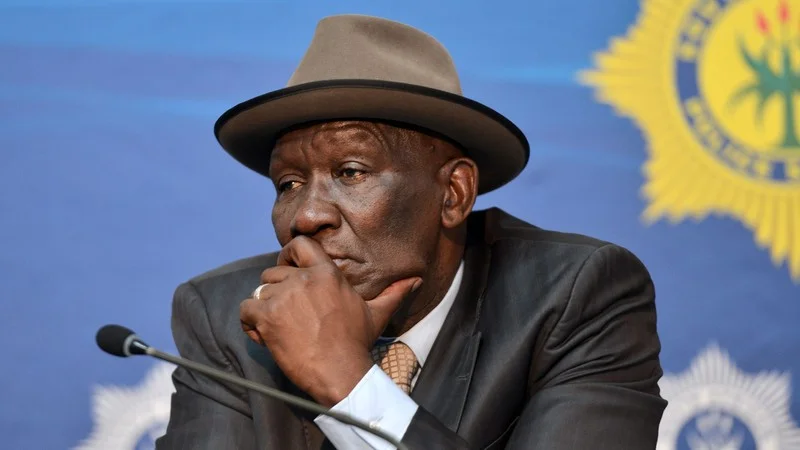
Former police minister Bheki Cele told the Khampepe Commission of Inquiry that preparations for the 2010 FIFA World Cup became the South African Police Service’s (SAPS) overriding priority during his tenure as national commissioner, while denying that investigations into Truth and Reconciliation Commission (TRC) cases were deliberately halted.

Appearing before the commission on Tuesday, Cele said he was largely unaware of the TRC-related investigations while serving as national commissioner between 2009 and 2011 because his focus was on ensuring South Africa successfully hosted the tournament.

“I don’t think much attention was brought to me about the TRC cases,” Cele said.

“I’m sure the head of the Hawks then was General Anwa Dramat. If there were cases, they would have been referred directly to him.”

Cele said he became more familiar with the TRC matters only after he was appointed minister of police.

“I must admit that my engagement with these Truth and Reconciliation Commission cases came more when I was minister than when I was National Commissioner,” he said.

Commissioner Andrea Gabriel questioned how Cele could have been unaware of the investigations while serving as the country’s top police official.

Cele replied that SAPS had been consumed by preparations for the 2010 FIFA World Cup.

“When I became National Commissioner, we had a very focused project. That was the 2010 World Cup,” he said.

“I’m sure many other things may have taken a bit of a back seat because we had to make the 2010 World Cup happen.”

He said there were widespread concerns at the time that South Africa’s crime levels could jeopardise the country’s hosting rights.

“There was a big issue that the World Cup might not come to South Africa because we were seen as a paradise of crime,” he said.

“The South African Police Service saved the World Cup.”

Cele told the commission that in March 2010, then South African Football Association president Kirsten Nematandani contacted him while he was in East London and instructed him to travel urgently to OR Tambo International Airport.

There, he met then FIFA secretary-general Jérôme Valcke, who was concerned that the tournament could be moved to Australia or Germany. Cele said he subsequently led a delegation of 13 police generals to FIFA headquarters in Zurich to reassure officials that South Africa was capable of hosting a safe World Cup.

Asked whether the focus on the tournament came at the expense of investigations into apartheid-era crimes, Cele denied that any police unit had been instructed to stop operating.

“There was never a time when any unit was told to stop operating because of the 2010 World Cup,” he said.

He acknowledged, however, that substantial police resources had been redirected to secure the event.

“South Africa and the world had this focus that had to be dealt with at that particular time,” Cele said.

“But that does not mean all other activities of the South African Police Service were stopped.”

Cele maintained that the Hawks, led at the time by General Anwa Dramat, continued investigating cases within their mandate.

“I would be lying if I said there was no extra focus on the World Cup at that particular time,” he said.

“But I would not say that it diminished the focus on other units. The Hawks had their own capacity and continued with the investigations that fell within their mandate.”

Commission chairperson Justice Sisi Khampepe asked whether Cele accepted responsibility for the limited attention given to TRC cases during his tenure.

Cele said he did.

“I take responsibility, but it was part of the broader functioning of the police,” he said.

“As National Commissioner, it would be foolish of me to say I was not responsible for the functioning of all units.”

Gabriel also referred Cele to his affidavit, in which he accepted responsibility for delays in TRC investigations between 2009 and 2011.

Cele confirmed that he stood by that admission but said the delays should be understood in the context of competing policing priorities and longstanding capacity constraints within the Hawks.

“The capacity of the Hawks has always been an issue. There was never a time when it was fully capacitated,” he said.

Pressed on the specific delays he accepted responsibility for, Cele again pointed to the demands of the World Cup, including security threats from al-Qaeda that required significant police resources.

He accepted that prioritising resources for the tournament may have slowed some investigations.

“In principle, I agree,” Cele said when asked whether redirecting resources inevitably resulted in delays.

“But I do not know in detail what was happening within the Hawks under the leadership that existed at the time.”

Cele reiterated that no specialised police unit had been instructed to suspend or slow its work during the tournament.

“Nobody told organised crime, the Family Violence, Child Protection and Sexual Offences units, the drugs units or kidnapping units to slow down because of the World Cup,” he said.

“All units continued operating, although perhaps not with the increased capacity they might otherwise have had because resources were prioritised for the 2010 World Cup.”

INSIDE POLITICS

More articles

LEAVE A REPLY

Please enter your comment!
Please enter your name here

Services Seta 2026

spot_img

Inside Education E-edition June 2026

spot_img

CATHSSETTA

spot_img

AVBOB STEP 12

spot_img

Inside Metros G20 COJ Edition

spot_img

JOZI MY JOZI

spot_img

QCTO

spot_img

Latest article



