



By Marcus Moloko
South Africa is heading into a tense week as widespread anti‑immigration protests build momentum ahead of the self‑declared June 30 deadline set by activist groups demanding that undocumented foreign nationals leave the country.
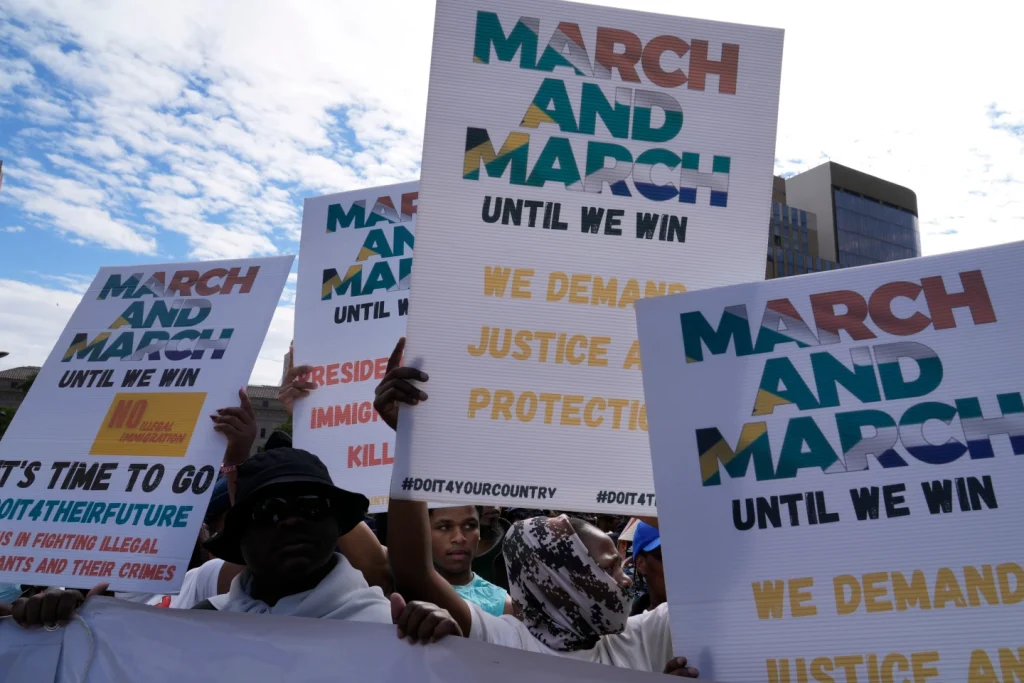
On Saturday morning, about 100 marchers took to the streets of Parklands in Cape Town under the banner of the March and March movement.
The demonstration, part of a series of mobilisations across cities including Durban, Boksburg, and Pietermaritzburg, saw several businesses shut their doors and street hawkers absent amid fears of unrest.
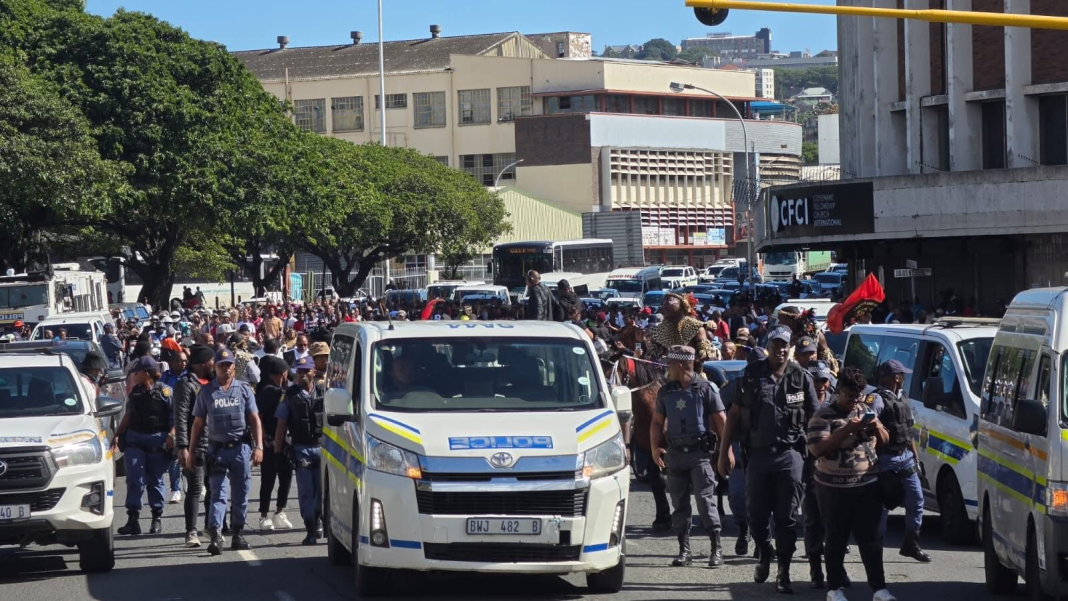
A heavy police presence lined the approved route, with Public Order Police and Metro Police deployed to monitor the crowd.
Before the march began, tensions flared when officers clashed with protesters over the possession of knobkieries and fighting sticks. Police delayed the start of the march, insisting that the weapons be surrendered.
Protesters argued the sticks were cultural symbols rather than tools of violence, but eventually law enforcement contained the situation without major escalation.
Provincial Police Commissioner Lieutenant General Tommy Mthombeni reiterated that fines of R10,000 per person will be imposed on South Africans found harbouring or illegally employing undocumented foreign nationals. He warned that landlords renting rooms to undocumented tenants and business owners employing them would face penalties and possible criminal charges.
President Cyril Ramaphosa and the Inter‑Ministerial Committee on Migration have stressed that private citizens, vigilante groups, or community organisations have no authority to demand documents or evict individuals. June 30, they said, will remain a normal working day, with social and economic activities expected to continue uninterrupted.
Law enforcement however, braces for potential unrest. A R600 million security mobilisation plan has been rolled out, with SAPS and NATJOINTS staging “State of Readiness” parades at FNB Stadium.
Surveillance measures include helicopters, drones, and more than 33,000 CCTV cameras across Gauteng to monitor protest hotspots.
The March and March movement insists its campaign is aimed at pressuring government to tighten immigration laws and prioritise locals for jobs.






