
By Sipho Ngwema
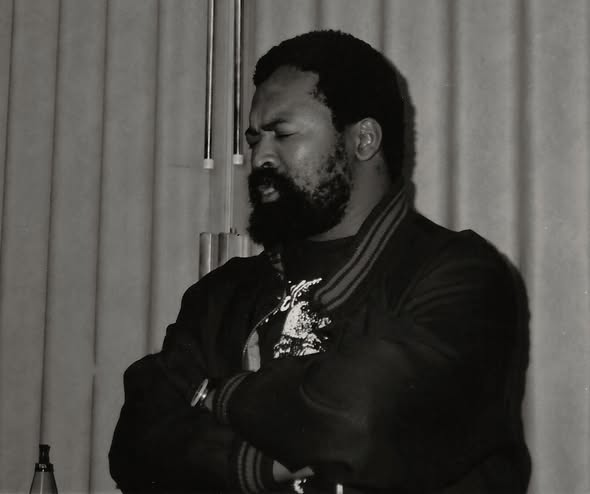
There are people who own businesses. Then there are people who create homes – bra-Fitz, Fitzroy Nkosomzi Ngcukana, who has passed away at the age of 69, was one of the latter.
When many of us from Cape Town arrived in Gauteng during the late 1990s, we were chasing careers, opportunities, and a future. But every weekend, something quietly pulled us back to where we came from. That place was Bra Fitz’s watering hole in Berea, Johannesburg.
The return trip from Sunnyside, outside Pretoria, to Johannesburg was well over 100 kilometres, but we never thought twice about it. There were no GPS directions then, only word of mouth.
Yet somehow everyone knew the way. Cars would arrive from Pretoria, the East Rand, the West Rand, and every corner of Gauteng. His establishment had become more than a tavern. It had become a destination, a home.
We were not simply going there for food and drink. We were going home. For a few precious hours every weekend, homesickness disappeared.
The familiar Cape accents, the music, the laughter, the endless political debates, the stories from “edladleni”, and the unmistakable warmth of the place reminded us that although we had left Cape Town behind, Cape Town had not left us.
That was Bra Fitz’s gift. He made strangers feel like family. Yet his joint belonged to everyone, not just Capetonians.
Bra Fitz was unapologetically Pan Africanist. He wore his PAC colours with pride and never pretended otherwise. His lifelong commitment to African liberation was evident not only in his political activism but also in his music.
His Ma Afrika album was dedicated to Azanian patriots, liberation heroes, and those who kept “the fires of resistance burning.” For him, music was never separate from politics. It was another language through which freedom, dignity, and African identity could be expressed.
Yet despite his firm political convictions, his tavern never became a partisan space. Quite the opposite. ANC members, PAC members, Black Consciousness activists, former guerrillas, journalists, artists (especially Cape Town legends), trade unionists, businesspeople, and ordinary workers all found a place around the same tables.
Fierce debates unfolded late into the night, but there was always mutual respect. Nobody was asked to surrender their convictions at the door. Instead, everyone was reminded that our shared humanity mattered more than our political labels.
Those spaces are becoming increasingly rare. Bra Fitz understood something our democracy sometimes forgets – disagreement need not become division.
Many people knew him as the larger-than-life proprietor with a booming laugh and generous spirit. Others knew him as the resident DJ who instinctively understood that music could change the mood of an entire room.
He did not merely play records – he curated memories. Every song seemed to carry a story, and every weekend became another chapter in the lives of those fortunate enough to be there.
But to reduce Bra Fitz to a beloved tavern owner would be to overlook the extraordinary life he lived before and beyond those weekends.
He was born into South African jazz royalty in 1957 kwa Langa, Cape Town. The son of the legendary Christopher “Mra” Columbus Ngcukana, he grew up in one of the country’s most important musical families.
Together with his brothers Duke (one of the most progressive high school principals we ever worked with), Ezra, Cyril and Claude, the Ngcukanas became custodians of the Cape Jazz tradition, preserving a uniquely South African sound that blended African rhythms, township life and the improvisational spirit of jazz into something unmistakably our own.
Bra Fitz was a gifted vocalist, performer, producer, cultural activist, actor, and organiser. His contribution stretched across music, television, and the broader creative industries. He served the Musicians’ Union of South Africa, later worked within the recording industry, coordinated the South African Music Awards, mentored generations of artists, and remained a steadfast advocate for South African musicians throughout his life.
Many people are unaware that he also collaborated with his homegirl Brenda Fassie, producing the memorable track Generations, one of many projects that reflected the breadth of his influence. Even in his later years, despite declining health, he continued recording, mentoring, and performing whenever he could.
The recognition eventually came. A Lifetime Achievement Award at the Standard Bank Joy of Jazz. Recognition as a Living Legend by the Gauteng Department of Sport, Arts, Culture and Recreation.
But perhaps his greatest achievement cannot be measured by awards.
It is measured by the communities he built. By the artists he encouraged. By the young musicians who discovered confidence because Bra Fitz believed in them. By the countless Capetonians living hundreds of kilometres from home who found comfort in a place where everyone knew their story before they even told it.
Music, politics, and culture were inseparable in his life because all three were expressions of identity.
He understood that music was never merely entertainment. It affirmed black excellence. It preserved memory. It told the stories that history books often overlooked.

That is why the passing of Bra Fitz feels so significant. Within a matter of weeks, we have said goodbye to three remarkable sons of Cape Town.
First came the passing of global jazz giant Abdullah Ibrahim, whose music carried the sound of the Mother City to concert halls across the world.
Then we buried ta-Mzoli, whose establishment became one of Cape Town’s most recognisable cultural landmarks, welcoming locals and visitors with the same warmth that defined the city itself.
Now we bid farewell to Bra Fitz. Three different men. Three different journeys. Yet each carried Cape Town wherever they went.
They reminded us that the city’s greatest export has never been Table Mountain, its beaches, or its postcard views. Its greatest export has always been its people.
People who create beauty from hardship. People who build community wherever they find themselves. People who understand that culture is something to be lived, shared, and defended.
Their generation carried the flag of Cape Town with quiet confidence and extraordinary generosity. They represented the city’s soul long before branding became fashionable.

Bra Fitz belonged proudly to that generation. His passing marks more than the end of an individual life.
It marks the gradual departure of a remarkable generation that understood instinctively that politics without culture becomes hollow, that music without purpose loses its soul, and that hospitality is one of the highest forms of nation-building.
The music has fallen silent. The debates have ended. The records have stopped spinning. But somewhere, one imagines another gathering has begun. The room is warm. The conversation is spirited. The jazz is playing softly in the background.
And another stranger has just been welcomed like family.
Hamba kahle, ta-Fitz.
Thank you for giving so many of us a place to belong when we were far from home.
Cape Town, South Africa, and generations of music lovers are richer because you passed this way.
Fitzroy Nkosomzi Ngcukana (15 April 1957 – 26 June 2026) was a jazz musician.
Sipho Ngwema is a former spokesperson of the National Prosecuting Authority (NPA) and currently serves as spokesperson for the Competition Commission.
INSIDE POLITICS





