
By Johnathan Paoli
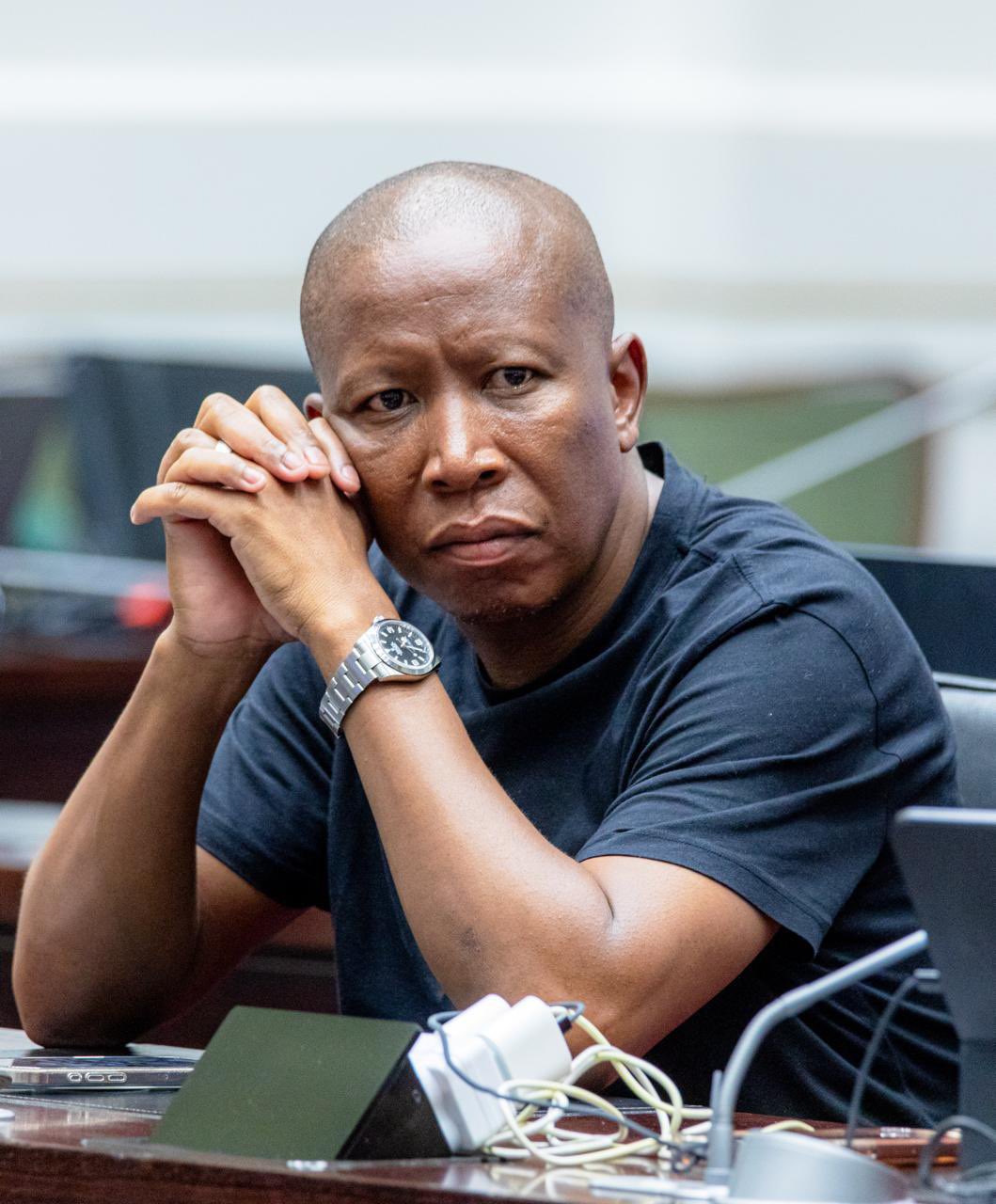
Members of Parliament’s Ad Hoc Committee investigating allegations of corruption and interference within the criminal justice system have pushed back against claims made by MKP MP Vusi Shongwe that EFF leader Julius Malema was responsible for preventing suspended Gauteng Crime Intelligence boss Major-General Feroz Khan from appearing before the committee.
The issue dominated the opening of the committee’s deliberations on its draft preliminary report on Wednesday, with MPs across party lines insisting that the decision not to summon Khan was taken collectively by all committee members and warning that suggestions to the contrary undermined the integrity of Parliament’s work.
EFF committee member Leigh-Ann Mathys took direct aim at Shongwe’s testimony before the Madlanga Commission, where he made the allegation.
Shongwe told the commission that Malema had been the most vocal opponent of Khan’s appearance before the parliamentary inquiry, although he acknowledged other parties had also supported the decision.
ALSO READ: Khan’s secret-testimony bid collapses after Madlanga blasts ‘vague’ application
“Decisions are not processed like that. So when we go and we put such information out in public, in other words, it’s saying that there’s 11 members of this committee who have the right to vote and one person runs this committee,” Mathys said.
“I think that must be corrected and that it must be noted that it might have to be that we even have to write to the commission and clarify that the decision on why Khan did not appear here was a decision that was made by the committee and it was not made by one member of the committee because it’s reducing this committee to a one-man show,” she added.
DA MP Glynnis Breytenbach broadened the criticism, saying she had received complaints from witnesses who believed confidential evidence presented to the committee had later been criticised during proceedings at the Madlanga Commission.
“I did not listen to it. And so I cannot vouch for the correctness of what I have been told, but I have had complaints from more than one person who had appeared before this committee, whose evidence was then discussed at the Madlanga Commission and criticised with them having no opportunity to defend themselves and them being placed on the impression by this committee that their position here was protected,” Breytenbach said.
ANC MP Khusela Sangoni urged the committee to develop a unified approach to revelations emerging from the commission rather than reacting to issues individually.
“As the ANC, I think that the committee needs to agree on a treatment on revelations that have come out subsequent to the committee finishing its work in the Madlanga Commission. I think the piecemeal approach is not going to help us.”
She supported Breytenbach’s proposal that affected witnesses submit formal complaints if they believed parliamentary protections had been compromised.
ANC MP Xola Nqola also defended the committee’s decision-making process, saying Khan was not called after KZN police chief Nhlanhla Mkhwanazi – whose allegations of police capture led to the establishment of the committee and commission — himself effectively cleared the general regarding a controversial drug seizure that had initially raised questions.
While Shongwe was not present, MKP MP David Skosana, however, maintained that the committee had erred.
ALSO READ: Acting police minister Cachalia warns of political agenda behind anti-immigration protests
“I said it and I’m still repeating it again, the issue of Khan was discussed here. Now, the Madlanga Commission called him, and we must own up. Khan was supposed to be called here. We’ve dropped the ball on that one,” Skosana said.
Patriotic Alliance MP Ashley Sauls also criticised suggestions that the committee deliberately shielded Khan.
“The truth is being spoken untruthfully. It’s wrong to say that we dropped the ball. We should not take that away from the committee. So I have a problem with the statement making it look like the committee intentionally as a joint body made the decision to protect General Khan,” Sauls said.
Committee chair Soviet Lekganyane tried to calm tensions, saying members would revisit issues arising from the Madlanga Commission before adopting their final report.
“We take ownership of the decisions that we have taken here as the committee. There is not any other decision that has been taken in our meeting that we were induced, that we were under duress, that we would have been bribed to arrive at such a decision,” Lekganyane said.
He stressed that witness lists had always been determined by the committee itself.
The committee is meeting over Wednesday and Thursday to conclude deliberations on its preliminary report before circulating it to affected parties for comment ahead of its submission to the National Assembly.





