
- Advertisement -spot_img

Cogta committee backs Treasury funding freeze, warns municipalities to fix governance failures

- Advertisement -spot_img

Must read

By Thapelo Molefe

The Portfolio Committee on Cooperative Governance and Traditional Affairs (Cogta) has backed the National Treasury’s decision to temporarily withhold July equitable share transfers to 69 municipalities, saying the move is necessary to enforce accountability and improve service delivery.

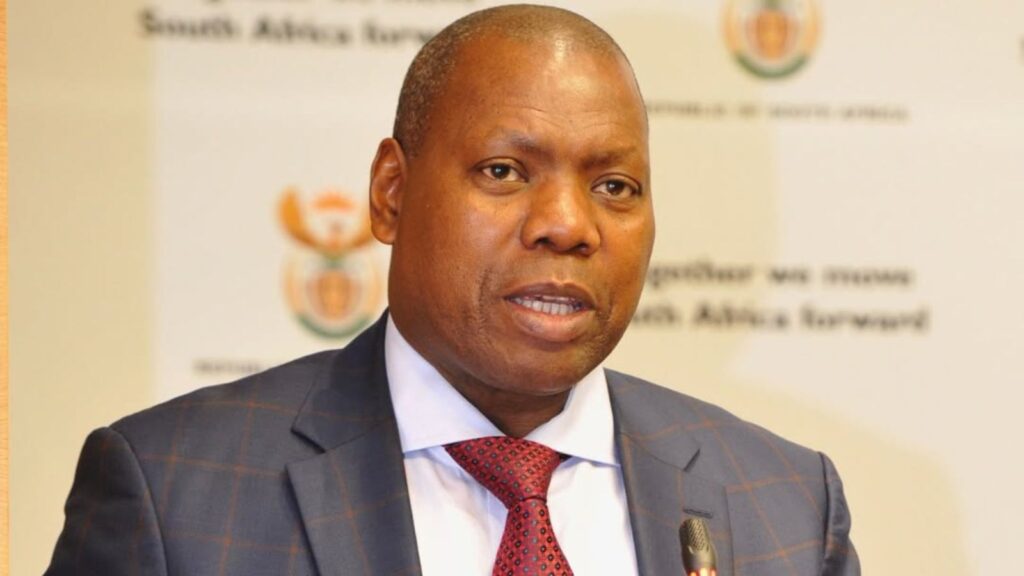
Committee chairperson Dr Zwelini Mkhize said the affected municipalities must urgently comply with Treasury’s conditions to secure the release of the funds and prevent further harm to communities.

“The committee welcomes and appreciates the intent behind this decision. Equitable share transfers are essential because they enable municipalities to deliver services to communities,” Mkhize said during a media briefing on Thursday.

He said the withheld allocations would be released once municipalities demonstrated compliance with Treasury’s requirements, including addressing unauthorised, irregular, fruitless and wasteful expenditure, implementing credible corrective action plans and taking disciplinary action against officials responsible for financial misconduct.

Mkhize said Parliament’s oversight had repeatedly identified many of the same weaknesses cited by Treasury, including unfunded budgets, weak financial controls, procurement irregularities, poor revenue collection, high water and electricity losses, and a lack of consequence management.

While municipal audit outcomes had shown some improvement, he said serious governance and financial management challenges remained widespread.

“The number of disclaimers was reduced to eight in 2024/25, down from 29 in 2020/21. This is progress because a disclaimer is the worst audit outcome, indicating that the Auditor-General could not obtain sufficient appropriate evidence to determine how public funds were used,” he said.

However, Mkhize noted that 145 municipalities, representing 57% of the country’s municipalities, remained at the same audit outcome as four years ago, while only 39 municipalities achieved clean audits.

He also expressed concern that none of South Africa’s eight metropolitan municipalities received a clean audit in the 2024/25 financial year and that the number of metros with qualified audit opinions had increased from two to five.

“The seriousness of this cannot be overstated. Metros manage multi-billion-rand budgets and provide services to millions of people. Where governance and financial failures occur, communities experience unreliable water and electricity supply, sewage spillages, potholes, poor refuse collection, deteriorating roads and delayed infrastructure projects,” he said.

Mkhize said Parliament had strengthened its oversight model by bringing together provincial legislatures, the Auditor-General, National Treasury, provincial treasuries, the Department of Cooperative Governance, municipalities and other oversight institutions to improve accountability across all spheres of government.

The joint oversight programme has already been implemented in the Free State, North West, Gauteng, the Eastern Cape and KwaZulu-Natal, with additional oversight visits planned.

Responding to concerns that withholding funding could negatively affect residents, Mkhize said responsibility rested with municipalities that had failed to comply with financial management laws.

“We are saying Parliament has voted funds for municipalities to render services to communities, and there are rules governing how those funds must be spent. Municipalities cannot spend public money outside those prescribed rules,” he said.

“If municipalities comply, Treasury cannot refuse to release the money. The focus should be on those responsible for these failures so that communities do not continue to suffer.”

Mkhize also criticised municipalities’ increasing reliance on consultants to prepare financial statements, saying what was intended as a temporary solution to address skills shortages had become a costly long-term practice.

He said the number of municipalities using consultants had increased from 179 in 2014/15 to 225 in 2024/25, while expenditure on consultants had risen from R586 million to R1.6 billion.

INSIDE POLITICS

More articles

LEAVE A REPLY

Please enter your comment!
Please enter your name here

Services Seta 2026

spot_img

Inside Education E-edition June 2026

spot_img

CATHSSETTA

spot_img

AVBOB STEP 12

spot_img

Inside Metros G20 COJ Edition

spot_img

JOZI MY JOZI

spot_img

QCTO

spot_img

Latest article



