
By Thapelo Molefe
The deployment of 3,405 South African National Defence Force (SANDF) members to support police during anti-illegal immigration protests and planned nationwide demonstrations cost taxpayers an estimated R54.6 million, Parliament heard on Thursday.
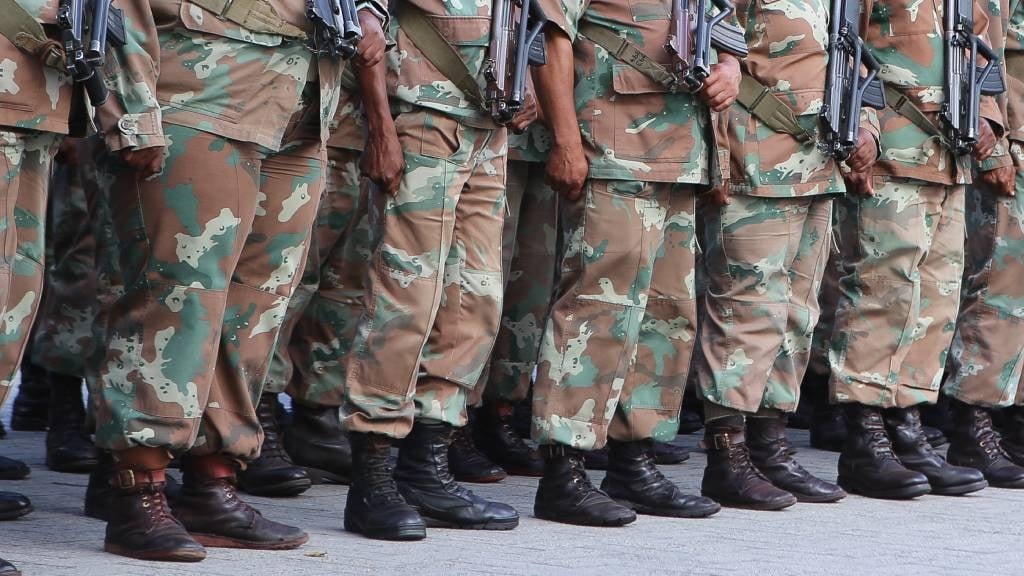
The Department of Defence briefed the Joint Standing Committee on Defence and Military Veterans (JSCDMV) on Operation Prosper, a contingency deployment authorised by President Cyril Ramaphosa to assist the South African Police Service (SAPS) in maintaining law and order between 28 June and 11 July.
According to the department’s presentation, the 14-day deployment was expected to cost R54,603,584, including R20.5 million for employee compensation and R34.1 million for goods and services. The department said the expenditure would be funded as unforeseen costs within the overall Operation Prosper budget.
The deployment followed growing security concerns ahead of planned nationwide protests on 30 June, which government feared could trigger violence and increased criminal activity.
The department told MPs the security situation had been exacerbated by “a recent and noteworthy increase in illegal immigration” linked to public dissatisfaction, prompting the Justice, Crime Prevention and Security (JCPS) Cluster to prepare contingency measures.
“The announcement by various groups and interested people for an organised country wide shutdown on 30 June 2026 required government intervention. This necessitated that the Justice, Crime Prevention and Security Cluster (JCPS) to have a contingency to intervene should the situation become dire and uncontrollable,” the presentation stated.
The department said the National Joint Operational and Intelligence Structure (NATJOINTS) was tasked with coordinating an integrated, intelligence-driven operation in affected areas. As a result, government determined there was a need to place SANDF members on standby to support SAPS and protect critical infrastructure if required.
President Ramaphosa authorised the deployment under Section 201(2)(a) of the Constitution and Section 19 of the Defence Act, allowing the military to support SAPS in preventing and combating crime and preserving law and order.
“The deployment of the SANDF is planned for a standby posture as a contingency to respond quickly for any eventualities,” the department said.
A total of 3,405 SANDF members were deployed nationwide to support the security cluster.
The department stressed that the soldiers were deployed specifically for the illegal immigration-related operation and were separate from existing Operation Prosper deployments targeting gang violence and illegal mining.
The presentation also confirmed that both the National Assembly and the National Council of Provinces had been formally notified of the President’s decision to authorise the deployment.
INSIDE POLITICS





